Best Way to Sweeten Tea
Use simple syrup-just equal parts sugar and water boiled for 90 seconds-for instantly smooth sweetness in iced tea, since granulated sugar won’t dissolve in cold brews. Agave nectar works too, with half a teaspoon matching a teaspoon of sugar. For lower calories, try erythritol or a stevia blend-they dissolve fully and taste like sugar without the grit. Add mint, cinnamon, or fresh fruit to boost natural sweetness and complexity; keep exploring to uncover even better flavor combos.
We are supported by our audience. When you purchase through links on our site, we may earn an affiliate commission, at no extra cost for you. Learn more. Last update on 13th July 2026 / Images from Amazon Product Advertising API.
Notable Insights
- Use simple syrup for instant, even sweetening in iced tea without graininess.
- Opt for agave syrup, which dissolves easily and sweetens more efficiently than sugar.
- Pre-dissolve honey in warm water to prevent clumping when sweetening cold tea.
- Enhance natural sweetness with spices like cinnamon or herbs like mint during brewing.
- Try erythritol-stevia blends as a low-calorie, 1:1 sugar substitute with clean flavor.
Best Liquid Sweeteners for Iced Tea
While iced tea’s cool, invigorating quality makes it a go-to drink in hot weather, sweetening it the right way can make or break your experience. To sweeten iced tea effectively, use liquid sweeteners that dissolve easily. Simple syrup-made from equal parts sugar and water boiled for 90 seconds-is the best way to sweeten without graininess. Agave syrup works well too; its high solubility means just half a teaspoon sweetens as much as a full teaspoon of sugar, even in cold tea. Honey must be pre-dissolved in warm water first, or it won’t mix smoothly. Maple syrup’s thickness resists blending in cold tea, making it less practical. Flavored syrups, like vanilla or lavender, add consistent flavor and sweetness with no effort. They dissolve sweeteners instantly, giving you a balanced, revitalizing drink every time.
Spices, Fruits & Herbs That Naturally Sweeten Tea
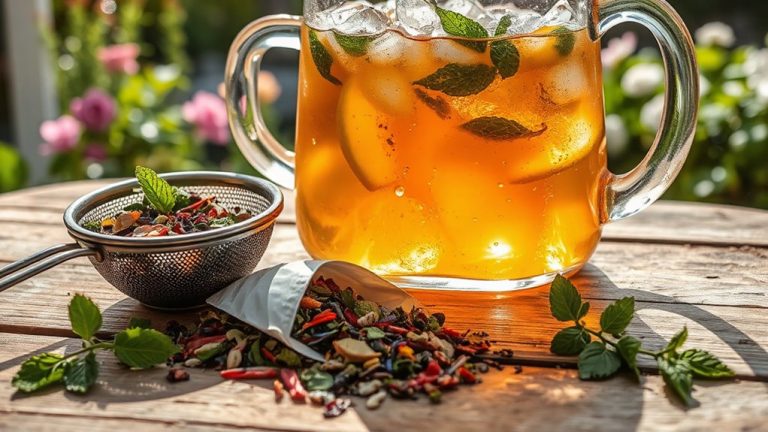
You’ve got liquid sweeteners down, but there’s another way to boost sweetness in your tea without adding sugar-turn to nature’s own flavor enhancers. Spices like cinnamon enhance perceived sweetness in black tea while offering anti-inflammatory antioxidants, no sugar needed. Star anise adds a licorice-like sweetness to herbal blends and elevates the flavor of chai spices. For a touch of natural sweetness, steep fresh fruit-like orange or peach slices-in your tea; they infuse vitamins and a tea sangria effect. Dried fruits such as raisins or figs, placed in the infuser, release natural sugars and minerals during steeping. Herbs including mint and lemongrass reduce bitterness and amplify complexity, letting the tea’s natural sweetness shine. These natural sweeteners don’t just Sweeten-they enrich the experience, deepening flavor with every sip.
Low-Calorie Sweeteners That Taste Like Sugar
Since you’re looking to cut calories without sacrificing the rich, satisfying sweetness you expect in your tea, low-calorie sweeteners that mimic sugar are a smart, science-backed choice. These sugar-like options deliver subtle sweetness without spiking your glycemic index. Here’s how popular zero calorie and low calorie sweeteners compare:
| Sweetener | Calories & Properties |
|---|---|
| Erythritol | 6% of sugar’s calories, minimal aftertaste |
| Xylitol | 2.4 cal/g, sugar-like texture, low glycemic index |
| Monk fruit | Zero calorie, 100–250x sweeter than sugar |
| Stevia | Zero calorie, plant-derived, slight bitterness at high doses |
| Erythritol-stevia blends | Balanced flavor, 1:1 sugar substitute |
Erythritol and xylitol offer the closest approximation to real sugar, while monk fruit and stevia bring zero calorie sweetness with a cleaner metabolic profile. For everyday use, blends with erythritol and stevia deliver consistent, sugar-like results you’ll enjoy sip after sip.
Why Sugar Doesn’t Work in Iced Tea (And What To Use)
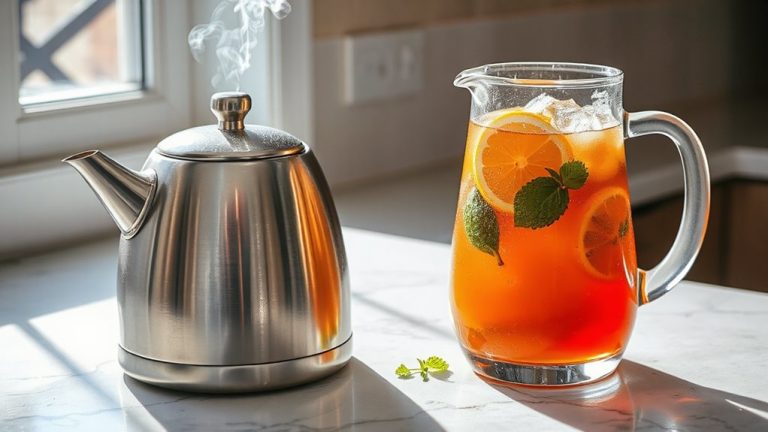
Though it might seem simple to sprinkle sugar into your iced tea, you’ll quickly find it sinks to the bottom without dissolving, leaving a gritty sip and uneven sweetness-especially in large batches or cold-brewed tea. That’s because granulated white sugar struggles to dissolve in cold liquids, making it a poor choice if you want to sweeten iced tea after brewing. Instead, use simple syrup-a liquid form made from equal parts sugar and water heated until clear. It blends instantly into cold tea, ensuring every sip of your sweet tea is smooth and consistent. Agave nectar also works well, mixing easily without stirring. Honey needs pre-dissolving in hot water first. For best results, make your syrup ahead and store it in the fridge. This small step makes a big difference in flavor, texture, and overall enjoyment.
On a final note
You’ve got better options than plain sugar for your iced tea. Liquid sweeteners like honey or agave mix easily in cold brews, while cinnamon, mint, or fruit infusions add natural sweetness without calories. For low-calorie needs, stevia or monk fruit blends dissolve quickly and taste like sugar-testers noted no bitter aftertaste in brands like Lakanto or Pyure. Real iced tea drinkers prefer 1–2 tsp of liquid sweetener per 16-oz serving, stirred while the tea’s still warm.