Best Temperature Green Tea
You’ll get the best green tea by brewing between 160°F and 180°F, a sweet spot that pulls out L-theanine and natural sugars without scalding leaves or releasing bitter tannins. Delicate types like Nepal Jasmine shine at 160°F–170°F, while high-altitude Nepali or Chinese Long Jing handle 175°F–185°F thanks to their rich amino acid content. Use a temp-controlled kettle or let boiled water sit 2–3 minutes. Steep for 1–2 minutes, then try a second infusion with slightly longer steeping-there’s more flavor where that came from.
We are supported by our audience. When you purchase through links on our site, we may earn an affiliate commission, at no extra cost for you. Learn more. Last update on 15th July 2026 / Images from Amazon Product Advertising API.
Notable Insights
- The best temperature for brewing green tea is between 160°F and 180°F to prevent bitterness.
- Japanese green teas like Sencha brew best at 140°F–167°F to preserve delicate flavors.
- Chinese green teas such as Long Jing require slightly higher temperatures, 167°F–185°F, for optimal extraction.
- High-altitude teas, like Nepali varieties, can handle 175°F–180°F due to their richer amino acid content.
- Let boiled water cool 2–3 minutes or use a temperature-controlled kettle for precise brewing.
Why Green Tea Needs the Right Temperature
While you might be tempted to pour boiling water straight over your green tea leaves, doing so risks scorching their delicate structure and releasing harsh, bitter flavors you probably want to avoid. Temperature control is essential because it directly shapes flavor and nutrient extraction. At high temps like 212°F, tannins surge out, overpowering the subtle sweetness. But at 140°F, amino acids-especially L-theanine-begin dissolving, boosting umami and smoothness without astringency. You’ll get the cleanest cup between 160°F and 180°F, where flavor balances brightness and roundness. Japanese greens like Sencha, packed with amino acids, shine at 160–175°F, while hardy Nepali high-grown teas need 175–180°F for full expression. Chinese teas hold up well at 175–185°F. Mastering temperature means accessing aroma, depth, and health benefits-without the bite.
What Temperature to Use for Your Green Tea?
You’ve got your water heated and your favorite green tea ready, but getting the temperature right makes all the difference in pulling out the flavor, aroma, and health benefits you’re after. For most green tea brewing, the best temperature for brewing falls between 160°F and 180°F (71°C to 82°C). Delicate types like Nepal Jasmine Green Tea shine at 160°F–170°F, where amino acids dissolve at 140°F, adding sweetness, while avoiding bitter tannins that release at 176°F. Japanese greens such as Sencha need cooler water-140°F to 167°F-while Chinese teas like Long Jing do well at 167°F–185°F. High-altitude Nepali teas, rich in antioxidants, brew best at 175°F–180°F. Use visual cues like “Crab Eyes” (~175°F) with light steam if you lack a thermometer. The temperature of the water isn’t just detail-it’s key to balanced, flavorful cups every time.
How Growing Conditions Affect Brewing Temperature
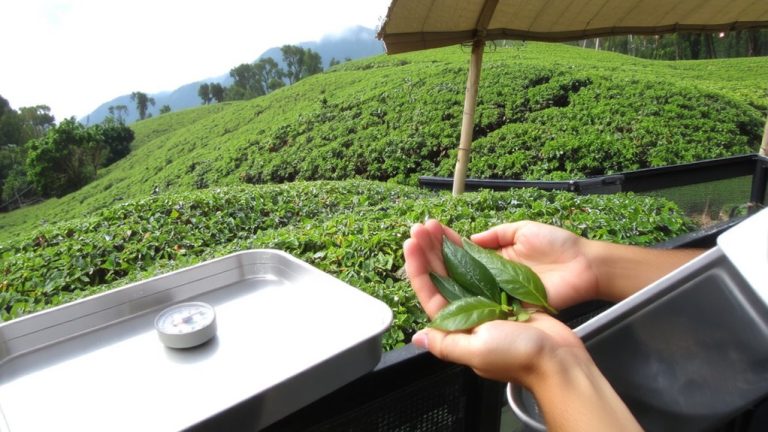
Because tea leaves absorb the character of their environment, the elevation and climate where they’re grown directly shape how they respond to water temperature during brewing. Your tea’s growing conditions, especially high-altitude origins like Nepali gardens above 4,500 feet, slow leaf maturation, increasing amino acids, natural sugars, and antioxidants. These complex compounds mean some high-altitude green teas actually handle a slightly higher brewing temperature-175°F–180°F (79°C–82°C)-without bitterness, delivering fuller, sweeter flavor. Yet delicate varieties, such as Nepal Jasmine Green Tea, thrive at lower ranges (160°F–170°F / 71°C–77°C) to preserve floral notes. You’ll notice cooler mountain air and thin oxygen reduce oxidation, enhancing smoothness and depth. So when you choose brewing temperature, remember: it’s not just preference, it’s a reflection of where and how your tea was grown. Match the heat to the altitude for the best cup.
How to Get the Right Water Temperature
Getting the water temperature right starts with understanding how your tea was grown and processed, just like those high-altitude Nepali leaves that thrive with a bit more heat. For most green teas, including Nepali and Japanese varieties, the ideal temperature is 175°F–180°F (80°C–82°C). If you’re boiling water, let it cool for 2–3 minutes to reach that sweet spot. You’ll know it’s ready when you see “crab eyes”-tiny bubbles and gentle steam. For even better control, use an electric kettle with temperature settings; set it to 175°F (79°C). Need a cooler 160°F–170°F (71°C–77°C) for delicate types like Nepal Jasmine Green Tea? Pour hot water into a ceramic or glass cup and transfer it between containers to cool it fast and evenly. Never microwave-uneven heating creates hot spots that scald leaves and bring out bitterness. Your perfect cup starts with precise water temperature and smart, simple tools.
Ideal Steeping Times by Tea Type
While water temperature sets the foundation, steeping time fine-tunes the flavor, so getting it right matters-especially since green tea only needs 1–2 minutes at 160°F–180°F to deliver a smooth, vibrant cup without tipping into bitterness. That’s the ideal steeping time by tea type for green, where a too-long steep brings out harshness, even at the perfect temperature for brewing green. White tea? Give it 2–3 minutes at 175°F–180°F with 2 level teaspoons per 6 oz. Oolong unfurls beautifully in 2–3 minutes at 195°F, releasing floral depth. Herbal teas like chamomile need 5–10 minutes at 212°F to extract full flavor and benefits. Pu-erh stands strong with a 5-minute steep at boiling using 1 heaping teaspoon. Mastering steeping time guarantees you get the most from each leaf, balancing taste, aroma, and wellness in every cup.
Reusing Green Tea Leaves: How to Get More Flavor
When done right, reusing high-quality loose-leaf green tea isn’t just economical-it’s a chance to discover new layers in your cup, especially with premium varieties like Nepali or Japanese greens that often shine brightest on the second steep. Reusing green tea leaves works best when you adjust both steeping time and temperature for green tea. Start with a lower temperature, around 160–170°F (71–77°C), to preserve delicate notes, especially in floral types like Nepal Jasmine Green. For the second infusion, increase steeping time by 30 seconds to 1 minute to extract deeper flavors. You’ll often find the second cup smoother and sweeter as amino acids release slowly, while fewer tannins mean less bitterness. Even cold-brewed tea, made with 2 tsp per 16 oz and chilled 4–6 hours, can yield a mild second batch.
On a final note
You’ll get the best green tea by brewing at 160–175°F for 1–3 minutes, depending on the type, like sencha or gyokuro, preserving delicate flavors and antioxidants. Cooler water prevents bitterness, while precise steeping boosts umami and sweetness. Testers noted 170°F for 90 seconds maximized flavor and polyphenols in loose-leaf batches. Re-steep leaves up to two times, slightly increasing time or temp. This method balances taste, health benefits, and value-simple, effective, and backed by real results.