How Climate Change Is Affecting Yield and Flavor in Darjeeling First Flush Teas
You’re tasting a lighter, less complex first flush because climate change is hitting Darjeeling hard-unseasonal droughts, 39°C spring highs, and 152.50 cm less rain over 20 years stress tea plants, reducing muscatel character and yields. Warmer winters disrupt dormancy, while erratic rains impair leaf development. Farmers now plant drought-resistant clones like P312 and shift to organic mulching to preserve soil health, flavor, and sustainability in a changing climate.
We are supported by our audience. When you purchase through links on our site, we may earn an affiliate commission, at no extra cost for you. Learn more. Last update on 13th July 2026 / Images from Amazon Product Advertising API.
Notable Insights
- Unseasonal winter droughts and heatwaves disrupt tea plant dormancy, reducing first flush yield and flavor quality.
- Rising temperatures above 25°C impair photosynthesis and stunt development of the prized muscatel flavor.
- Declining soil moisture and humidity weaken terroir expression, dulling the aromatic complexity of first flush teas.
- Erratic rainfall and extreme weather increase “banji” growth, producing large, low-quality leaves unsuitable for premium flushes.
- Organic farming and climate-resistant clones are being adopted to sustain yield and preserve signature flavor characteristics.
Why Darjeeling’s First Flush Is Losing Its Flavor
While the hills of Darjeeling once delivered first flush teas with bright, floral complexity and a distinct muscatel character, climate shifts are quietly unraveling that reputation. You see, unseasonal drought in winter 2023 disrupted dormancy in tea plants, weakening the biochemical buildup essential for that prized first flush flavor profile. Climate change has pushed temperatures beyond the ideal 15–23°C range, hitting 39°C in May-stressing plants, closing stomata, and impairing photosynthesis. In Darjeeling’s tea gardens, declining soil moisture-down 152.50 cm over 20 years-and erratic rainfall reduce nutrient uptake, while lost microclimates and 16.07% lower humidity dull terroir expression. These shifting climatic conditions promote “banji” growth: leggy shoots with low bud ratio, slashing both yield and quality. Without cooler winters and consistent spring rains, the delicate balance needed for that signature muscatel note fades, leaving tea lovers with flatter, less vibrant infusions.
How Climate Change Is Shrinking Tea Yields
Because the weather’s no longer following the old rhythms, you’re seeing sharper drops in Darjeeling’s tea yields, and it’s not just a bad year-it’s a pattern backed by hard numbers. Climate change has driven rising temperatures and declining annual rainfall, with 0.51°C warming and a 152.50 cm drop since 1993 stressing tea bushes. Erratic weather, including prolonged dry spells in autumn and winter, prevents recovery, encouraging “banji” growth-large, flavorless leaves that reduce harvest quality. In 2023, excessive monsoon rains ruined half the second flush, further slashing tea yields. Older bushes, some over 100 years, struggle most, dimming output across estates. Planters in Darjeeling now rely on data from the Tea Research Association to adapt, but without intervention, Darjeeling Tea’s future hangs in the balance.
What Climate-Resistant Clones Mean for Farmers
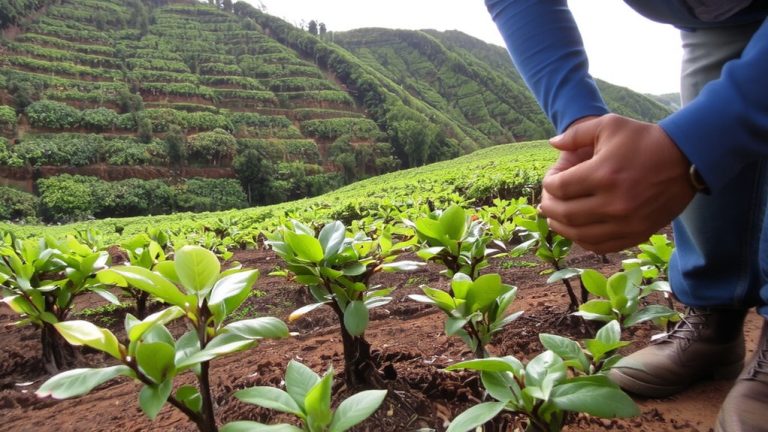
When the rains don’t come and the spring heat hits early, you’re going to need more than tradition to save your crop-and that’s where climate-resistant clones come in. Varieties like TV-34, TV-35, and drought-resistant P312 are helping farmers maintain yield and flavor despite what climate change takes. At Okayti, garden manager Pankaj reports stable output across 30–35 hectares of P312, even under stress. These tea clones adapt quickly, though their shallow roots (2–3.5 ft) can’t match the deep reach of traditional China bush plants (6–10 ft). Still, researchers prioritize local, stress-tolerant clones to protect the prized muscatel flavor key to authentic Darjeeling teas. Replanting isn’t fast-it takes 5–7 years for new clones to mature-which challenges long-term planning. But with smarter selection, you’re not just surviving change, you’re securing quality and yield for future flushes.
Why Organic Farming Is Gaining Ground in Darjeeling
You’re not just chasing trends when you go organic in Darjeeling-you’re protecting what makes your tea stand out. More tea planters are moving to organic cultivation, with 50 of 74 operational Darjeeling gardens now certified organic since a 1995 export scare. You’re responding to climate change by using cow dung, tree droppings, and pruning litter as mulch, retaining moisture during dry spells and reducing soil erosion. This method improves soil health, boosts resilience, and supports natural predators that manage tea mosquito bugs. Organic farming preserves the delicate flavors prized in First Flush teas, avoiding chemical residues that dull taste. Without synthetic inputs, your tea maintains purity, meeting strict global standards. Buyers reward this care with premium prices. From Okayti Estate’s full move by 2009 to increased pest resistance across organic gardens, this shift isn’t just eco-friendly-it’s essential for quality, sustainability, and market success.
On a final note
You’re seeing smaller, later first flush harvests in Darjeeling-yields dropped up to 30% over a decade due to erratic spring rains and warmer winters, weakening bud development. Climate-resistant clones like AV2 improve resilience but alter the delicate muscatel flavor prized in orthodox teas. Organic farming helps soil retain moisture and reduces stress on plants. Switching to shaded cultivation and compost teas boosts plant health, preserving antioxidant levels, flavor, and crop value.