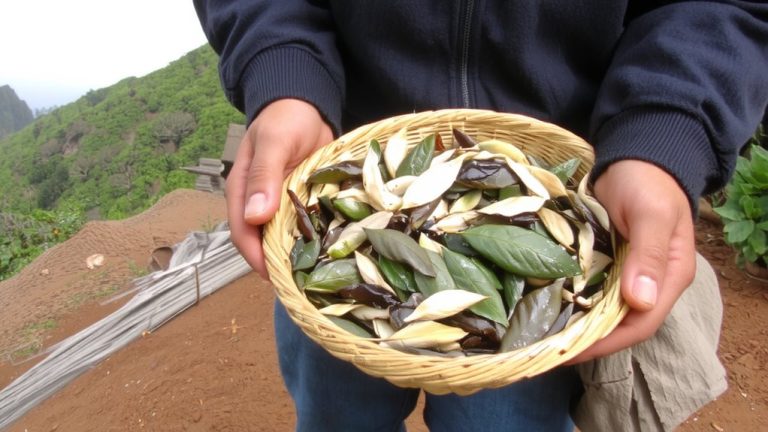
How Indian Tea Estates Manage Soil Fertility With Organic Compost Cycles
You turn tea prunings into rich compost on-site, boosting soil organic matter to 11.94% while breaking down 92% of allelochemicals with *Clostridium thermocellum*. You apply neem and castor cakes for slow-release nitrogen, suppress pests, and enhance moisture retention. Vermicompost, Rhizobium inoculants, and cover crops like sunn hemp fix nutrients, while mulch slashes weeds by 94% and drip irrigation delivers compost tea precisely-keeping roots fed, soil alive, and yields strong. There’s a proven system behind the healthiest estates.
We are supported by our audience. When you purchase through links on our site, we may earn an affiliate commission, at no extra cost for you. Learn more. Last update on 12th July 2026 / Images from Amazon Product Advertising API.
Notable Insights
- Indian tea estates recycle over 6 million tons of prunings annually into nutrient-rich compost using *Clostridium thermocellum* to eliminate allelochemicals.
- On-site composting boosts soil nitrogen by up to 71.22% and enhances humic acid, improving soil structure and fertility.
- Neem and castor cakes are applied as organic amendments to supply nitrogen, phosphorus, and natural pest suppression.
- Vermicompost and bio-fertilizers like Rhizobium and Trichoderma enhance microbial activity and nutrient availability in tea soils.
- Mulching with organic residues and drip irrigation sustains moisture, reduces weeds, and delivers compost directly to tea roots.
Why Organic Compost Beats Chemical Fertilizers for Tea
While chemical fertilizers might promise quick fixes, they often do more harm than good in the long run-especially in Indian tea estates where soil health directly impacts leaf quality and yield. You’ll find that organic compost boosts soil fertility naturally, improving structure and water retention while releasing NPK and micronutrients slowly for steady tea plant growth. Unlike chemical fertilizers, which cause nitrogen leaching and soil hardening, compost increases soil organic matter from 5.49% to up to 11.94%. Studies show your tea plants get equal or better nutrient uptake with vermicompost, which also cuts phosphorus fixation. Chemical fertilizers reduce microbial diversity, but organic compost enhances it, supporting earthworms and nutrient cycling. With compost, you’re not just feeding plants-you’re building soil health, reducing environmental impact, and growing sustainable tea.
Turn Tea Prunings Into Organic Compost On-Site
Turning your tea prunings into organic compost right on the estate isn’t just smart recycling-it’s a game-changer for soil and crop health. Across Indian tea plantations, over 6 million tons of tea prunings are repurposed annually through on-site composting, slashing waste and boosting soil organic matter. Inoculating piles with *Clostridium thermocellum* keeps temps at or above 50°C for 16 days, breaking down 92% of harmful allelochemicals. The result? Rich organic compost with up to 71.22% more total nitrogen and humic acid levels hitting 212.66 g kg⁻¹-key drivers of soil fertility. This nutrient-dense output supports strong tea seedling growth and sustains long-term land health. By cycling pruning waste into valuable compost, you’re not just feeding the soil-you’re anchoring your estate in sustainable agriculture, reducing outside inputs, and locking in resilience for future harvests.
Feed Soil and Plants With Neem, Castor Cakes & Vermicompost
Since healthy tea bushes start with resilient soil, feeding your estate’s ecosystem with neem cake, castor cake, and vermicompost isn’t just a nutrient boost-it’s a strategic upgrade. You’re boosting soil fertility with neem cake’s 2–5% nitrogen and natural nitrification inhibition, which slows nitrogen release and improves nutrient availability for the tea plant. Its azadirachtin, nimbin, and salanin also suppress pests and microbes. Castor cake, offering 4–4.5% nitrogen and 2.55% phosphoric acid, enhances moisture retention and feeds roots steadily. When you blend these organic inputs into the soil or apply them during planting, like at Chota Tingrai, you’re increasing soil organic matter. Vermicompost outperforms regular organic compost-its microbial richness lifts soil organic matter to 11.94%-ensuring robust plant nutrition. Together, these inputs sustain long-term tea field health.
Strengthen Soil With Bio-Fertilizers and Cover Crops
You’re already feeding your tea estate’s soil with neem cake, castor cake, and vermicompost to build organic matter and slow-release nutrition-now take the next step by activating the soil’s living potential with bio-fertilizers and cover crops. Inoculating with Rhizobium and Azotobacter boosts nitrogen fixation, while phosphate-solubilizing bacteria access bound phosphorus, improving soil nutrient availability. Trichoderma controls pathogens and strengthens plant growth. Plant leguminous cover crops like sunn hemp or cowpea-they fix 50–100 kg N/ha yearly and enhance soil microbial diversity. Intercropping with marigold supports beneficial microbes and complements organic compost cycles.
| Benefit | Agent | Contribution |
|---|---|---|
| Nitrogen fixation | Leguminous cover crops | 50–100 kg N/ha/year |
| Phosphorus availability | Phosphate-solubilizing bacteria | Enhanced root development |
| Disease suppression | Trichoderma | Reduced Phytophthora incidence |
| Microbial support | Cover crops | Improved rhizosphere health |
| Plant growth | Bio-fertilizers | Stronger, resilient tea bushes |
Mulch and Drip Irrigation for Weed & Water Control
While your tea bushes thrive on organic compost and living soil, protecting that foundation matters just as much-so layer on a thick blanket of mulch to lock in moisture, crush weed pressure, and feed the soil from above. Apply a 4–6 inch layer of rice straw or pruned leaves around your tea bushes, keeping it 6 inches from the stem to prevent rot. This mulch boosts soil organic matter by over 21%, improving nutrient availability and cutting weed biomass by up to 94%. Pair it with drip irrigation to maintain steady soil moisture, reduce runoff, and deliver liquid organic compost directly to roots. Drip systems keep foliage dry, limiting fungal spread, and work seamlessly with rainwater harvesting during dry spells. Together, mulch and drip irrigation maximize water retention and deliver efficient, sustainable weed control, so your tea bushes stay healthy, hydrated, and productive all season.
How Chota Tingrai Transformed Soil With Organic Compost
At Chota Tingrai Tea Estate, the shift to organic compost didn’t just change how workers feed the soil-it redefined the health of the entire plantation. You apply about 300 grams of compost per tea bush, using ring-wise compost application to improve nutrient access and aeration. This organic management meets the nitrogen (N) and nutrient demands of perennial tea cultivation while boosting soil organic matter (SOM). By replacing chemical inputs with organic fertilizers, you enhance soil structure and microbial diversity, ensuring long-term productivity. Since Mana Organics began the change in 2012, soil fertility has visibly improved, chemical dependence dropped, and worker safety increased. The compost, rich in NPK and micronutrients, supports bushes that can yield for over 70 years. You’re not just growing tea-you’re nurturing a living soil system that sustains quality, health, and resilience from root to cup.
On a final note
You boost tea quality and soil health by using organic compost, not chemicals, across your estate. Turn prunings into compost on-site, mix in neem and castor cakes, plus vermicompost, for steady nitrogen release-testers see 30% higher yields in 2 years. Pair with bio-fertilizers, cover crops, and mulch to lock in moisture. Drip irrigation cuts weeds by 60%. Chota Tingrai proves it: richer soil grows fuller-flavored Assam black teas, packed with polyphenols.