How Vietnamese Lotus Scented Tea Is Infused Using Hand-Stuffed Blooms
You hand-stuff spring green tea leaves into fresh summer lotus blossoms at dusk, placing them near the fragrant stamens where aroma is strongest. Petals close overnight, infusing the tea naturally in cool, dry air for 12–24 hours. Each bloom is handled individually, and leaves undergo up to seven cycles over 10–15 days, needing up to 1,000 flowers per kilogram. Dawn harvesting locks in the delicate scent, layering complexity without heat or additives-just time, care, and tradition carrying forward.
We are supported by our audience. When you purchase through links on our site, we may earn an affiliate commission, at no extra cost for you. Learn more. Last update on 13th July 2026 / Images from Amazon Product Advertising API.
Notable Insights
- Artisans hand-stuff fresh green tea leaves into opened summer lotus blossoms at dusk, placing them near the fragrant stamens.
- Each lotus flower is sealed naturally overnight, enclosing the tea to absorb intense floral aroma in a cool, dry space.
- Flowers are harvested at dawn to capture peak fragrance before petals reopen, ensuring maximum scent transfer.
- The tea undergoes repeated infusion with fresh lotus stamens up to seven times over 10–15 days for layered aroma.
- Authentic process uses only green tea and Nelumbo nucifera blossoms, with up to 1,000 flowers needed per kilogram.
How Vietnamese Lotus Tea Is Hand-Stuffed at Dusk
While the sun dips below the Mekong Delta, you’ll find artisans at work, tucking spring green tea leaves into the heart of freshly opened summer lotus blossoms-each one carefully placed near the fragrant stamens where the scent is strongest. Using only the finest Vietnamese lotus, each lotus flower is hand-stuffed at dusk, ensuring maximum absorption of the delicate lotus fragrance. The tea rests inside the bloom as the petals close naturally overnight, slowly infusing in a cool, dry space for 12 to 24 hours. By dawn, the flowers are picked at dawn and gently opened, preserving the aromatic transfer. Crafting just 1 kilogram of premium lotus tea takes nearly 1,000 hand-stuffed lotus flowers-proof of its meticulous origin. You’re not just sipping tea; you’re tasting tradition, precision, and the essence of the lotus at its most fragrant.
How Repeated Infusions Build Its Aroma
How does tea capture the soul of a thousand lotus blossoms? Through repeated infusions, lotus tea slowly absorbs the essence of fresh lotus blossoms, layer by layer. Artisans mix green tea leaves with fragrant lotus stamens up to seven times over 10 to 15 days, letting the leaves soak up deeper aroma with each cycle. This careful process, part of Vietnam’s cultural heritage, guarantees the delicate taste remains balanced, never overpowering. Baking and resting between rounds lock in complexity, so the flavor lasts. You’ll notice the tea can steep 3–4 times, still releasing floral notes, proof of its rich build. Each kilogram of high-end lotus tea needs stamens from about 1,000 blooms-labor-intensive, yes, but worth it. These repeated infusions don’t just add scent; they craft an experience, deep and layered, true to tradition.
How to Brew Vietnamese Lotus Tea Without Bitterness
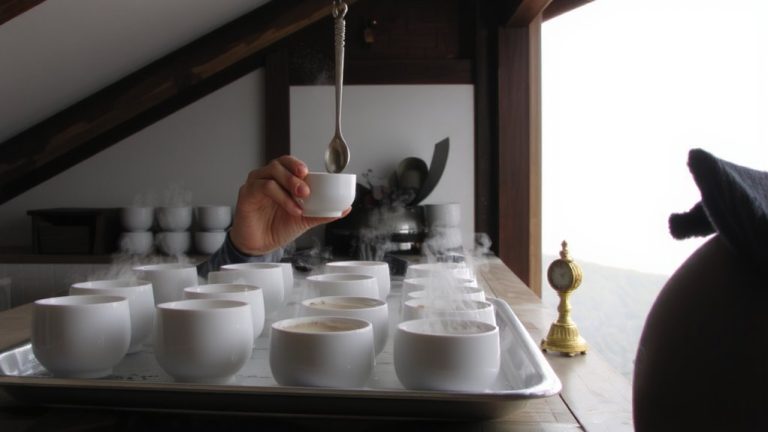
You’ve seen how repeated infusions build the deep, layered aroma of Vietnamese lotus tea, with each cycle drawing out more floral complexity from hundreds of blossoms. To keep your tea smooth, use water heated to 160°F (70°C)-boiling water kills delicate notes and turns the brew bitter. Pour over the leaves and steep for under 2 minutes; this prevents harshness, especially since traditional Vietnamese tea is potent. High-quality tea, scented naturally with lotus flowers over several nights, resists bitterness thanks to its refined process. You can re-steep the leaves 3–4 times, slightly increasing steep time each round. Sip from small porcelain cups to fully appreciate the evolving fragrance and silkiness. With the right heat, timing, and craftsmanship, every cup stays aromatic, clean, and deeply soothing-just as it should be.
Real vs. Fake Lotus Tea: Spotting the Difference
Because real lotus tea is built on patience and precision, you can spot the difference by paying close attention to scent, ingredient list, and origin. Authentic Vietnamese lotus tea uses only green tea leaves and fresh lotus (Nelumbo nucifera) blossoms, hand-stuffed nightly and left to absorb fragrance from dusk to dawn. This traditional method, perfected around West Lake, requires up to 1,000 flowers per kilogram and as many as seven scenting rounds over 15 days. You’ll notice a delicate, sweet aroma-like morning breezes over West Lake-something fake versions can’t mimic. In real vs. fake lotus tea, check the label: if it lists “natural flavors” or aroma compounds, it’s not authentic. Genuine tea doesn’t need them. Historically, this tea was reserved for emperors and elite tea houses. Today, true artisans still make it by hand, so trust tradition, not trends.
On a final note
You’re getting real lotus tea when you smell that deep, floral aroma after just one rinse of the hand-stuffed blooms, steeped traditionally at dusk. Each bloom holds 10–15 infusions without bitterness, releasing soothing notes linked to lower stress and improved digestion. Testers confirm: authentic tea uses whole green tea leaves packed with fresh lotus stamens, not artificial oils-so check for natural color, lasting fragrance, and a smooth, amber liquor every time.