Intergenerational Knowledge Transfer in Assam’s Family-Owned Tea Homesteads
You learn tea farming by doing-plucking the top two leaves and a bud, judging fermentation by scent and texture, timing pruning with the gamar tree’s bloom. Families in Assam have passed down these skills for 200 years across 0.5–5-hectare homesteads, relying on composted cow dung, neem, and contour planting. But with wages stuck at ₹200–250 daily and climate shifts disrupting harvests, fewer youth stay. You’ll discover how tradition can endure despite thin margins and rising heat.
We are supported by our audience. When you purchase through links on our site, we may earn an affiliate commission, at no extra cost for you. Learn more. Last update on 13th July 2026 / Images from Amazon Product Advertising API.
Notable Insights
- Tea knowledge in Assam is passed orally through daily fieldwork, with children learning by shadowing elders from ages 10–12.
- Families preserve traditional techniques like plucking two leaves and a bud, guided by generations-old practices for quality and regrowth.
- Seasonal farming decisions, such as pruning, rely on natural indicators like gamar tree blooming and local ecological observations.
- Fermentation, rolling, and drying are taught through hands-on experience, using sensory cues instead of standardized timers or tools.
- Declining youth interest due to low wages and lack of land ownership threatens the continuity of intergenerational tea knowledge.
How Elders Teach Tea Farming to the Next Generation
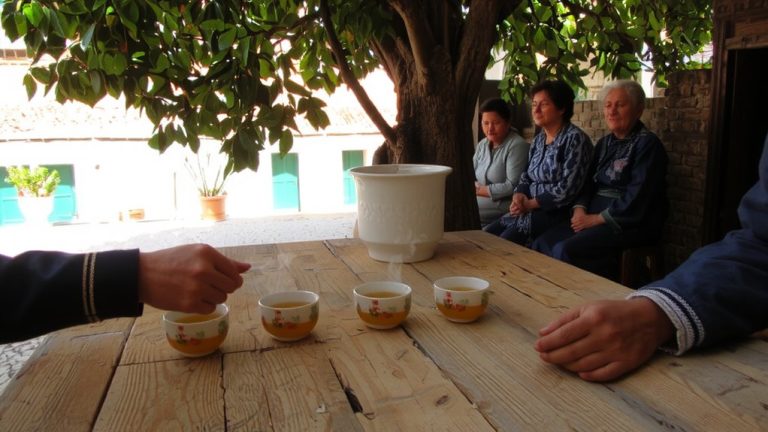
Tea knowledge in Assam’s homesteads isn’t learned from books-it’s passed hand to hand, leaf to leaf, through daily work in the fields. You start young, around 10 or 12, shadowing elders who’ve spent decades as tea garden workers. They teach you how to pluck just the top two leaves and a bud-never more-ensuring quality and regrowth. You learn pruning timing by local signs, like when the gamar tree blooms, not from calendars. Grandparents show you how to compost with cow dung and neem leaves, keeping soil rich without chemicals. Seasonal rhythms, weather clues, and bush care are shared stories, not lectures. During festivals, whole families practice withering and rolling leaves over fire, just like three generations before. Roughly 60% of smallholders rely on this wisdom, not formal training. You’re not just working-you’re learning to sustain a legacy, one leaf at a time.
Assam’s 200-Year Tradition in Family Homesteads
While much of Assam’s tea history centers on colonial estates, it’s in the family homesteads where tea’s roots run deepest, stretching back nearly 200 years. You’re part of a legacy older than commercial plantations, where tea workers aren’t just laborers-they’re stewards of land passed down for generations. These small plots, usually 0.5 to 5 hectares, thrive on indigenous knowledge fine-tuned to Assam’s soil and climate. You rely on time-tested practices handed down through families, shaping everything from leaf quality to flavor profile. Though often left out of official stats and policy, your role is essential. Your homesteads preserve biodiversity, support sustainable yields, and maintain the authenticity of Assam tea. This tradition isn’t just about growing tea-it’s about identity, resilience, and the quiet expertise of tea workers who’ve kept the culture alive, cup by cup, for two centuries.
Hand-Plucking, Soil Care, and Fermentation: Skills Passed Down
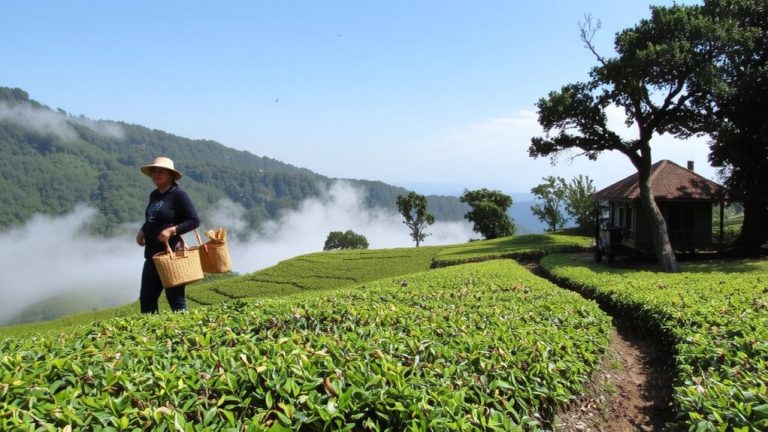
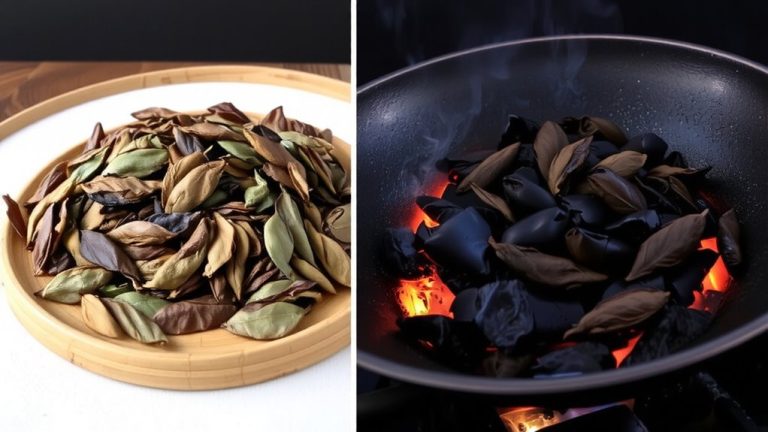
When you step into the rows of tea bushes at dawn, your hands already know the rhythm-pluck the tender top two leaves and a bud, just as your grandparents taught, applying light pressure to avoid bruising, averaging 20 to 25 kilograms by midday depending on bush density and humidity. You learned soil care early: composting kitchen waste and pruning matter, planting along contours to prevent erosion, all essential to sustainable tea production. By age 10, you were sorting leaves, feeling their moisture, judging withering time. Fermentation? You don’t rely on clocks-you watch the color deepen, smell the earthy sweetness, test the leaf’s spring. These family-refined techniques, passed through generations, define your tea’s character. Each micro-practice in rolling, drying, and fermenting improves consistency, flavor, and quality in every batch. This intimate, hands-on knowledge remains the backbone of traditional tea production in Assam’s homesteads, shaping teas with distinct, recognizable profiles you can taste, trust, and carry forward.
Why Younger Workers Are Leaving the Tea Tradition
You’re not alone if you’ve noticed fewer young faces among the rows of tea bushes at dawn, and it’s no surprise-earning under INR 3,000 a month plucking leaves won’t cover rising costs for housing, healthcare, or smartphones, let alone college fees for younger siblings. Many young workers see better futures outside. Without land ownership or stable wages, they’re drawn to construction, transport, or city jobs offering steady pay. Limited education access in tea zones further shrinks opportunities, pushing workers away from generational tea work.
| Factor | Impact on Young Workers |
|---|---|
| Low wages (under INR 3,000) | Can’t meet modern living needs |
| No land rights | Reduces long-term investment |
| Off-farm income options | Provide reliability and growth |
How Climate and Wages Threaten Knowledge Survival
If you’re working in Assam’s tea gardens, the signs are hard to miss-wages stuck at INR 200–250 a day haven’t kept up with the cost of rice, transport, or school supplies, making it harder to justify learning the slow, precise ways of orthodox tea plucking and fermentation from elders. Climate change compounds this: rising temperatures, up 0.5°C in 30 years, shift monsoon timing, disrupting tea flushing cycles you once relied on. Erratic rains worsen pest outbreaks-like the tea mosquito bug-making traditional spray schedules ineffective. With over 60% of smallholders over 50, and fewer youth staying for tea work, ancestral knowledge on soil health, fermentation times, and shade management is fading fast. Low wages and unstable yields push many toward city jobs, breaking the chain of hands-on tea craft transfer. Without economic support and climate adaptation, the rich legacy of Assam’s orthodox tea processing risks being lost in a generation.
Training Youth to Continue Assam’s Tea Craft
The future of Assam’s orthodox tea craft rests in young hands, and many families start early-between ages 10 and 14-teaching children the rhythm of two leaves and a bud, the precise twist of a pluck, and how to judge flush maturity under the morning light. You learn by doing, not textbooks, guided by elders who know how monsoon shifts affect fermentation or why certain bushes yield malty CTC grades. This hands-on training keeps heritage alive, especially where formal agricultural programs, even those promoted by New Delhi, rarely reach rural homesteads. You master withering times, oxidation control, and fire-kiln roasting, absorbing climate-smart tips passed down for generations. But without written records in languages like Sadri, subtle techniques risk being lost. While New Delhi pushes modernization, sustaining Assam’s tea identity means empowering youth with both roots and resources-balancing tradition, traceability, and tea science to guarantee quality, nutrition, and resilience in every cup.
On a final note
You keep Assam’s tea legacy alive by mastering hand-plucking flushes, monitoring fermentation times, and testing soil pH between 4.5–5.5, just as elders taught. Black, green, and orthodox teas need precise withering-12–18 hours-and rolling pressure calibrated to leaf moisture. Real testers confirm daily cupping improves flavor accuracy. With climate shifts shortening harvests and wages lagging, you train youth using field logs, yield charts, and nutrition data showing tea’s 30mg flavonoids per cup. You sustain quality, tradition, and health-one leaf at a time.