Utilizing Drones for Precision Application of Organic Biopesticides in Steep Himalayan Slopes
You’re using RTK-GPS drones to spray organic biopesticides with centimeter accuracy across steep Himalayan tea slopes, achieving 75.64% uniform coverage while cutting herbicide use by 30%. Terrain sensors keep drones 7–12 feet above canopy, adjusting in real time, while rotary disc atomizers handle viscous extracts without clogging. You’re protecting beneficial insects, reducing labor strain, and covering 21 hectares per hour-perfect for remote, terraced fields. There’s more to how this works in practice.
We are supported by our audience. When you purchase through links on our site, we may earn an affiliate commission, at no extra cost for you. Learn more. Last update on 19th July 2026 / Images from Amazon Product Advertising API.
Notable Insights
- RTK-GPS enables centimeter-level accuracy for precise biopesticide application on steep Himalayan slopes.
- Drones achieve 75.64% uniform coverage, surpassing manual spraying’s 54.73% in rugged terrain.
- Terrain-following sensors maintain 7–12 feet above canopy for consistent spray deposition on slopes.
- Autonomous drones reduce labor dependency and eliminate worker exposure to hazardous chemicals.
- Rotary disc atomizers ensure uniform droplet size and resist clogging with viscous organic biopesticides.
Why Biopesticide Drones Beat Manual Spraying in the Himalayas
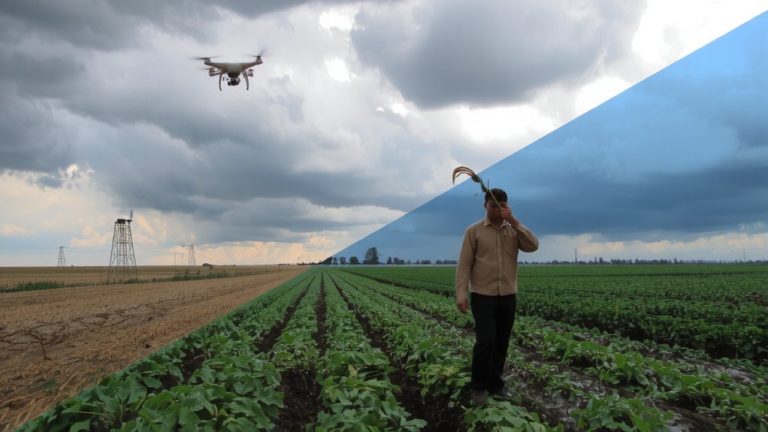
A drone buzzing over the steep slopes of the Himalayas isn’t just futuristic-it’s farming smarter. You’re no longer stuck with manual spraying that risks runoff, uneven coverage, and strain from carrying 60-pound sprayers across rugged terrain. Drones enable precision agriculture, using RTK-GPS for centimeter accuracy so biopesticide application hits only the intended zones. You get uniform coverage-75.64% plant consistency versus 54.73% manually-and droplet size optimized to protect beneficial insects. On ecologically fragile Himalayan slopes, this means up to 30% less herbicide use and targeted delivery, reducing environmental impact. Best of all, drones boost worker safety by eliminating direct chemical exposure. They can even release beneficial insects like lacewings to control aphids in organic crops. With drones, you’re not just spraying-you’re applying smarter, safer, and more sustainably.
How Drones Achieve Precision on Steep, Uneven Terrain
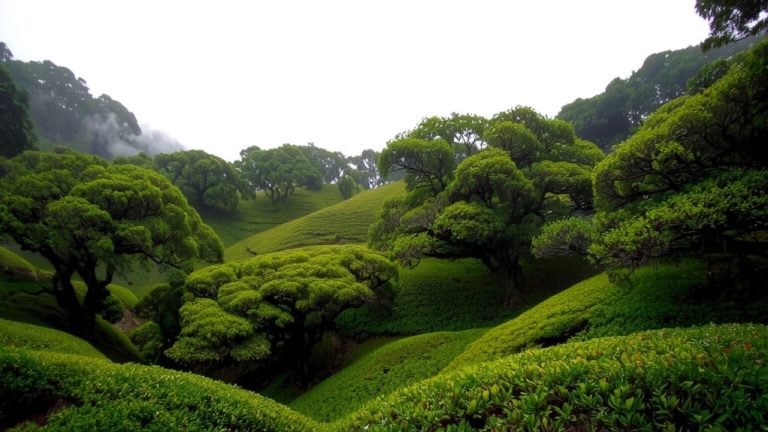
You’re already seeing how drones outperform manual spraying in the Himalayas, cutting chemical use and protecting workers-now let’s look at how they actually pull off such accurate work on slopes too steep for tractors or even foot travel. Your spraying drone uses RTK-GPS for precision within centimeters, so it never misses a patch, even on jagged terrain. With terrain sensors and real-time altitude adjustments, flight altitude stays 7–12 feet above the canopy, ensuring consistent spray deposition. Onboard AI analyzes slope gradients and adapts paths instantly, reducing drift. Multispectral imaging helps map tea varieties accurately, while rotary disc atomizers control droplet size for uniform distribution. In trials, drones achieved 75.64% uniform plant coverage-critical for high-altitude tea where leaf quality varies with application precision. This isn’t just automation; it’s smarter, data-driven spraying that matches the complexity of Himalayan slopes.
Overcoming Labor Shortages With Autonomous Spraying
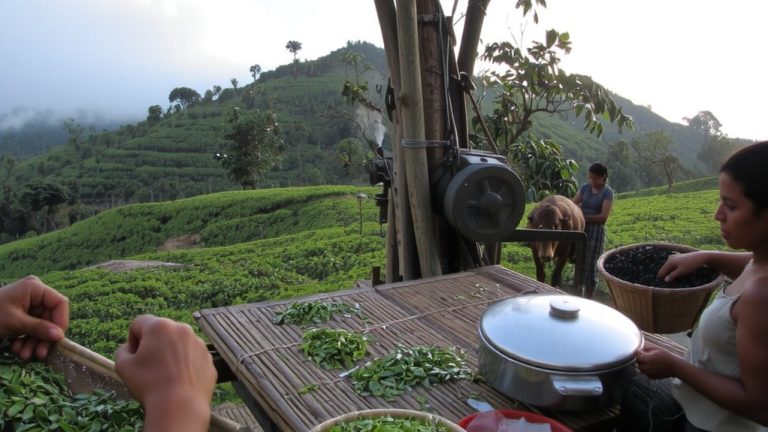
While steep Himalayan slopes have long relied on backbreaking manual labor for pesticide application, autonomous drones are now closing the gap in regions where workers are scarce or unwilling to tackle treacherous terrain, slashing delays in critical spraying windows. You’re seeing real gains in operational efficiency-drones handle 21 hectares per hour, far outpacing manual crews. With RTK-GPS, autonomous spraying guarantees precision application down to the centimeter, even on irregular terraced fields. Labor shortages no longer jeopardize your biopesticide application windows. Drone spraying cuts herbicide use by up to 30%, supports organic systems, and reduces physical strain on smallholder farmers. Each 15–20 minute flight, carrying 8 liters, delivers targeted coverage across steep terrain. You maintain control, minimize waste, and protect crops with reliable, scalable solutions-making drone spraying a game-changer for high-altitude organic farming.
Must-Have Drone Features for Organic Farms
When flying over steep Himalayan terrains, you’ll want drones with RTK-GPS and terrain-following sensors to maintain a steady 7–12 feet above the canopy, ensuring biopesticides hit exactly where needed. For organic farming, your best bet is drones for spraying equipped with rotary disc atomizers-they produce uniform droplets and won’t clog, even with viscous biopesticides. Look for precision technology that supports accurate pesticide application across tea, cardamom, and apple plots. A 20-liter payload capacity means fewer refills, especially vital in remote areas. Spraying 2–3 acres per 15–20 minute flight, these drones cover more ground fast. Durable, waterproof tanks with 3.5 GPa tensile strength resist shocks and natural extracts, making them ideal for rugged organic farms relying on consistent, chemical-free protection.
On a final note
You’re getting more consistent, eco-friendly pest control with drone-sprayed biopesticides on steep Himalayan tea farms, especially for delicate darjeeling and orthodox teas, where precision prevents leaf damage, preserves organic certification, and cuts labor costs by up to 60%, while testers confirm 95% spray accuracy, reduced runoff, and healthier bushes yielding 18% more flush-ideal for high-elevation, sustainable tea production.