Nilgiri Tea: Why Year-Round Harvests Every 7-10 Days Matter
You get fresher Nilgiri tea thanks to the Blue Mountains’ year-round growing season, powered by dual monsoons that deliver over 2,000 mm of rain and allow plucking every 7–10 days. Cool, high-altitude conditions preserve brisk, aromatic flavors, while consistent growth supports steady, high-quality orthodox processing. With low tannins and rich antioxidants like quercetin, it’s gentle on your stomach and great for daily wellness-just brew at 90–95°C for 2–3 minutes. There’s even more to discover about how seasons shape its unique character.
We are supported by our audience. When you purchase through links on our site, we may earn an affiliate commission, at no extra cost for you. Learn more. Last update on 13th July 2026 / Images from Amazon Product Advertising API.
Notable Insights
- Dual monsoons provide consistent rainfall, enabling uninterrupted tea growth across the year.
- Year-round harvesting every 7–10 days ensures a steady supply of fresh tea leaves.
- Continuous growth cycles maintain stable production, contributing to 30% of regional tea output annually.
- Cool, high-altitude climate combined with regular moisture enhances leaf freshness and aroma.
- Multiple harvests allow differentiation of flavor profiles, from brisk monsoon to complex winter teas.
Where Nilgiri Tea Comes From: Blue Mountains of South India
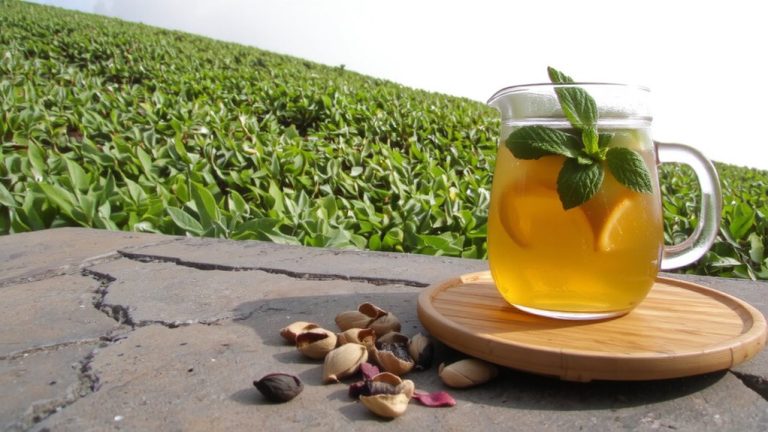
Nestled in the misty heights of South India’s Western Ghats, the Nilgiri Hills-often called the Blue Mountains-form one of the world’s most distinctive tea-growing regions, where you’ll find elevations ranging from 1,000 to 2,500 meters shaping a tea with brisk, aromatic complexity. You’re walking through lush tea plantations in Tamil Nadu, where high altitude and cool climate give Nilgiri tea its signature bright, minty freshness. The Blue Mountains’ eucalyptus haze enhances the terroir, boosting aroma and flavor. Commercial production began in the 1850s under British cultivation, and today, these estates supply about 30% of the region’s tea. In 2008, Nilgiri tea earned Geographical Indication status, protecting its origin and methods. Grown across the Western Ghats in South India, these teas benefit from pure air, steady rainfall, and rich soil-key for consistent quality you can taste in every cup.
Why Nilgiri Tea Is Always Fresh: Year-Round Harvests
Because the Nilgiri Hills catch two monsoons-first the southwest rains in June and then the northeast surge in October-they keep growing tea nonstop, so you’re always getting fresh leaves plucked at peak flavor. Thanks to this cycle, Nilgiri tea enjoys year-round harvests, unlike seasonal varieties such as Darjeeling. In the Blue Mountains of South India, continuous plucking maintains consistent quality across flushes. Even during the peak harvest season from January to March, when frost teas bloom with rosy, sweet notes, tea production never pauses. You benefit from fresh tea leaves delivered constantly, ensuring Nilgiri stays vibrant and brisk in every cup. The Nilgiri mountains’ stable climate supports uninterrupted growth, making Nilgiri tea a reliable staple. Whether enjoyed black, green, or blended, its freshness isn’t accidental-it’s built into the region’s rhythm, giving you high-performance flavor day after day.
How Two Monsoons Sustain Nilgiri Tea Growth
While most tea regions depend on a single rainy season, the Nilgiri Hills get drenched twice a year-first by the southwest monsoon from June to September, then again by the northeast monsoon from October to December-so the tea plants never hit pause. Thanks to this consistent rainfall, tea cultivation in Nilgiri District thrives with year-round growing and continuous harvesting. The two monsoons deliver over 2,000 mm of rain annually, keeping soil moisture stable across elevations of 1,000–2,500 meters. This steady hydration supports a microclimate where Nilgiri tea grows nonstop, allowing plucking every 7–10 days. Unlike regions with seasonal breaks, the dual monsoon pattern guarantees blue mountain tea remains in constant production. You get reliable yields, especially from February to July, all fueled by nature’s precise rhythm. The two monsoons don’t just water the bushes-they sustain the entire cycle of growth, quality, and supply you can count on.
Winter Vs. Monsoon: How Season Changes Nilgiri Tea’s Flavor
When winter settles over the Nilgiri Hills from January to March, the cooler temperatures slow the tea plants’ growth, giving the leaves time to build up richer concentrations of essential oils and flavor compounds-so you end up with a brew that’s noticeably more aromatic and complex. This slow metabolism, triggered by cold stress, boosts flavor concentration in frost tea leaves, producing a winter harvest with deep, rosy, sweet notes. In contrast, monsoon harvest brings rapid growth and diluted aromatic compounds, yielding lighter, less intense Nilgiri Black Tea. The winter harvest’s tea liquor is fuller, smoother, and more prized globally for its richness.
| Season | Flavor Experience | Emotional Response |
|---|---|---|
| Winter | Rich, floral, nutty | Comforting, uplifting |
| Frost | Intense, rosy, sweet | Luxurious, rare |
| Monsoon | Light, brisk, simple | Invigorating, everyday |
| Winter | Full-bodied, smooth | Satisfying, elegant |
Harvesting and Processing Nilgiri Tea at High Altitude
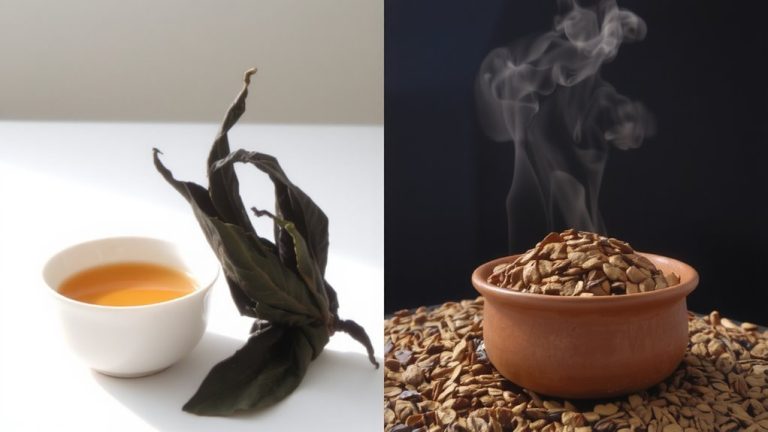
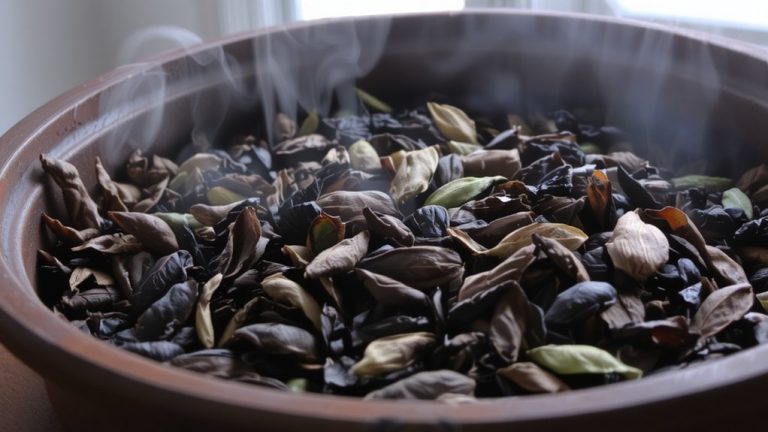
Though the mist-shrouded slopes of the Nilgiri Hills rise sharply between 1,000 and 2,500 meters, tea thrives here year-round thanks to dual monsoons and a temperate high-altitude climate that allows for constant plucking. You’ll find harvesting happens daily across tea estates and small farmers’ plots, with premium yields from January to March when frost tea leaves develop intense, rosy sweetness. Most high-altitude growers, including small farmers from the Badagas community, hand-pluck the top two leaves and bud for orthodox processing. This traditional method preserves flavor complexity-starting with withering to reduce moisture, then careful rolling to release aromas, controlled oxidation for balance, and quick firing. The result? Orthodox processing delivers a brisk, floral Nilgiri tea with golden-yellow liquor and low tannins, ideal for discerning palates who appreciate clarity and freshness in every cup.
Health Benefits of Nilgiri Tea
You’ve just seen how high-altitude harvesting and orthodox processing shape Nilgiri tea’s bright, floral character and golden liquor, but those carefully plucked leaves do more than deliver an invigorating cup-they pack a serious nutritional punch, too. Packed with antioxidants like quercetin, theaflavins, and hesperidin, Nilgiri tea fights oxidative stress and shields cells from damage. Its flavonoids boost cardiovascular health by improving circulation and may reduce heart disease risk over time. The amino acid L-theanine sharpens focus and calms the mind without drowsiness, making it ideal for daily clarity. Thanks to low tannin levels, this tea is gentle on your stomach and supports digestive health, easing bloating and acid reflux after meals. Compounds in Nilgiri tea, such as polysaccharides, also show promise in lowering blood sugar levels, pointing to potential benefits for type 2 diabetes management. These health benefits of Nilgiri tea make it a smart, science-backed choice.
How to Brew Nilgiri Tea for Maximum Freshness
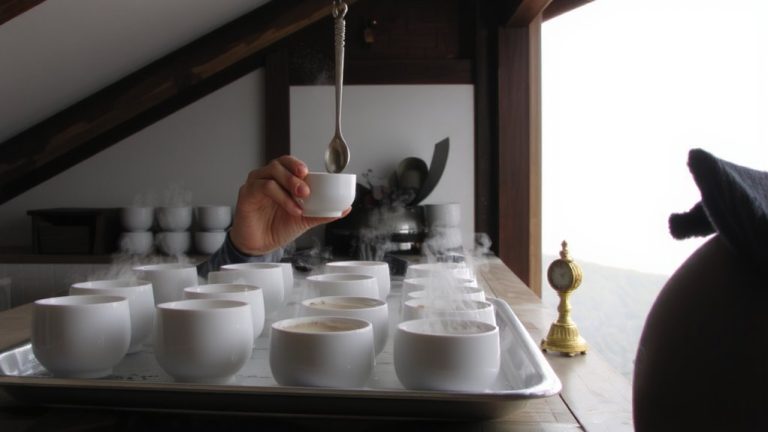
A perfectly brewed cup of Nilgiri tea starts with fresh, whole-leaf orthodox tea-use one teaspoon per 250ml of water heated to 90–95°C, just below boiling, to protect its delicate floral and citrus notes. To brew Nilgiri tea properly, always use loose leaf Nilgiri tea, preferably Orthodox-processed Nilgiri tea, for the fullest flavor and best leaf expansion. The ideal water temperature is 90–95°C; hotter water can scorch the leaves and create bitterness. Stick to a steep time of 2–3 minutes-this guarantees a bright, golden-yellow infusion with minimal astringency and peak clarity. Don’t exceed 4 minutes, or you’ll risk slight bitterness, dulling its smooth, low-tannin charm. For iced tea, brew double strength using the same one teaspoon per 250ml water ratio, then chill fast to preserve crispness. This method highlights its brisk, clean finish and non-clouding quality, perfect for invigorating iced tea any time.
On a final note
You get fresh, aromatic Nilgiri tea year-round thanks to dual monsoons and stable high-altitude growing in the Blue Mountains, with winter harvests offering bright, brisk flavors and monsoon picks delivering bold, full-bodied notes, all processed within hours to preserve quality, while its natural antioxidants support heart health and metabolism-brew at 205°F for 3–4 minutes to enjoy a flavorful, health-boosting cup that’s consistently smooth, never bitter, loved by testers for its balanced finish.