How Japanese Hojicha Is Roasted to Reduce Caffeine and Add Toasted Notes
You get roasted hojicha by heating mature bancha leaves, stems, and twigs at 160°C to 220°C for 5–7 minutes, triggering the Maillard reaction that creates nutty, caramel notes and a reddish-brown color. This high-heat process cuts caffeine to just ~7.7 mg per 250 ml and reduces bitter catechins by up to 60%, giving a smooth, mellow flavor perfect for sensitive stomachs or evening sipping-ideal if you love tea but want less caffeine and gentle taste. There’s more to discover about how tradition and chemistry shape every sip.
We are supported by our audience. When you purchase through links on our site, we may earn an affiliate commission, at no extra cost for you. Learn more. Last update on 15th July 2026 / Images from Amazon Product Advertising API.
Notable Insights
- Hojicha is roasted at 160°C to 220°C, reducing caffeine to ~7.7 mg per 250 ml through thermal breakdown.
- High-heat roasting degrades up to 60% of bitter catechins, yielding a smoother, less astringent flavor.
- The Maillard reaction between amino acids and sugars produces roasted, nutty aroma compounds like pyrazines.
- Roasting for 5–7 minutes develops toasted notes and a rich reddish-brown color in mature Bancha leaves.
- Traditional charcoal or modern rotary roasters apply even heat, with rapid cooling to preserve aromatic complexity.
What Makes Hojicha Unique Among Japanese Teas?
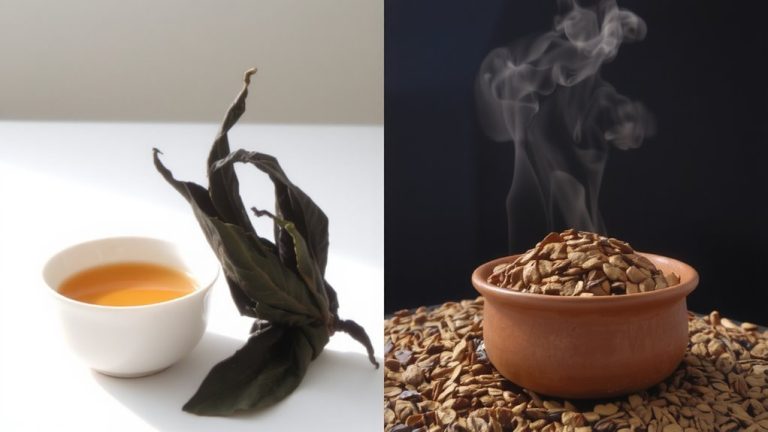
One of the most distinctive Japanese teas you’ll come across, hojicha stands out thanks to its high-temperature roasting process-typically between 160°C and 220°C-which not only gives it a rich reddish-brown color but also slashes its caffeine to just about 7.7 mg per 250 ml cup, making it a go-to if you’re sensitive to stimulants or enjoy tea in the evening. Unlike most Japanese green tea, hojicha is roasted at high temperatures, triggering the Maillard reaction for its signature toasty flavor and aroma. It’s often made from mature Bancha leaves, plus stem and twigs, which contribute to its low caffeine content and smooth, mellow taste. The roasting process of hojicha transforms both flavor and color, turning what would be a typical green tea into something uniquely comforting. Hojicha’s blend of accessibility, depth, and gentle profile makes it ideal for all-day sipping, especially for those avoiding high caffeine.
The Chemistry of Roasting: How Heat Transforms Tea
While you might think roasting is just about adding flavor, it’s actually a precise chemical transformation that redefines hojicha from leaf to cup. Roasting green tea leaves at 160°C–220°C triggers thermal breakdown, reducing caffeine to ~7.7 mg per 250 ml and degrading bitter catechins for a smoother taste. The Maillard reaction between amino acids and reducing sugars generates flavor compounds and aroma molecules like 2,3-diethyl-5-methylpyrazine, giving hojicha its warm, earthy scent. Melanoidins form during this process, adding color and antioxidant activity. These chemical changes don’t just alter taste-they redefine the tea’s profile.
| Process | Effect |
|---|---|
| Roasting | Lowers caffeine, breaks down catechins |
| Thermal breakdown | Releases aroma, creates flavor compounds |
| Maillard reaction | Builds toasty notes, rich color |
Maillard Reaction in Hojicha: Creating Toasted Flavor
You’ve seen how heat reshapes green tea at a molecular level, lowering caffeine and mellowing bitterness through thermal breakdown, but the real magic behind hojicha’s signature warmth kicks in when amino acids and reducing sugars meet intense heat. That’s when the Maillard reaction begins-triggered at 200–220°C-transforming the leaves with a rich reddish-brown color and deep roasted flavor. Unlike simple caramelization, this reaction pairs amino acids and reducing sugars to build complex compounds, including pyrazines, which deliver distinct roasted nuts and caramel-like notes. With longer roasting, you’ll taste more toasty notes and umami notes, adding depth without bitterness. The high heat is precise, not excessive, ensuring aromatic development while preserving tea integrity. Testers note the most balanced profile emerges after 5–7 minutes of roasting, when color deepens and aroma opens fully-sweet, nutty, and warm, perfect for slow sipping.
Catechin Breakdown and Hojicha’s Smooth Taste
Because heat transforms both flavor and chemistry during roasting, catechin levels in hojicha drop by up to 60% compared to raw green teas, and that reduction is exactly why this tea tastes so smooth. As a roasted green tea, hojicha’s roasting method breaks down bitter catechins, especially when using lower-grade leaves exposed to high heat (160–220°C). With fewer catechins, the roasted leaves deliver a mellow flavor free from harsh astringency, making it ideal for sensitive palates and even children. Though hojicha has fewer antioxidants than matcha (which contains up to 3.2g catechins per 100g), it still offers benefits from remaining polyphenols and Maillard reaction byproducts formed between amino acids and reducing sugars. That same Maillard reaction enhances depth without bitterness, contributing to hojicha’s smooth taste you can enjoy any time of day.
How Roasting Builds Hojicha’s Smoky, Nutty Aroma
When you smell a cup of hojicha, that rich, nutty warmth isn’t just from the leaves-it’s chemistry in action. As hojicha is roasted between 160°C and 220°C, amino acids and reducing sugars trigger the Maillard reaction, building its deep toasted aroma. This process forms pyrazines-volatile compounds that give hojicha its signature roasted, nutty character. At higher temperatures, around 200–220°C, chlorophyll breaks down and furans develop, adding sweet, earthy layers to the fragrance. Traditional charcoal roasting enhances the smoky aroma, with direct flame and wood type infusing subtle complexity. Roasting time and rapid cooling are tightly controlled to preserve pyrazines and other delicate volatiles. Together, these steps guarantee every batch delivers hojicha’s comforting, roasted scent-balanced, aromatic, and deeply inviting without bitterness. You’re not just drinking tea-you’re experiencing precise, science-driven craftsmanship.
Traditional vs Modern Roasting Techniques
The chemistry behind hojicha’s aroma sets the stage for how roasting methods shape its final character. When you choose traditional roasting, like charcoal roasting in Kyoto, you get a deeply nuanced flavor of Hojicha-smoky, complex, and aromatic-thanks to hands-on temperature control and wood-fired iron pots. This method, though often roasted in small batches, demands skill to manage roasting time and prevent burning. Modern roasting, using rotary roasters at 160–220°C, offers consistency and efficiency, with even heat distribution for large-scale roasted Japanese green tea. While modern roasting lacks some smokiness, it guarantees precise temperature control and shorter roasting time. Many producers now blend both techniques, balancing authentic depth with scalability. You’ll notice traditional roasting gives richer complexity, while modern roasting delivers reliable, mellow notes-ideal depending on your taste and use.
Caffeine Reduction: Why Hojicha Is Ideal for Evenings
Sipping hojicha in the evening brings a quiet comfort, thanks to its remarkably low caffeine content-just 7.7 mg per 250 ml cup, less than a quarter of what you’d get from matcha and about a fifth of a typical sencha. Hojicha achieves this lower caffeine level through a unique roasting process where tea leaves undergo high heat, causing some caffeine to sublimate at 178°C. Roasted Hojicha leaves, often mature summer or autumn harvests, start with less caffeine than the young leaves used in Sencha and Matcha. Many blends also include stems and twigs, which naturally contribute to caffeine reduction. This makes hojicha an ideal evening tea for those sensitive to caffeine, including children and the elderly. While not caffeine-free, its gentle profile offers a soothing, worry-free ritual-rich in flavor, light on stimulation.
On a final note
You get a smoother, lower-caffeine tea when green tea leaves are roasted at 180–200°C, like in hojicha, reducing catechins by up to 30% and limiting bitterness, while the Maillard reaction builds toasty, nutty notes, ideal for evening sipping; traditional clay roasters give depth, but modern steel drums guarantee consistency, and testers note less jitteriness, making hojicha a flavorful, practical choice for anyone exploring roasted Japanese teas with milder stimulation.