The Influence of Korean Lunar Calendar on Spring Green Tea Harvest Timing
You’re harvesting Ujeon just before Gokwoo-around April 20-guided by the Korean lunar calendar, when the first tender buds emerge after winter dormancy. These young buds, rich in amino acids and theanine, deliver smooth, umami flavor. Cooler northern temps delay harvest, making timing essential. Pan-fired at 350°C, leaves preserve freshness and nutrients. The 2016 season’s ideal rain and warmth created a high-yield, nutrient-dense crop-discover how terroir and tradition shape each cup’s character.
We are supported by our audience. When you purchase through links on our site, we may earn an affiliate commission, at no extra cost for you. Learn more. Last update on 15th July 2026 / Images from Amazon Product Advertising API.
Notable Insights
- The Korean lunar calendar determines spring tea harvests, with Ujeon picked just before Gokwoo around April 20.
- Ujeon, harvested pre-Gokwoo, uses only tender buds that emerge after winter dormancy.
- Sejak is harvested between Gokwoo and Ipha, featuring buds and young leaves.
- Lunar-based timing aligns with climate patterns, ensuring optimal bud development despite Korea’s cold delays.
- Ideal 2016 harvest conditions followed lunar schedule, yielding high-quality, nutrient-rich Ujeon and Sejak.
The Korean Lunar Calendar and the Start of Tea Harvest
While the Korean lunar calendar guides the timing of the spring tea harvest, you’ll find the real action starts just before Gokwoo-around April 20-when the first tender buds emerge for Ujeon, the season’s most prized green tea. Tea farmers closely watch this harvest timing, knowing Ujeon’s value comes from its limited first flush yield and winter-rested tea plants. Though classified as pre-Gokwoo, Korea’s northern latitude often delays budding, pushing actual harvests slightly later, especially in cooler regions. After Gokwoo and before Ipha (May 5), tea leaves grow slightly larger, marking the Sejak harvest-still premium, with soft flavor and mild astringency. The Korean lunar calendar doesn’t just schedule the tea harvest-it defines quality. Each window, from Ujeon to Sejak, captures distinct chemical profiles, affecting antioxidants, flavor, and aroma in your cup.
Why Ujeon Is the Pinnacle of Korean Spring Green Tea
What makes Ujeon the most sought-after green tea in Korea? Ujeon is the first flush of spring, harvested just before Gokwoo-around April 20 on the Korean lunar calendar-when only the youngest tea buds are picked. These tender buds, nourished after six months of dormancy, deliver a high concentration of amino acids and umami, giving you a smooth, refined cup. Because Korea’s cooler climate delays leaf maturity, the ideal harvest often extends slightly past the calendar date, especially in northern regions. Each batch is hand-processed in small quantities, traditionally pan-fired in iron cauldrons, preserving its freshness and high quality. This limited, meticulous production makes Ujeon the pinnacle of Korean green tea-rare, seasonal, and deeply flavorful, with grassy, sweet notes enhanced by perfect spring weather, like in the standout 2016 harvest.
Sejak vs. Ujeon: Flavor, Leaf Shape, and Harvest Window
You already know Ujeon sets the gold standard for Korean spring green tea, with its exclusive harvest of tender buds just before Gokwoo delivering a smooth, umami-rich cup. But Sejak, picked during the later harvest season between Gokwoo and Ipha, offers a bolder, more balanced flavor. While Ujeon shines with creamy, grassy notes, Sejak brings light astringency and buttery sweetness from skilled tea harvesting and pan-firing. Its leaf shape includes small buds and adjacent leaves, slightly larger than Ujeon’s bud-only, dark green picks.
| Feature | Ujeon | Sejak |
|---|---|---|
| Harvest Window | Pre-Gokwoo (~Apr 20) | Gokwoo to Ipha |
| Leaf Shape | Tender buds only | Buds + young leaves |
| Flavor | Delicate, minty | Buttery, roasted |
| Spring Tea | Most nutrient-rich | Fuller, balanced |
Sejak’s 2016 season showed how ideal warmth and rain boost flavor, proving its worth in any Korean green tea lineup.
How Cold Weather and Terrain Delay Korean Tea Picks
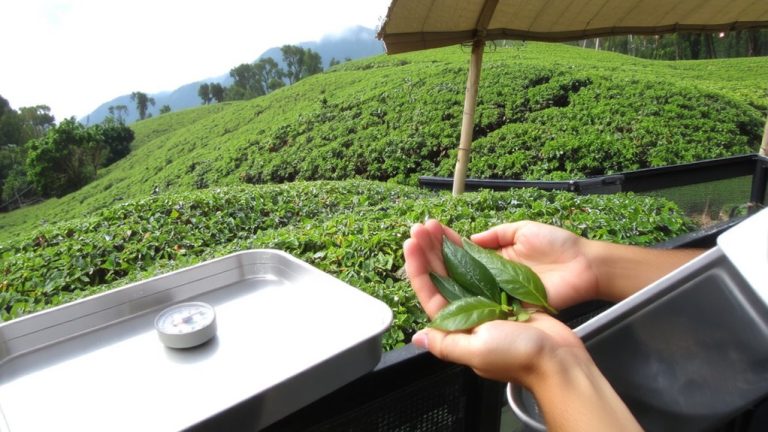
Even with spring’s arrival, Korea’s rugged terrain and chilly northern latitude keep tea fields locked in a slower thaw, meaning you won’t see the first ujeon buds plucked before April 20-or often not until early May. You’re facing real delays when cold waves sweep through, like the March snowfall of 2015 that damaged tender tea plants across southern regions. These conditions push back harvest time, especially in elevated tea mountains like Jirisan, where freezing temps linger. While Jeju Island enjoys milder weather, mainland tea growing regions still lag behind warmer zones like Kagoshima. Pruned to about 1 meter for hand-plucking, tea plants stay exposed to frost, slowing bud growth. So, though you’re keen for that first spring green tea, geography and climate mean patience is key-true ujeon waits until the warmth truly sets in.
How Traditional Processing Preserves Spring Tea Delicacy
Though the harvest timing sets the stage, it’s what happens in the first few hours after picking that truly defines Korean spring tea’s delicate character. Once hand-harvested, the tender buds and leaves go straight to traditional processing to preserve freshness. You’ll see artisans use pan-firing in gas-heated cauldrons at 350°C, a quick step that stops oxidation and protects key amino acids like theanine. This careful handling keeps the grassy, umami-rich flavor in green tea intact. For 2–4 days, repeated rolling and heating shape the tea leaves without scorching them, while the final mat-naegi stage draws out a lasting delicate aroma. Since most Korean green teas from places like Jirisan stay minimally industrialized, processing stays gentle, avoiding damage. After cooling, they’re sealed in 30–50 gram moisture-proof foil bags to lock in taste.
How 2016’s Weather Created Korea’s Ideal Ujeon Harvest
Because the weather in early 2016 delivered steady rains, mild temperatures, and just the right humidity, you got one of the finest ujeon harvests Korea’s tea regions had seen in years. The ideal weather restored green tea production after 2015’s damaging frost, giving spring teas renewed balance and depth. Around Gokwoo-April 20-you began hand-plucking tender tea leaves at peak softness, capturing their grassy sweetness and rich fragrance. In 2016, ujeon jaksulcha showed fuller flavor and smoother finish, thanks to consistent moisture and no extreme shifts. This harvest set a benchmark for quality in Korea’s tea industry.
| Feature | 2016 Ujeon Harvest |
|---|---|
| Flavor Profile | Grassy, sweet, complex |
| Harvest Start | April 20 (Gokwoo) |
| Plucking Method | Hand-plucked |
| Climate Impact | Ideal weather, high yield |
On a final note
You’ll want to pick your spring green tea around Ujeon, when tender leaves peak in flavor and antioxidants, like catechins, hit their highest levels. Ujeon teas offer sweet, floral notes with minimal bitterness, while Sejak, harvested days later, brings fuller body. Korean mountain farms, despite late harvests due to cold, produce more complex teas. Traditional steaming and roasting lock in freshness, color, and health benefits-ideal for daily sipping with measurable polyphenol intake.