Why Kenyan Tea Farmers Use Clonal Propagation for Disease-Resistant Bushes
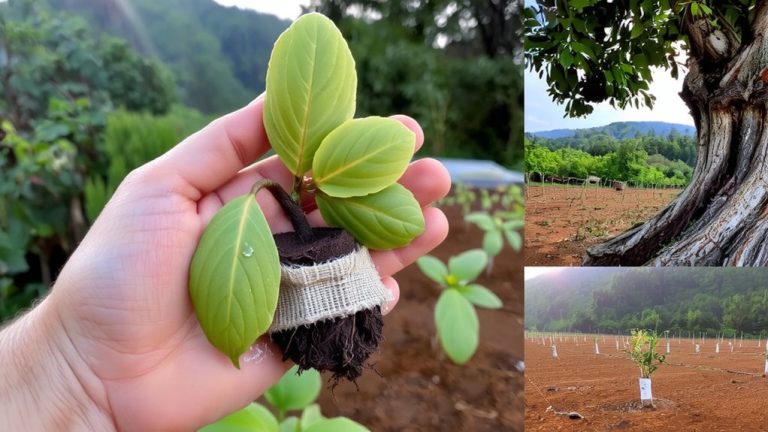
You use clonal propagation because it gives you disease-resistant tea bushes like TRF301 and TRF302, bred over 25 years for resilience against blister blight and drought, with 80% survival across Kenya’s zones. These clones yield more, mature in nine months, and maintain quality through pre-maceration blending. Purple tea clones even offer 16 anthocyanins, fetching $6 per ounce. Their genetic uniformity cuts crop failure, boosts climate resilience, and guarantees consistent flavor, health benefits, and market value-discover how each clone is precisely matched to your farm’s conditions.
We are supported by our audience. When you purchase through links on our site, we may earn an affiliate commission, at no extra cost for you. Learn more. Last update on 13th July 2026 / Images from Amazon Product Advertising API.
Notable Insights
- Clonal propagation ensures genetic uniformity, providing consistent disease resistance across tea bushes.
- TRFK clones like TRF301 and TRF302 are bred for resilience against blister blight, a major yield-limiting disease.
- Genetic markers from 70 million genome reads help TRFK develop clones with enhanced disease resistance.
- Clonal tea plants offer predictable performance, reducing crop failure risks from pests and environmental stress.
- High survival rates and rapid maturity of clones improve farm productivity and sustainable tea production.
Why Clonal Tea Outperforms Seed-Grown Plants
While seed-grown tea plants may seem like the traditional choice, they can’t match the reliability and performance of clonal varieties-especially when you’re aiming for strong yields and resilient crops. With clonal tea, you get genetically identical copies of high-yielding parent bushes, so traits like disease resistance and drought tolerance are predictable and consistent. Unlike seed-grown plants, which vary wildly in performance, tea clones from the Tea Research Foundation of Kenya (TRFK) are selected through rigorous field trials to thrive under climate change pressures. Developed via vegetative propagation, clones like TRF301 reach field size in nine months-three times faster than seedlings. TRFK’s 50 elite clones boast survival rates over 80%, thanks to strong disease resistance and adaptation across Kenya’s diverse tea zones. When you choose clonal tea, you’re planting certainty, consistency, and future-proofed productivity in every row.
Boost Yield With High-Performing Tea Clones
You’re already seeing how clonal tea delivers stronger, more reliable plants compared to seed-grown varieties, and now it’s time to put that vigor to work in boosting your yields. With TRFK-developed clones like TRF301 and TRF302, you’re planting bushes bred for over 25 years to deliver high yields and resist pests’ infestation while staying drought tolerant. The Tea Research Foundation has released about 50 clonal teas tailored to Kenya’s diverse zones, ensuring genotype-environment fit. Clones like 12/2 and 6/8 achieve 80% survival and shorten maturity to nine months-fast-tracking tea production. These clonal teas don’t just grow faster; they produce high quality leaves rich in secondary metabolites, boosting both flavor and health benefits. When you choose TRFK clones, you’re investing in consistency, volume, and long-term farm success.
Develop Disease-Resistant Clones With TRFK
Because disease pressure can wipe out entire tea crops, TRFK has made it a priority to develop clones that stand up to threats like blister blight, a leading cause of yield loss in Kenya. You can rely on the Tea Research Foundation of Kenya (TRFK), formerly Tea Research Institute (TRI), to deliver disease-resistant clones through rigorous science. They use genetic markers-derived from 70 million tea genome reads-to screen for resistance early. TRFK conducts genotype-environment interaction trials across diverse sites, ensuring clones like TRF301 and TRF302 resist pests and diseases while thriving in local conditions. These clones took over 25 years to perfect, offering high anthocyanin levels and stress resilience. Through clonal propagation, TRFK supports sustainable tea cultivation, reducing crop failure risks. Farmers adopting clonal mixtures see more stable yields, even under pressure. You’re not just growing tea-you’re building a stronger, smarter crop.
Blend Tea Clones Before Processing for Uniform Quality
When you blend clonal tea leaves before maceration, the resulting black tea delivers a consistent, predictable quality that mirrors the proportions of each clone in the mix, guaranteeing uniformity across batches. Blending clones like 12/2 with faster-fermenting types before maceration prevents uneven tea quality, as mixing after processing leads to inconsistency. You’ll find no dominant negative effects-even lower-performing clones don’t degrade the final black tea. For Kenyan Tea farmers, planting clone mixtures buffers against disease and climate risks, making separate harvesting impractical. Pre-maceration blending becomes essential for efficient tea processing. This strategy stabilizes tea quality across seasons and farms, supporting market reliability. Whether you’re managing smallholder plots or larger estates, blending clonal tea leaves early guarantees your black tea meets strict standards. It’s a proven step in modern tea processing, backed by field results and flavor consistency.
Grow Drought-Resistant Clones for Climate Resilience
As climate conditions shift across Kenya’s tea-growing regions, staying ahead means planting smart-and that starts with choosing drought-resistant clones like TRFK 301 and TRFK 302, bred over 25 years to thrive despite longer dry spells and rising temperatures. You’re facing a new reality: the ideal climate for Kenya tea is changing, with well distributed rainfall ranging from 1,000–2,000 mm now less reliable. Climate data from KALRO-TRI shows rainfall declining 4.82 mm yearly, pushing tea growers to adopt clonal propagation for climate resilience. Drought stress causes 14–20% yield loss and high plant mortality, but drought-resistant clones cut those risks. The Tea Research Institute (TRI) and TRFK developed nearly 50 clones, tested in genotype-environment trials, to guarantee stability. By planting mixed drought-resistant clones, you protect against total crop failure and maintain steady yields, even as conditions grow unpredictable.
Create Premium Value With Purple Tea Clones
You’ve already seen how drought-resistant clones like TRFK 301 and TRFK 302 safeguard your crop under shifting rains and rising heat, but now you can go a step further-turning climate-smart farming into higher profits with purple tea clones. Developed by the Tea Research Foundation of Kenya, TRF301 and TRF302 are disease-resistant varieties with high anthocyanins-16 potent antioxidants that give purple tea its bold color and health appeal. Thanks to clonal propagation, these traits stay consistent across farms. Anthocyanins act as “radical scavengers,” boosting purple tea’s value in wellness markets. Unlike bulk black tea, purple tea fetches a premium price of $6 per ounce. The clones thrive in Kenyan high-altitudes, ensuring strong yields and quality. By growing purple tea, you’re not just adapting to climate change-you’re tapping into premium value, better income, and global demand for functional beverages.
How TRFK Builds a New Tea Clone in 25 Years
It takes a quarter century, but every new tea clone from TRFK starts with a deliberate choice: picking parent plants that show real staying power under drought, resist pests, and still deliver high yields. You begin with the Tea Research Institute (TRI) identifying elite genotypes for clonal propagation, then spend 4–6 years on nursery propagation and vegetative multiplication to lock in genetic stability. Each clone’s drought tolerance and disease resistance are tested across Kenya’s diverse zones through multi-location field trials, revealing how genotype-environment interactions shape performance. TRI uses 70 million genetic reads to pinpoint resistance markers, ensuring only the toughest survive. You see results in uniform, high-performing bushes that maintain quality, yield, and vigor. After decades of validation, these clones are released to farmers, offering reliable returns, enhanced sustainability, and superior crop consistency through precise, science-backed clonal propagation.
On a final note
You boost yield and resilience by planting clonal tea, like TRFK 306 or purple varieties, which deliver uniform, disease-resistant bushes, 20–30% more leaf than seed-grown plants, and better drought tolerance. Blending clones before processing guarantees consistent quality, while purple tea offers anthocyanins, 2.5x the antioxidants of green tea. Testers report deeper flavor and reliable harvests, even in dry seasons. With TRFK’s 25-year breeding cycle, you gain elite, field-proven cultivars built for profit, health, and climate demands.