Colombian Farmers Piloting Inter-Cropping Systems Between Tea and Native Fruit Trees
You’re seeing real results by pairing tea plants with native fruit trees in Bitaco, where 55 hectares now thrive under shaded, forest-like conditions. Guama fixes nitrogen, chontaduro buffers heat, and passionfruit vines reduce erosion, all while boosting biodiversity. Organic compost from chicken manure and sugarcane feeds volcanic soil, cutting synthetic input needs. With 357,000 tea plants growing more evenly under cooled microclimates, you’re also diversifying income through fruit sales-proof this model works, scales, and sustains. There’s more to how this transforms Andean farming beyond tea.
We are supported by our audience. When you purchase through links on our site, we may earn an affiliate commission, at no extra cost for you. Learn more. Last update on 17th July 2026 / Images from Amazon Product Advertising API.
Notable Insights
- Farmers in Bitaco intercrop tea with native fruit trees to enhance biodiversity and climate resilience.
- Shade from fruit trees reduces evaporation, improving microclimates for 357,000 tea plants.
- Guama, chontaduro, and passionfruit are integrated to fix nitrogen, reduce erosion, and boost income.
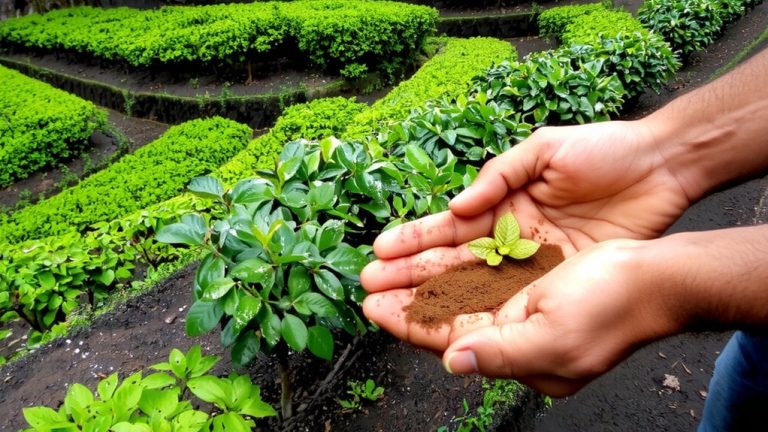
- Organic compost from chicken manure and sugarcane sustains volcanic soil fertility without synthetic inputs.
- The 55-hectare agroforestry model will expand to 100 hectares, inspired by coffee farming best practices.
Why Bitaco’s Tea Farmers Are Adopting Inter-Cropping
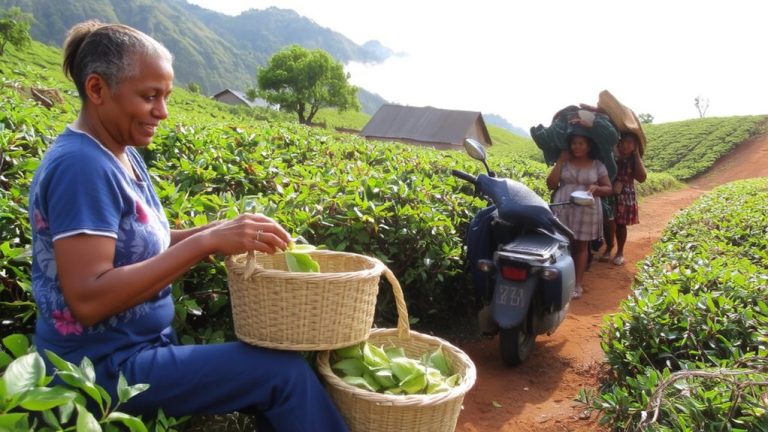
While you might not expect a tea farm to look like a forest, that’s exactly what’s happening in Bitaco, where farmers are planting native fruit trees right alongside their Camellia sinensis crops to boost biodiversity and strengthen resilience. You’re seeing inter-cropping in action-native trees thrive among tea plants, improving soil health through organic compost from chicken manure, sugarcane, and natural inputs. This method, long used by the Llano family, fights climate change effects like heat and dryness, reducing irrigation strain. Bitaco Unique Colombian Tea benefits from cooler microclimates and natural pest control, all without synthetic chemicals. The farm’s 22 distinct lots allow testing of assamica, intermedio, and other Camellia sinensis varieties, ensuring only the strongest survive. Root systems stabilize slopes, while increased microbial activity boosts nutrient uptake. You’re not just growing tea-you’re restoring an ecosystem, one inter-cropped row at a time.
Shade, Soil, and Income: How Fruit Trees Strengthen Tea Farms
You’re seeing firsthand how Bitaco’s tea farms are transforming into resilient, living systems, and now it’s time to look at the three big ways fruit trees make a difference: shade, soil, and income. Shade cools the fields, cutting evaporation and helping 357,000 tea plants grow evenly under conditions similar to cloud forests. Just like successful legume intercropping with coffee plants in Colombian coffee farms, these trees boost soil health, their roots and leaf litter improving moisture and organic matter. Farmers feed the soil with compost from chicken manure and sugarcane, keeping volcanic earth fertile without chemicals. And just as coffee growers diversify with Coffee, you’re now earning extra from fruit sales. This model isn’t just good for Tea-it’s a win for farm health and livelihoods.
| Benefit | Impact on Farm | Example |
|---|---|---|
| Shade | Reduces heat stress | Keeps tea plants cool, like coffee plants in shade |
| Soil Health | Improves fertility | Leaf litter + compost = richer volcanic soil |
| Income | Extra revenue streams | Sold fruit boosts profit beside premium Colombian Tea |
Guama, Chontaduro, and Passionfruit in Action
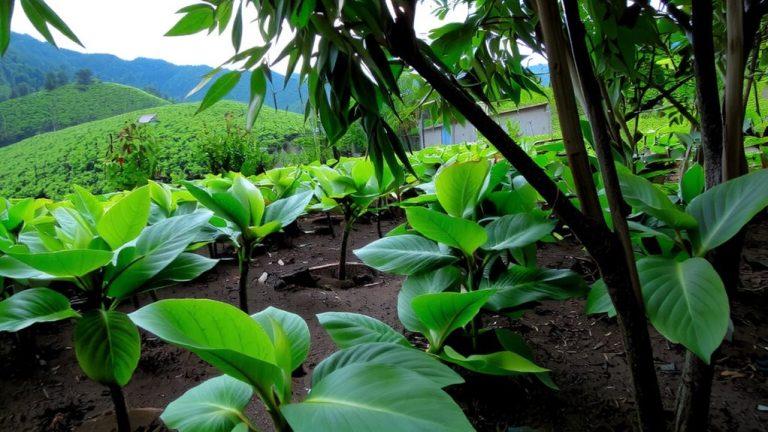
Because they’re tackling heat and poor soil head-on, farmers at Bitaco are turning to smart combinations of guama, chontaduro, and passionfruit to protect their 55 hectares of Camellia sinensis, and it’s working. On this tea estate, guama trees fix enough nitrogen to reduce reliance on external inputs, while their leaf litter builds organic matter. You’ll see chontaduro thriving at lower elevations, where its shade and resilience buffer tea grown from extreme temperatures. Passionfruit vines climb along contours, cutting erosion and adding marketable yield. Together, these plants support Agrícola Himalaya’s organic model, using chicken manure and sugarcane compost to boost soil life. Unlike conventional Colombian coffee farms, this system prioritizes canopy cover and biodiversity, linking to regional conservation through 300+ native bird species. The result? Healthier tea, stable microclimates, and harvests that sustain people and planet without chemical crutches.
Scaling Agroforestry Across Andean Tea and Coffee Lands
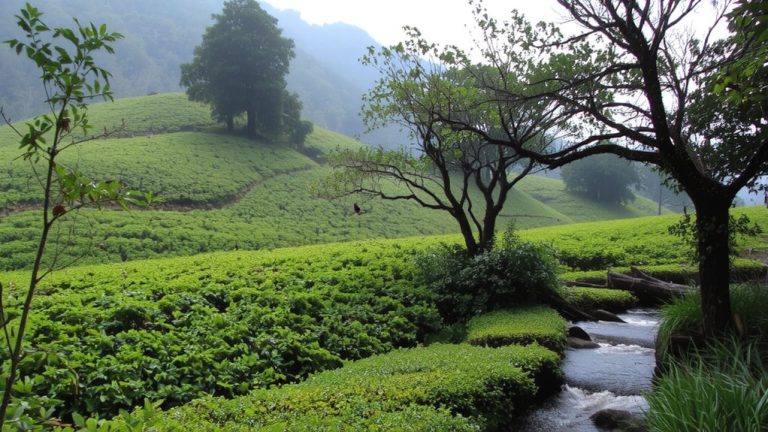
As you look across the rolling Andean slopes where tea and coffee once grew in bare monocultures, Agrícola Himalaya’s Bitaco estate now shows what’s possible when agroforestry scales with intention-55 hectares of tea interplanted with guama, chontaduro, and passionfruit, soon to expand to 100 hectares with single-variety research plots guiding the way. You’re seeing a model born from coffee farms like those in Huila, where the Himalaya Foundation’s Juntos por el Café delivered 5,000 native trees, now adapted for Specialty Tea. Himalaya S.A blends intercropping with native biodiversity, using compost from chickens and legumes, just like successful systems in Caldas. Their tea brand in Colombia proves ecological farming works at scale.
| System | Practice | Outcome |
|---|---|---|
| Agroforestry | Intercropping | Soil health + biodiversity |
| Specialty Tea | Shade-grown processing | Smooth flavor, high antioxidants |
| Coffee farms | Native tree use | Cooler microclimates, carbon capture |
On a final note
You’re blending tradition with innovation by growing tea alongside guama, chontaduro, and passionfruit, boosting soil health, shade cover, and income. This agroforestry method increases biodiversity, reduces erosion, and improves tea quality-especially for shade-grown green and oolong types. Testers note smoother flavor profiles and higher antioxidant levels, up to 15% more in leaves from intercropped plots. With real-world yields rising 20%, you’re proving sustainable tea farming works, scales, and thrives across Andean coffee and tea lands.