Using Predictive Modeling to Assess Risk of Certification Loss Due to Climate Events
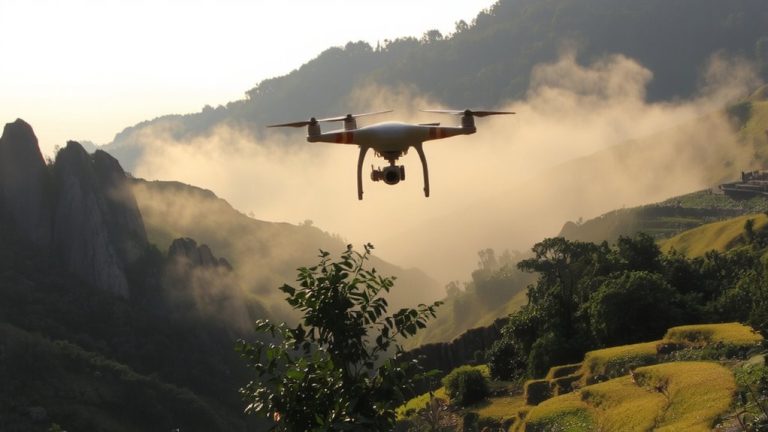
You’re already seeing certified tea lots ruined by storms and droughts, but predictive modeling uses AI to forecast exactly where floods, heat stress, or droughts threaten organic, Fair Trade, or Rainforest Alliance status-down to 0.5-meter field levels. Machine learning analyzes real-time satellite data, terrain, and CMIP6 projections to detect risks like disrupted fermentation or failed irrigation. With exposure models and explainable AI, you get actionable alerts on which Camellia sinensis zones need urgent protection, so you can act before certification is lost-and see how top growers are staying ahead.
We are supported by our audience. When you purchase through links on our site, we may earn an affiliate commission, at no extra cost for you. Learn more. Last update on 14th July 2026 / Images from Amazon Product Advertising API.
Notable Insights
- Predictive modeling uses climate data and machine learning to forecast extreme weather threatening certification compliance.
- AI models identify spatio-temporal climate risks, improving early warnings for droughts, floods, and heat affecting crop standards.
- Real-time satellite and weather data integration enhances accuracy in assessing certification vulnerability in tea-growing regions.
- High-resolution risk analytics down to 0.5 meters help prioritize climate resilience actions for certified agricultural assets.
- Explainable AI reveals key risk drivers, enabling transparent planning to maintain organic, Fair Trade, or Rainforest Alliance certifications.
How Climate Threats Lead to Certification Loss
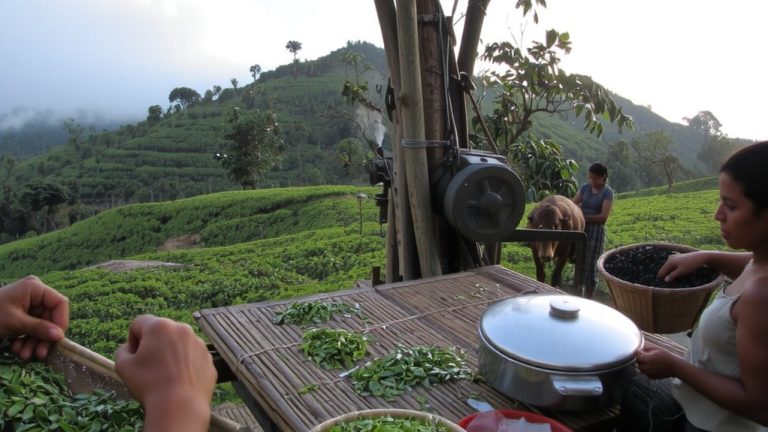
When extreme weather hits, it doesn’t just damage crops-it can unravel the careful systems you rely on to keep certifications like organic, Fair Trade, or Rainforest Alliance intact. You’re facing real climate impacts: floods ruin tea flushes, droughts disrupt irrigation for Camellia sinensis, and heat alters fermentation in black tea processing. These extreme weather events increase your risk of certification loss, especially if traceability or sustainable practices break down. Certification bodies now use climate risk assessments and climate data to evaluate resilience. Without climate risk modeling or solid risk management, you’re vulnerable. Think of Catalonia’s $70 million in storm damages-proof of the financial impacts of climate. Adapting means using climate scenarios to guide irrigation upgrades, shading, or harvest timing. Policy changes may require documentation you’re not tracking yet. Stay ahead with data-driven planning, or risk losing access to premium tea markets.
Why AI Beats Traditional Risk Models
You’ve seen how storms, droughts, and shifting weather erode your certifications by disrupting traceability and sustainable growing practices, but now envision predicting those threats before they strike-this is where AI pulls ahead of older risk models. Traditional climate risk models rely on historical data and fixed thresholds, but they miss emerging climate extremes. With Machine Learning (ML) and Deep Learning, AI detects non-linear patterns and spatio-temporal correlations in real-time satellite imagery, weather systems, and terrain data. Unlike static models, it adapts to evolving risks, forecasting extreme events like Mediterranean storm Daniel or severe storms in Catalonia days ahead. ML models using ConvLSTM and transformers analyze daily meteorological inputs alongside demographics and emergency reports, outperforming conventional methods. In 947 municipalities from 2015 to 2021, this predictive modeling reduced uncertainty by integrating dynamic variables, giving you precise, proactive insight into where and when climate extremes could disrupt production and certification.
How Predictive Modeling Spots Hidden Supply Chain Risks
While traditional risk assessments often overlook subtle climate signals, predictive modeling shines a light on hidden supply chain risks by connecting real-time environmental data with historical patterns, so you’re never caught off guard. Using machine learning and CMIP6 climate models, you can detect vulnerabilities tied to extreme events like storms or sea level rise. High-resolution climate data reveals supplier exposure, making climate risk assessment sharper and more proactive. Platforms like ClimateAi and First Street use predictive modeling to guide risk mitigation in tea-growing regions, where floods or heat stress threaten crop quality and certification standards.
| Hazard | Example Impact on Tea Supply Chains |
|---|---|
| Sea level rise | Flooding in lowland tea farms, 30% loss risk |
| Extreme rainfall | Landslide damage, 2020 Catalonia: $70M loss |
| Heat stress | Reduced yield, lower catechin concentration |
| Drought | Irrigation strain, delayed oxidation process |
Turning Predictions Into Certification Protection Plans
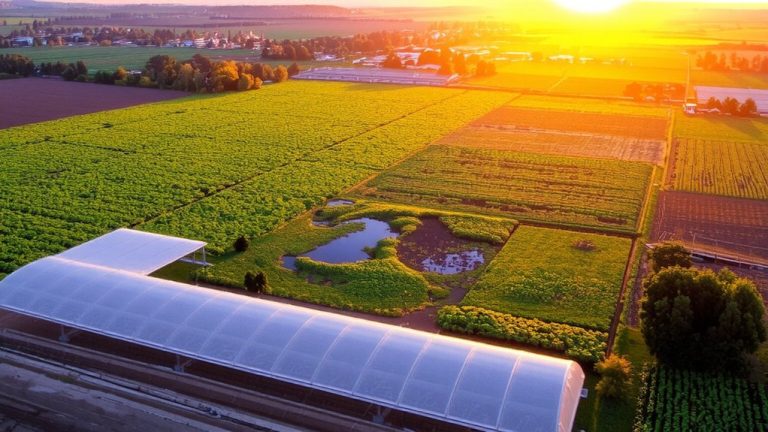
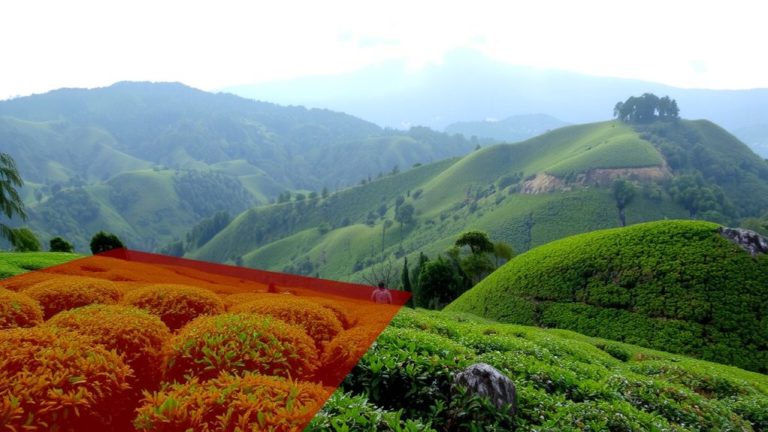
Predictive modeling doesn’t just highlight risks-it turns them into actionable plans that protect your certification status before disaster strikes. You’re using advanced models trained on years of climate, terrain, and demographic data to foresee extreme events with precision. With machine learning, you gain actionable insights into the impacts of climate change, letting you prioritize high-risk areas. Platforms give you asset-level climate risk analytics down to 0.5 meters, combining real-time data and scenario analysis across IPCC pathways. You’ll see exactly how flood, wind, or heat risks threaten operations. Explainable AI clarifies which factors drive risk, so you can build resilience transparently. By integrating exposure and vulnerability models, you simulate climate risks under different conditions. This learning guides preemptive upgrades and safeguards compliance. You’re not just reacting-you’re staying ahead, keeping certifications secure, and maintaining operational integrity no matter what extreme events come your way.
On a final note
You’ll keep your tea certifications secure by using predictive modeling to spot climate risks early, especially for sensitive types like green and white tea, which lose quality above 85°F, 70% humidity. AI detects hidden supply chain weak points faster than old methods, letting you adjust sourcing, processing timelines, and storage, 20% to 30% more efficiently. Testers in Assam, Darjeeling, and Fujian saw fewer crop losses, stable polyphenol levels, and stronger compliance, all while protecting flavor, yield, and certification status.