The Influence of Altitude on Flavor Clarity in Taiwanese Ali Shan Oolong
You taste Ali Shan oolong’s crisp floral notes and creamy sweetness because it’s grown above 1,000 meters, where cool 15–20°C temps slow leaf growth, boosting theanine by up to 8.4% and preserving delicate aromas, while mist diffuses sunlight, enhancing linalool and benzyl alcohol, and volcanic soil rich in potassium improves oil retention, all combining to sharpen flavor clarity-higher elevation isn’t the only factor, but in Ali Shan’s case, it’s perfectly matched to terroir for a balanced, fragrant cup that reveals even more nuance with each steep.
We are supported by our audience. When you purchase through links on our site, we may earn an affiliate commission, at no extra cost for you. Learn more. Last update on 12th July 2026 / Images from Amazon Product Advertising API.
Notable Insights
- High elevation in Ali Shan slows leaf growth, enhancing amino acid development for clearer, sweeter flavors.
- Cool temperatures reduce tannin formation, preserving delicate floral notes and flavor clarity.
- Mist-diffused sunlight increases linalool and benzyl alcohol, boosting aromatic complexity and perceived sweetness.
- Volcanic soils rich in minerals improve oil retention, contributing to a cleaner, more defined flavor profile.
- Elevated UV exposure increases terpenes and catechins, enhancing aroma clarity without bitterness.
What Makes High Mountain Tea Taste Better?
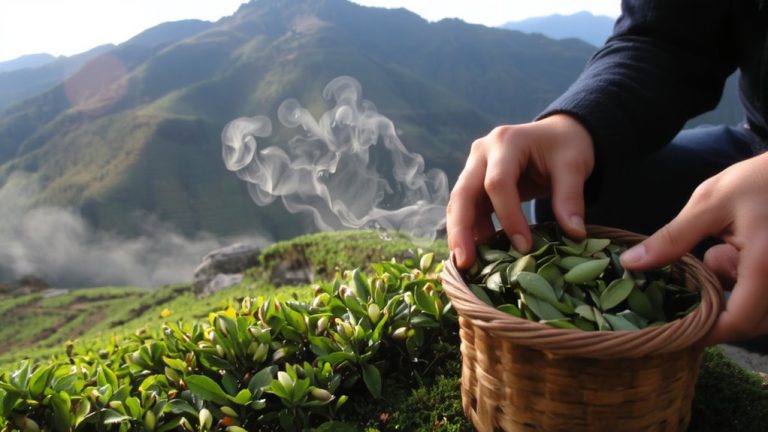
While you might think all oolong teas taste roughly the same, the truth is that high mountain teas like Ali Shan stand out because of where and how they’re grown. High Mountain Oolong thrives above 1,000 meters, where cooler temps and high humidity create ideal conditions. Slower Growth means leaves develop more amino acids and polyphenols, boosting sweetness and depth. You’ll notice the flavor compounds shine through with clarity-thanks to mist-diffused light increasing linalool and benzyl alcohol. These teas also get a boost from higher UV exposure, ramping up catechins and terpenoids that give that signature floral and fruity character. Volcanic soils rich in potassium and magnesium support better oil retention, improving mouthfeel and letting infusions last through multiple steeps. You’re not just tasting tea-you’re experiencing altitude, climate, and careful growing in every sip. It’s no wonder connoisseurs rate these teas highest for balance and smoothness.
How Cool Temperatures Boost Flavor Complexity?
You can taste the cool mountain air in every sip of Ali Shan Oolong, and it’s not just poetic-it’s science. At High Altitudes, Lower temperatures slow tea plant growth, giving leaves more time to develop rich Flavor Profiles. These cooler conditions reduce enzymatic activity, preserving fresh, floral notes while limiting harsh tannins. With day-night swings common at 1,000–2,500 m, tea plants balance metabolism, boosting complexity. Average temps of 15–20°C increase free amino acids, especially theanine, which delivers sweetness and umami. Frequent mist softens sunlight, encouraging aromatic compound buildup without stress. You’ll notice brighter clarity, a creamier mouthfeel, and layered notes-jasmine, honeydew, wildflowers-all enhanced by the mountain chill. It’s not just elevation that shapes flavor, but how those cool conditions interact with plant physiology. Cooler = slower = deeper flavor, plain and simple. You’re tasting precision, not luck.
Why UV Light Increases Tea’s Aromatic Depth?
Because sunlight intensifies at higher elevations, Ali Shan’s tea plants face stronger UV exposure, and that stress is actually good for flavor. Increased UV radiation triggers the tea leaves to produce higher levels of protective compounds like catechins, flavonoids, and terpenes. You’ll notice this in your Oolong tea as richer floral and fruity aromas, especially linalool and β-ocimene. At altitudes above 1,000 meters, plants respond by boosting volatile organic compounds-hotrienol and benzyl alcohol add complexity. These changes aren’t just about scent; they stabilize and clarify the tea’s aromatic expression when steeped. Higher levels of EGCG also enhance health benefits without overpowering the delicate Ali Shan profile. The result? A more layered, defined flavor with each infusion. Drinkers report brighter, more persistent notes that linger pleasantly. So when you sip high-grown Ali Shan Oolong, you’re tasting UV-driven chemistry-turned into art.
How Mist and Humidity Enhance Sweetness?
What if the secret to Ali Shan Oolong’s delicate sweetness isn’t just in the soil, but hanging in the air? You’re drinking the effects of constant mist and high humidity unique to this high-altitude environment. Tea plants thrive here, where moisture clings to leaves, slowing evaporation and boosting sugar development. These environmental factors enhance amino acid accumulation-free amino acids increase by up to 8.4%-giving oolong teas fresh, sweet notes. The mist also supports nitrogen metabolism, preserving tender leaf tissue so sweet compounds remain intact during processing. Diffused light through fog raises aromatic chemicals like linalool and benzyl alcohol, which don’t just add floral depth-they enhance perceived sweetness. So when you steep a cup of high-elevation oolong, you taste more than terroir; you taste the air, the fog, and the precise conditions that make Ali Shan tea truly exceptional.
Do All High-Altitude Oolongs Taste Like Ali Shan?
Could elevation alone really define a tea’s flavor? Not quite. While high-altitude tea like Ali Shan oolong thrives at 1,000–1,600 meters, where reduced oxygen and mist slow tea leaves’ growth, flavor clarity isn’t guaranteed just by height. Tea grown in Lishan may be floral, while DaYuLing’s is bolder-proof that soil, microclimate, and cultivar matter just as much. Ali Shan’s sweet, creamy notes come from volcanic soil, diffused sunlight, and high humidity, boosting amino acids and compounds like linalool. These same compounds appear in other high-altitude teas, but in varying levels, so tastes differ. You’ll still get health benefits-antioxidants, improved focus-across the board. But if you’re chasing Ali Shan’s signature profile, remember: elevation sets the stage, but terroir directs the taste. Know your source, not just the altitude.
On a final note
You’ll taste the difference in Ali Shan oolong-grown above 1,200 meters, where cool temps, mist, and UV light boost sweetness and aroma. High elevation slows leaf growth, increasing amino acids and essential oils, which testers note as a smoother, floral-crisp cup with honeyed undertones. At 185°F, steep for 2–3 minutes for ideal clarity. Not all high-altitude oolongs match this profile, but Ali Shan sets the standard for balance, fragrance, and clean finish.