Traditional Uzbek Choy Etiquette in Silk Road Oasis Towns Like Bukhara and Samarkand
You’ll show respect in Bukhara and Samarkand by accepting green tea, or kuk-choy, served in a piala with the host’s left hand while their right rests over the heart, a gesture as essential as the 2.65 kg of tea Uzbeks drink yearly. Rejecting tea insults tradition, while the three-pour kaytarma ritual guarantees balanced flavor from loose-leaf brew in a warmed chianik. Each pour, done without sugar or milk, honors elders first and deepens connection, turning every sip into a shared moment shaped by centuries of Silk Road hospitality-and there’s more to how this unfolds across Uzbekistan’s regions.
We are supported by our audience. When you purchase through links on our site, we may earn an affiliate commission, at no extra cost for you. Learn more. Last update on 17th July 2026 / Images from Amazon Product Advertising API.
Notable Insights
- Tea is served in a piala filled one-third to half full, allowing room for respectful, continuous refills.
- Rejecting tea is considered impolite; accepting it symbolizes trust, respect, and community belonging.
- Hosts serve tea with the left hand while the right rests on the heart, accompanied by a slight bow and “olig.”
- The kaytarma ritual involves three pours between chianik and piala to enhance flavor and show hospitality.
- Elders are served second, after the first pour (loy), as a sign of deep cultural respect.
What Tea Means in Uzbek Culture
While you might think of tea as just a morning pick-me-up, in Uzbek culture it’s far more-it’s a daily ritual soaked in meaning, served to everyone from unexpected visitors to honored guests, and turning down a cup isn’t just impolite, it’s a breach of respect. Tea is poured with care, often as green tea (kuk-choy), the most traditional choice. You’ll find tea drinking woven into every meal, celebration, or quiet moment in homes and bustling tea houses. At 2.65 kg per capita yearly, tea is central to Uzbek life. Whether at a wedding or in a modest choyxona, tea fosters connection. The ritual of kaytarma-pouring tea into a piala and back-enhances flavor, showing thought and precision. Green tea, served hot and unsweetened, supports focus and digestion. In Uzbek culture, tea isn’t just drunk-it’s lived.
Brewing Green Tea in Bukhara and Samarkand
When you’re preparing green tea in Bukhara or Samarkand, you’re not just making a drink-you’re continuing a centuries-old tradition shaped by Silk Road travelers and desert climates. The brewing process starts by warming a porcelain chianik with boiling water, then adding one teaspoon of loose green tea leaves per half liter. Pour fresh boiling water over the leaves and let steep for 5 minutes to release a smooth, hot green infusion. For depth and aroma, locals pour tea between the piala and teapot three times-each pour enhancing flavor and tradition.
| Step | Purpose |
|---|---|
| Warm teapot | Prevents shock to tea leaves |
| 5-minute steep | Maximizes taste, minimizes bitterness |
| Kaytarma pours | Enhances aroma, blends temperature |
Only pure green is served-no additives-preserving its authentic character as a clean, invigorating drink rooted in heritage.
Serving and Receiving Tea With Respect
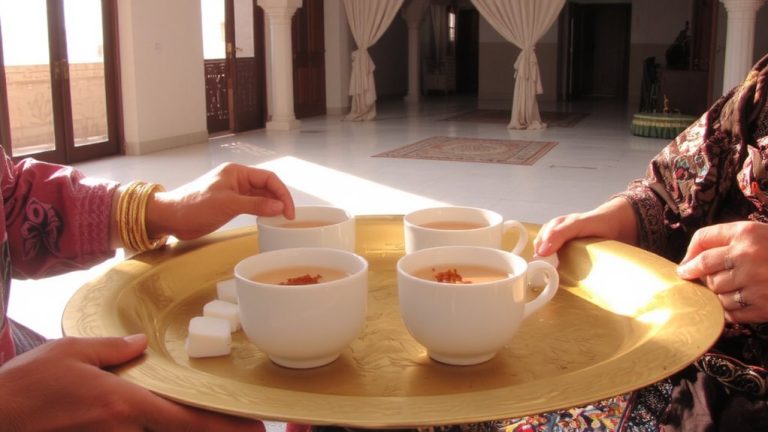
You’ve brewed the perfect green tea in your chianik, following the time-honored steps of warming the pot, steeping for five minutes, and mastering the three pours of kaytarma, and now it’s time to serve it the right way. Tea is served in a piala, filled only one-third to half full, so it won’t spill and shows you’re happy to refill. The host uses the right hand over the heart, the left hand offering the piala, bowing slightly while saying “olig.” Even if you prefer black, honoring the green tea ritual matters. The first pour-loy-is poured back three times during kaytarma to balance flavor. The highest honor goes to the eldest, who’s served second. Never refuse tea; doing so disrespects the host. To drink tea here is to accept trust, warmth, and community with both hands.
Inside an Uzbek Choyxona: Heart of the Community
Though you might expect a bustling market or grand mosque to anchor a Silk Road town, it’s the choyxona-the humble tea house beneath shady trees or beside still khauz pools-that truly pulses at the heart of daily life in Bukhara and Samarkand. Here, men gather for hours, sharing stories over steaming pialas of strong black tea, brewed in porcelain chianik teapots and refined by the kaytarma aeration ritual. These choyhanas are the soul of Uzbek Tea Culture, where tea connoisseurs savor the bold, full-bodied flavor of kok choy. Low tapchan tables, kurpacha cushions, and the soft call of bedana birds create a calm setting perfect for reflection. Continuous refills symbolize warmth and welcome. Whether young or old, you’re drawn into a rhythm of conversation and calm that defines the region’s daily life.
Regional Tea Traditions Across Uzbekistan
Tea culture in Uzbekistan isn’t one-size-fits-all-it shifts with the wind, the soil, and centuries of local habit. In the Heart of Uzbek cities like Samarkand and Bukhara, you’ll drink hot green tea (kuk-choy) without sugar, just as caravans once did. But head to Tashkent, and black tea (kora-choy) takes over, strong and hot, a local signature. In Karakalpakstan, both black and green tea are often taken with milk-shir-choy-unusual elsewhere. The Fergana Valley surprises with different varieties like khoshak-tea, a fragrant herbal blend of dry grasses and spices, caffeine-free and flavorful. Rural homes serve homemade infusions with mint, thyme, or saffron-always without sugar, always hot. You’ll notice Uzbeks drink hot tea all day, believing it aids digestion and circulation. These regional customs reflect climate, history, and identity-each cup a quiet lesson in tradition.
What to Order in a Traditional Chaikhana
When stepping into a traditional chaikhana in Bukhara or Samarkand, go straight for hot green tea-kok choy-as it’s the cultural standard and widely served across Silk Road-era caravanserais. Skip black tea (kora choy); it’s uncommon here. Instead, choose plain kok choy or raikhonli choy, infused with dried basil, which helps digestion after heavy plov. Avoid asking for sugar-Uzbek tea is served unsweetened, unlike kand-choy. For authenticity, request a chianik (porcelain teapot) and pialas (small bowls), used for proper heat control and serving. These towns cherish green tea for its light flavor and subtle antioxidants, best enjoyed fresh and hot.
| Tea Type | Serving Vessel |
|---|---|
| Kok choy | Chianik + pialas |
| Raikhonli choy | Chianik + pialas |
The Three-Pour Ritual: Flavor, Respect, and Meaning
As you lift the chianik to pour, you’re not just serving tea-you’re continuing a centuries-old ritual that transforms simple kok choy into something meaningful. The three-pour ritual, known as koytarma, is a hallmark of hospitality in Silk Road towns like Bukhara and Samarkand. You pour from pot to piala and back three times: the first return is *loy*, the second *moy*, and only after the third does it become true *choy*. This aeration evenly blends flavor, improves aroma, and guarantees the tea is hot throughout. It’s not just about taste-it’s a sign of respect, patience, and skill. Each movement shows care, turning kok choy into a shared moment of connection, where tradition, flavor, and meaning steep together in every cup.
On a final note
You’ll savor authentic Uzbek choy when you brew green tea strong, using 1 teaspoon of loose leaf per 8 oz water, steeped 3–5 minutes. Locals in Samarkand and Bukhara serve it piping hot in small cups, never with milk. The three-pour ritual extracts flavor gradually, enhancing depth and respect. Real testers note its light grassiness, slight astringency, and calming effect. Rich in antioxidants, traditional Uzbek green tea supports metabolism and focus-simple, healthful, and deeply cultural.