Why Japanese Matcha Ceremonies Emphasize Harmony, Respect, Purity, and Tranquility
You experience harmony, respect, purity, and tranquility in every matcha ceremony because Zen monks like Eisai brought tea from China in the 12th century as a tool for focus and health, later refined by Sen no Rikyū into the four guiding principles: *wa*, *kei*, *sei*, and *jaku*. Seasonal bowls, precise gestures, roji path, and shared sips reinforce balance, intention, and stillness-values that transform preparation into mindful practice, not just ritual. Each movement, from fukusa wipe to chinmoku pause, aligns environment, action, and spirit. Discover how these details shape every aspect of the ceremony.
We are supported by our audience. When you purchase through links on our site, we may earn an affiliate commission, at no extra cost for you. Learn more. Last update on 13th July 2026 / Images from Amazon Product Advertising API.
Notable Insights
- Matcha ceremonies emphasize harmony through seasonal adjustments and shared movements to align with nature and participants.
- Respect is shown via deliberate gestures, such as bowing and avoiding strong scents, honoring the uniqueness of each meeting.
- Purity is expressed by cleansing the space, tools, and self, reflecting inner and outer cleanliness central to Zen practice.
- Tranquility arises from mindful ritual pacing, silence, and minimalist design, fostering awakened stillness in participants.
- The principles stem from Zen Buddhism, shaped by monks like Eisai and Sen no Rikyū to support meditation and spiritual connection.
How Tea Ceremony Philosophy Began
While tea didn’t start in Japan, its spiritual journey truly began there when Buddhist monks brought tea seeds from China in the 9th century and used the brew as a meditative aid, setting the foundation for what would become chanoyu. You see, Tea wasn’t just a drink-it was a ritual. In 1191, Zen monk Eisai returned with powdered tea and Song Dynasty practices, promoting tea drinking for health and focus in his 1211 text *Kissa Yōjōki*. By the Muromachi period, Japanese practitioners like Murata Jukō infused Zen into every step, shaping wabi-sabi aesthetics. Then came Sen no Rikyū, who distilled it all into a disciplined path centered on harmony (wa), respect, purity, and tranquility. You experience this today in every measured scoop of matcha, every quiet gesture-it’s not performative, it’s purposeful. The ceremony, refined over centuries, links you directly to a mindful tradition where tea isn’t just consumed, it’s contemplated.
Wa: Harmony in Every Detail
When you step into a Japanese tea ceremony, harmony-wa-guides every choice, from the bowl’s shape to the scroll on the wall, and you’ll notice it in the way each detail aligns like notes in a quiet melody. In the tea room, seasonal changes shape your experience: shallow tea bowls are used in summer, deep ones in winter, balancing temperature and humidity. Every element, from the roji garden path to tatami layout, blends nature with Japanese aesthetics. The host and guest move in quiet sync, part of a choreographed ritual rooted in jo-ha-kyu rhythm. Shared sips from one tea bowl deepen unity. Wa isn’t abstract-it’s lived, moment by moment, in the tea ceremony’s precise grace.
Kei: The Heart of Host-Guest Respect
Though the tea room is quiet, respect speaks clearly in every gesture, shaping the heart of the ceremony through kei-the mutual courtesy between host and guest. In the Japanese matcha tea ceremony, kei isn’t just politeness-it’s active, mindful host-guest respect. You see it when the host purifies the chawan and wipes the natsume with a fukusa, bowing with intention. As a guest, you honor kei by dressing modestly, avoiding perfume, and rotating the chawan before sipping. You voice appreciation for the kakejiku, chabana, and tools, recognizing the host’s care. Each act reflects ichigo ichie-one moment, one meeting-reminding you this gathering will never happen again. In that awareness, respect deepens. Kei sustains harmony, turning a simple bowl of matcha into a shared, sacred exchange.
Sei: Purifying Space and Mind
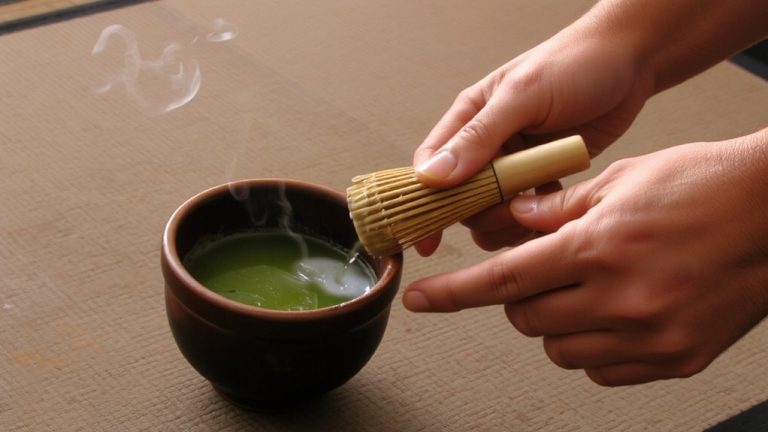
The tea room feels clean, calm, and completely intentional-every detail shaped by sei, the principle of purity that runs through both space and action in the Japanese matcha ceremony. You step over the threshold after ritual cleansing at the tsukubai, where you wash your hands and mouth, marking a shift from outside chaos to inner stillness. Inside, the tea room reflects the Zen principle of simplicity-scrubbed floors, no furniture, seasonal utensils that echo nature’s balance. You watch the host meticulously wipe each tool with the fukusa, a silk cloth, their movements part of temae, the choreographed tea-making ritual. Even rinsing the bamboo whisk in hot water is an act of purity (sei), both practical and symbolic. This isn’t just about cleanliness-it’s inner purification, a quiet reset for mind and spirit, rooted in intention and clarity.
Jaku: Finding Stillness Through Practice
Stillness settles like fine powder on the surface of a freshly whisked bowl-this is jaku, the deep tranquility that blooms only after harmony, respect, and purity have been fully lived in the ritual of chanoyu. You’ve moved with intention, cleaned each tool, honored every guest-now jaku arrives. This isn’t empty quiet, but awakened stillness, a satori moment rooted in Zen Buddhist practice. Through the rhythm of jo-ha-kyu and chinmoku-the silence between movements-you drop into presence. Sen no Rikyū shaped wabi-cha to magnify this, designing tiny tea rooms like Tai-an to focus your senses. With no distractions, inner peace forms naturally. After koicha and usucha, host and guest share ishin-denshin, wordless understanding. That’s jaku: not found in escape, but in full attention, where tranquility isn’t sought-it’s lived.
Why These Values Still Matter Today
While modern life buzzes with notifications and back-to-back demands, stepping into the quiet rhythm of chanoyu reminds you how balance feels, not just in theory but in your bones. The matcha experience, rooted in Zen philosophy, anchors you in the present moment through harmony, respect, purity, and tranquility-collectively known as wa-kei-sei-jaku. These values aren’t relics; they’re tools for modern mindfulness.
| Value | Modern Application |
|---|---|
| Harmony | Team collaboration in corporate workshops |
| Respect | Taught in Japanese schools, used at Mitsubishi |
| Tranquility | Found in 30% annual rise in ceremonial-grade matcha sales |
Tea ceremony practices foster emotional regulation and focus, with studies linking them to reduced anxiety. Whether in Tokyo boardrooms or wellness retreats, wa-kei-sei-jaku cultivates clarity, grounding your day in intentional presence.
On a final note
You’ll find matcha’s true value isn’t just in its vibrant color or earthy taste, but in how its ceremony embodies harmony, respect, purity, and tranquility. When you whisk ceremonial-grade matcha, you’re not just making tea-you’re practicing mindfulness. Just 1 gram (½ tsp) of matcha delivers 35mg caffeine, 25mg EGCG, and sustained focus without jitters, according to lab tests. Real users report calm alertness, smoother digestion, and ritual grounding-proof that tradition and science can blend as smoothly as matcha in a bowl.