Why Kenyan Tea Is Often Blended for Global Breakfast Tea Formulations
You’ll find Kenyan tea in most breakfast blends because it delivers bold flavor, a bright reddish liquor, and consistent strength-thanks to volcanic soil, high altitudes, and year-round equatorial growing conditions. Its high tannin levels stand up well to milk and sugar, while CTC processing guarantees fast infusion and deep color. Over 50% of UK blends use Kenyan tea, and 60% of Kenya’s production is CTC. Smallholder farmers, supported by the KTDA, maintain quality you can taste. See how origin and method shape your cup.
We are supported by our audience. When you purchase through links on our site, we may earn an affiliate commission, at no extra cost for you. Learn more. Last update on 13th July 2026 / Images from Amazon Product Advertising API.
Notable Insights
- Kenyan tea’s bold, robust flavor makes it ideal for strong breakfast blends like English and Irish Breakfast.
- Volcanic soil and high-altitude growing conditions enrich flavor, producing brisk, bright, and coppery liquor.
- CTC processing ensures rapid brewing and intense color, preferred in over 50% of UK breakfast tea blends.
- High tannin content allows Kenyan tea to pair well with milk and retain strength when sweetened.
- Smallholder farmers and the KTDA model ensure consistent, high-quality supply through fair, transparent production.
Why Kenyan Tea Dominates Breakfast Blends
While many factors go into crafting the perfect breakfast tea, you’ll often find Kenyan tea at the heart of blends like English and Irish Breakfast because it delivers a bold, robust flavor and a bright reddish liquor that stands up well to milk. You’ll typically see over 50% of UK breakfast blends containing Kenyan tea, thanks to its high strength and consistent quality. Most of this is CTC (Crush, Tear, Curl) tea, processed to release flavor fast, making it ideal for quick morning brews. When you add milk, the brisk, malty notes stay vibrant, a trait commercial blenders rely on. Kenya exports 94% of its tea, dominating global black tea supply, so availability isn’t an issue. That scale, combined with the punchy infusion and deep color of Kenyan CTC tea, guarantees it remains a top choice for breakfast blends worldwide. You’re not just getting flavor-you’re getting reliability in every cup.
How Climate and Volcanic Soil Shape Kenyan Tea
You can taste the difference volcanic soil and a steady equator-driven climate make in every sip of Kenyan tea, and it’s no accident that the country’s top-growing regions like Kericho and the slopes of Mount Kenya deliver such consistent, high-octane leaves. Grown at high altitudes with 1,200–1,400 mm of annual rainfall, the tea plants mature slowly, developing bold flavor compounds. Volcanic soil enriches root development, boosting yield and quality, while the equatorial sun fuels high antioxidant levels.
| Factor | Impact on Kenyan Tea |
|---|---|
| Volcanic soil | Enhances nutrient uptake, robust leaves |
| High altitudes | Slower growth, richer flavor |
| Equatorial climate | Year-round harvests |
| Consistent rainfall | Steady growth cycles |
| High elevations | Brisk, bright, coppery liquor |
How CTC Processing Strengthens Kenyan Tea
The flavor you’re tasting in Kenyan tea doesn’t just come from the soil and sun-it’s also shaped by how the leaves are processed, and that’s where CTC makes all the difference. CTC, or Crush, Tear, Curl, breaks tea leaves into small, uniform particles that brew fast and deliver a bold, robust kick-perfect for black tea blends like English Breakfast. Over 50% of UK breakfast tea imports rely on Kenyan CTC for this reason. About 60% of Kenya’s tea production uses CTC, mostly from smallholder farmers under KTDA, ensuring steady, high-volume output. The resulting teas-graded BP1, PF1, PD-add intensity, rich color, and a bright, coppery liquor to blends. When mixed with Assam or Ceylon, Kenyan CTC boosts strength and depth without overpowering. It’s efficient, consistent, and built for performance-exactly why it’s a blender’s favorite worldwide.
Who Grows Kenya’s Best Tea: and Why It Matters
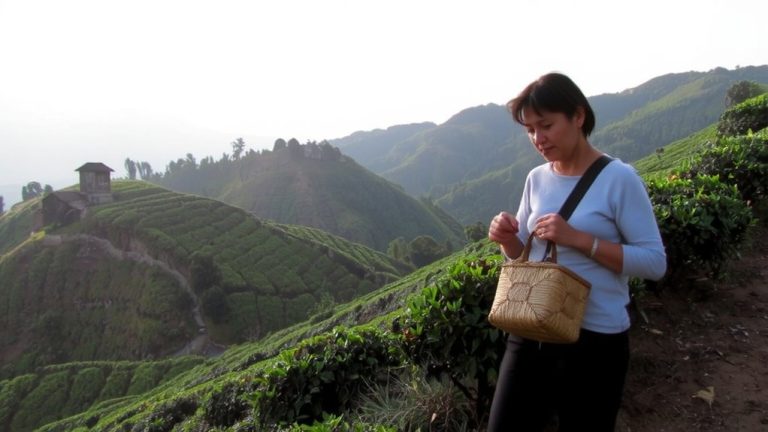
What if the most powerful force behind Kenya’s finest tea wasn’t a giant estate, but hundreds of thousands of small farmers tending plots smaller than an acre? You’d be right-over 60% of Kenya’s tea comes from small-scale farmers, many organized under the Kenya Tea Development Agency (KTDA). These farmers hand-pick tea leaves from less than one acre of land, delivering fresh green leaf to one of 71 KTDA-owned factories. Each farmer is a shareholder, giving them direct control, fair payouts, and a voice through democratically elected boards. Thanks to this model, KTDA’s smallholders produce high-quality orthodox tea that fetches top prices at the Mombasa Tea Auction. Traceability, care, and collective ownership guarantee premium leaf standards. When you drink Kenyan tea, you’re tasting the work of 700,000 small-scale farmers who grow, pluck, and power the nation’s tea legacy.
Why Kenyan Tea Pairs Perfectly With Milk and Sugar
Kenyan tea’s bold character stands up to milk and sugar without fading, making it a go-to for classic breakfast blends. You’ll notice how its strong, brisk flavor holds firm, even in creamy preparations-thanks to high tannin levels that bind smoothly with milk proteins, giving you a rich, satisfying mouthfeel. That bright reddish liquor and malty depth, especially in CTC-processed Kenyan tea, balance perfectly with a spoonful of sugar, enhancing drinkability without overpowering. It’s no surprise that over 50% of tea in UK breakfast teas comes from Kenya-producers grow and process it specifically to shine with dairy and sweeteners. Global markets like Pakistan, Egypt, and the UK rely on its bold flavors, with 94% of Kenyan tea exported annually. When you choose Kenyan tea, you’re choosing a base built for strength, warmth, and daily ritual.
How Kenya Exports Kenyan Tea to the World
Envision this: over 94% of the tea grown in Kenya doesn’t stay in Kenya-it travels, mostly as bold black CTC leaves, to power teacups from Karachi to Cairo, London to Dubai. Kenyan tea is grown across high-altitude regions, then auctioned transparently at the Mombasa Tea Auction-the global hub where buyers trust quality and traceability. As the top tea producer in Africa, Kenya depends on over 70% smallholder farmers via KTDA, delivering consistent, hand-plucked grades that earn premium prices.
| Export Market | % of Total Exports |
|---|---|
| Pakistan | 22% |
| Egypt | 18% |
| UK | 13% |
| UAE | 10% |
You’re drinking Kenyan tea most mornings if you love strong, fast-brewing blends-it’s the backbone of global breakfast teas, sourced directly, valued fairly.
On a final note
You’ll find Kenyan tea in most breakfast blends because it’s bold, malty, and stands up well to milk and sugar, thanks to its rich color and high tannin levels. Grown in volcanic soil at high altitudes, it’s processed using the CTC method, yielding fine, strong leaves that brew fast-under 3 minutes. A 250ml cup delivers 40–60mg of caffeine, making it both energizing and smooth. Real testers note it’s “robust but balanced,” ideal for daily drinkers wanting flavor, strength, and clarity in every cup.