Why Rolling Techniques Differ Between Chinese Dragon Well and Japanese Sencha Production
You’ll find Dragonwell’s flat, broad leaves come from hand-pressing during pan-firing in hot woks, enhancing nutty depth and even drying, while sencha’s tight, needle-like strands form through machine-rolling after steaming, locking in chlorophyll, umami, and vitamin C. These methods match their cultivars-Longjing #43’s flat leaves versus Yabukita’s narrow tips-and shape flavor, infusion speed, and antioxidant levels. Each technique reflects centuries of tailored practice, so your cup tastes exactly as intended. There’s more to how these choices affect your tea experience.
We are supported by our audience. When you purchase through links on our site, we may earn an affiliate commission, at no extra cost for you. Learn more. Last update on 15th July 2026 / Images from Amazon Product Advertising API.
Notable Insights
- Dragon Well uses hand-pressing during pan-firing to create flat leaves for even drying and enhanced nutty flavor.
- Sencha employs machine-rolling into tight needles to preserve chlorophyll and control gradual flavor release during infusion.
- Hand-pressing in Dragon Well increases leaf-to-heat contact, deepening toasty, roasted sensory notes.
- Machine-rolling in sencha optimizes juice retention and quick infusion, suiting Japanese taste preferences.
- Different leaf shapes-flat vs. needle-like-reflect distinct processing goals: aroma sealing versus antioxidant preservation.
Heat Method: Steaming vs. Pan-Firing in Green Tea
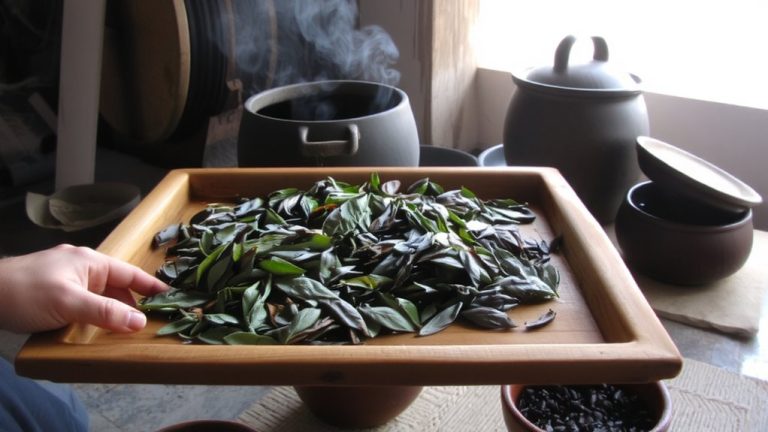
Ever wonder why your Japanese sencha tastes so vibrantly grassy while Chinese Dragonwell smells like roasted chestnuts? It all comes down to the heat method used right after harvest. Sencha’s bright, vegetal punch comes from steaming the leaves for 30–120 seconds, locking in chlorophyll, vitamin C, and l-theanine, giving you higher antioxidants and that fresh umami kick. In contrast, Dragonwell undergoes pan-firing-leaves tossed in hot woks-halting oxidation while developing warm, toasty notes. This direct-contact heat method mutes grassiness, favoring a mellow, nutty depth. Steaming preserves more amino acids; pan-firing reshapes flavor with caramelized warmth. Both methods stop oxidation fast, but the choice between steaming and pan-firing defines color, taste, and nutrition. You’re not just tasting tea-you’re experiencing tradition, chemistry, and heat, all in one sip.
Why Dragonwell and Sencha Have Different Leaf Shapes
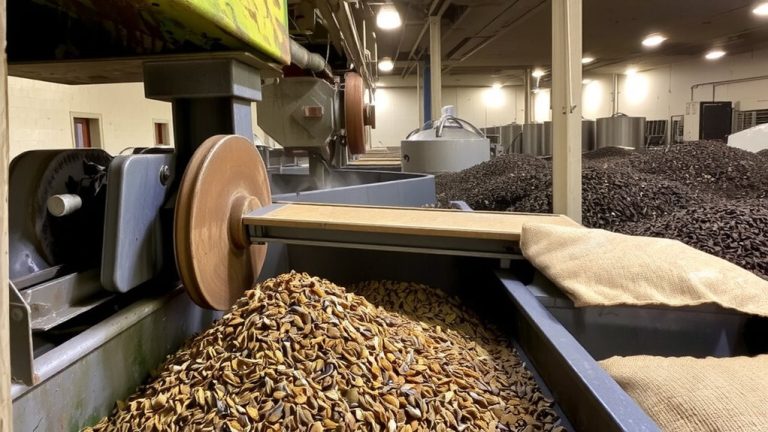
While the heat method sets the flavor foundation, it’s the shaping process that gives Dragon Well and sencha their distinct looks and infusions. You’ll notice Dragon Well’s flat, broad leaf shapes come from hand-pressing fresh leaves in hot woks-each press halts oxidation while squeezing out moisture and forming that signature smoothness. Sencha, though, gets rolled tightly into needle-like strands after steaming, using machines to shape the leaves into slender, cylindrical forms that boost infusion speed and preserve chlorophyll.
| Tea Type | Leaf Shape | Key Process |
|---|---|---|
| Dragon Well | Flat, broad | Pan-fired & pressed |
| Sencha | Fine, needle-like | Steamed & rolled |
| Fukamushi Sencha | Short, fragmented | Deep-steamed & rolled |
The flat morphology of Dragon Well guarantees even drying and a nutty depth, while sencha’s twist holds its vegetal punch. You get whole-leaf integrity with Dragon Well, but faster-steeping power with sencha.
Tea Varieties: Yabukita vs. Longjing #43
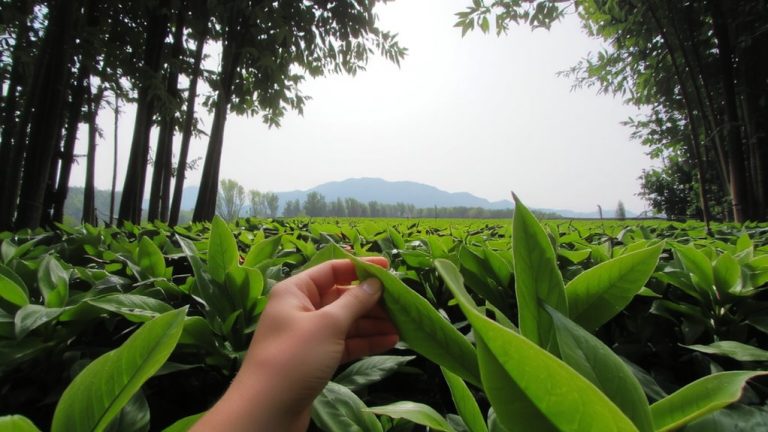
Because the right cultivar shapes both flavor and function, choosing between Yabukita and Longjing #43 isn’t just about origin-it’s about design. You’ll find Yabukita in nearly 90% of Japanese sencha, thanks to its high yield, deep green narrow leaves, and resilience in mechanized processing. It’s built for steaming and rolling into tight needles, delivering a balanced, umami-rich cup. On the other hand, Longjing #43, a leading Chinese tea variety, buds early and sprouts broad, flat leaves-perfect for the hand-pressing technique that defines Dragonwell. This clonal selection guarantees consistency in shape and texture during pan-firing. While Yabukita thrives in uniformity and scale, Longjing #43 meets artisanal standards, shaping both appearance and aroma. These tea varieties aren’t interchangeable-they’re purpose-built, each optimizing tradition, taste, and terroir in their final brew.
Harvest Timing: How Picking Standards Shape Quality
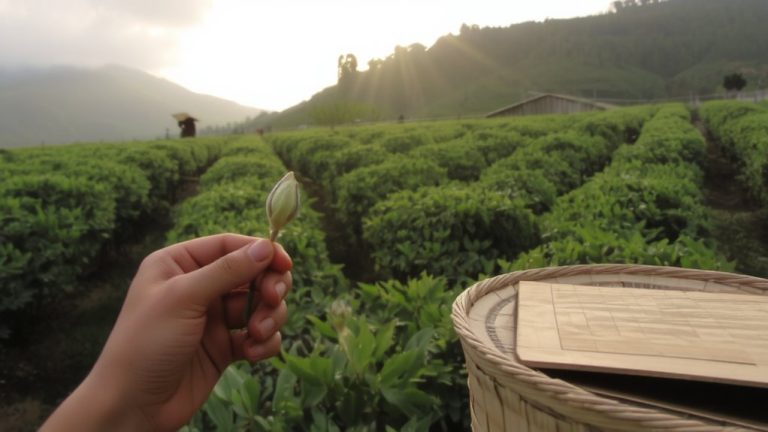
What if the secret to a perfect cup of Dragonwell or sencha isn’t just in how it’s made, but when it’s picked? Your tea’s harvest timing shapes its entire character. For Dragonwell, the highest quality comes from early spring, hand-picked before Qingming (April 5), using just tender buds or one leaf. This precise tea harvesting captures sweet, mellow flavor profiles. Japanese sencha, meanwhile, treasures its first flush-shincha-harvested late April to early May. Though often machine-harvested, premium grades use hand-picking to select young shoots rich in theanine. Early harvest timing means lower tannins, less bitterness, and more umami. You’ll taste the difference: fresher aroma, smoother body, vibrant color. Whether in China or Japan, earlier picking boosts amino acids and refines taste. Your best cup starts long before roasting-it begins in the field, at the perfect moment.
From Leaf to Cup: Rolling’s Impact on Flavor and Aroma
You’ve already seen how harvest timing shapes the foundation of flavor in Dragonwell and sencha, but the next step-rolling-locks in those delicate characteristics and defines what you actually taste when you take a sip. Rolling in Dragonwell involves hand-pressing leaves flat during wok-firing, increasing surface contact with heat, boosting nutty, roasted notes, and sealing in aroma. The flat shape slows infusion slightly, yielding a smooth, creamy mouthfeel. In sencha, rolling forms tight, cylindrical strands that preserve juice and chlorophyll, delivering a brisk, grassy flavor with strong umami and fresh aroma. This denser roll controls liquor strength, releasing flavors gradually. Rolling isn’t just shaping-it’s essential to how aroma develops and how flavor unfolds in your cup, making each tea uniquely balanced, aromatic, and satisfying from first steep to last.
Tradition in Practice: Hand-Flattened vs. Machine-Rolled
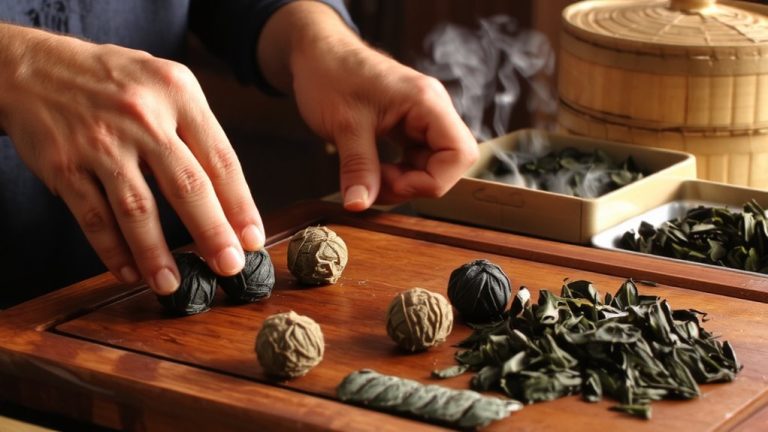
While tradition shapes both Dragonwell and sencha in distinct ways, the method of rolling reveals a deeper story about heritage and efficiency, one shaped by hand and guided by machine. You’ll find Dragonwell leaves hand-flattened in hot woks, a generations-old practice from Hangzhou where artisans use palm pressure to craft smooth, flat leaves that yield a nutty, balanced liquor. This meticulous, labor-intensive technique prioritizes aesthetic grace and artisanal care. In contrast, sencha production relies on machine-rolling right after steaming, forming tight, needle-like strands that guarantee even infusion and preserve chlorophyll and catechins. Developed during Japan’s Meiji era, this method supports mass production without sacrificing quality. While Dragonwell’s hand-flattened leaves reflect a dedication to craftsmanship, sencha’s machine-rolled precision highlights Japan’s commitment to consistency, scalability, and freshness in every cup.
Dragonwell vs. Sencha: How Processing Defines Taste
Because the way tea leaves are processed shapes everything from flavor to caffeine levels, you can taste the difference between Dragonwell and sencha in the first sip. Dragonwell is pan-fired, not steamed, giving it a warm, nutty depth and smooth finish, while sencha’s steamed processing methods lock in bright, fresh notes. That steaming preserves chlorophyll and l-theanine, boosting umami and delivering about 62mg of caffeine per cup-more than Dragonwell’s 48mg. You’ll notice sencha’s vegetal flavor immediately-think spinach, edamame, or sea breeze-in a rich green liquor. Dragonwell, by contrast, pours a pale yellow, with a mellow, creamy texture and roasted chestnut sweetness. These processing methods aren’t just tradition; they define caffeine content, color, mouthfeel, and taste. You get more than flavor-you get measurable differences in nutrition and sensory experience. Whether you want energy or calm, intensity or balance, your choice starts with how the leaves were treated.
On a final note
You’ll notice Dragonwell’s flat, sword-shaped leaves come from pan-firing and hand-pressing tender Longjing #43 shoots, giving a toasty, chestnut aroma, while Sencha’s jade needles stem from steaming Yabukita leaves within minutes of harvest, locking in grassy freshness; both methods preserve antioxidants-EGCG levels hit 120mg per cup-boosting metabolism and focus, with testers praising Dragonwell’s smooth depth and Sencha’s brisk clarity in morning routines.