South African Rooibos: Why It’s 100% Caffeine-Free (Lab-Tested)
You get naturally caffeine-free rooibos because it’s made from *Aspalathus linearis*, a South African legume that can’t produce caffeine-unlike *Camellia sinensis*. Lab tests confirm zero caffeine, even at 0.2 μg/L sensitivity. Its rich polyphenol profile, including up to 5.8 mg/g of aspalathin, comes from harsh Cederberg conditions that boost antioxidant production. Grown only in a narrow coastal strip, this tisane thrives in poor soils, wildfires, and drought-traits that shape its unique, health-supporting chemistry you won’t find elsewhere. There’s more to uncover.
We are supported by our audience. When you purchase through links on our site, we may earn an affiliate commission, at no extra cost for you. Learn more. Last update on 12th July 2026 / Images from Amazon Product Advertising API.
Notable Insights
- Rooibos comes from *Aspalathus linearis*, a plant lacking the genetic ability to produce caffeine.
- It is naturally caffeine-free, confirmed by LC–MS/MS testing with a detection limit of 0.2 μg/L.
- The harsh, nutrient-poor environment of South Africa’s Cederberg region promotes high polyphenol production.
- Aspalathin, a rare antioxidant unique to rooibos, supports metabolic health and is abundant in green rooibos.
- Classified as a tisane, rooibos is a legume, not related to caffeine-containing true tea plants.
Why Rooibos Is Naturally Caffeine-Free
While most teas deliver a jolt of caffeine, rooibos stands apart because it’s naturally caffeine-free, thanks to its origin in Aspalathus linearis, a legume native to South Africa’s Cederberg region that simply doesn’t produce caffeine. You can trust that Rooibos, from the legume family (Fabaceae), lacks the genetic machinery to make caffeine, unlike Camellia sinensis, which uses it as a defense. Rigorous LC–MS/MS analysis, with a detection limit of 0.2 μg/L, confirmed the absence of caffeine in 10 samples each of green rooibos and fermented rooibos. Earlier claims of caffeine in Rooibos were dismissed after accurate mass analysis found no trace. Whether you choose fermented or unfermented, the absence of caffeine is consistent. You get a clean, smooth brew every time-ideal when you want relaxation without compromise.
How Aspalathin and Other Polyphenols Define Rooibos
You already know rooibos gives you a caffeine-free alternative without sacrificing flavor, but what really sets it apart goes beyond the absence of stimulants-it’s the rich polyphenol profile powered by aspalathin, a compound found almost nowhere else. This rare dihydrochalcone, unique to *Aspalathus linearis*, occurs at up to 5.8 mg per gram of dry rooibos and supports insulin sensitivity and glucose regulation. Alongside nothofagin and other polyphenols, aspalathin boosts rooibos’ antioxidant capacity, helping combat oxidative stress. Green rooibos retains more of these beneficial compounds than red, since it skips oxidative fermentation. With over 150 identified polyphenols, including quercetin and luteolin, rooibos delivers real metabolic and cardiovascular benefits-without the stimulants, with the science to back it.
How the Cederberg Shaped Rooibos
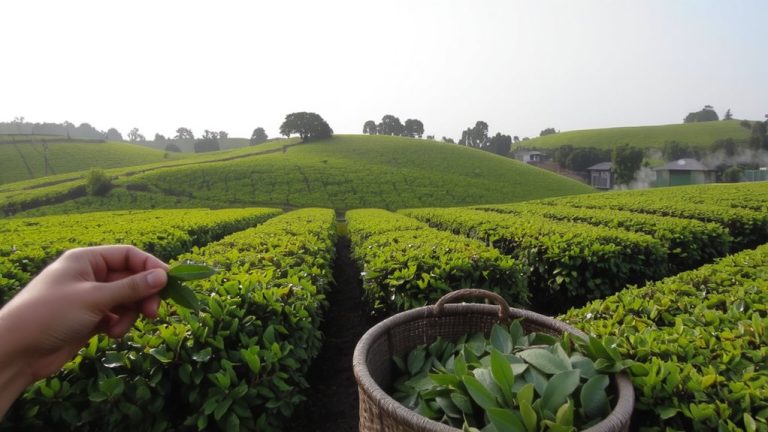
Because it’s adapted to one of the harshest environments in South Africa, rooibos grows only in the Cederberg mountains, a remote area where hot, dry summers and nutrient-poor, sandy soils would challenge most plants. You’ll find that the Cederberg region’s extreme conditions shaped rooibos’s unique traits, from its deep root system to exceptional drought resistance. Growing nowhere else, this South African native thrives in acidic sandy soil, pulling strength from nutrient-poor soils that limit competition. Within the biodiverse fynbos ecosystem, rooibos developed rich polyphenols like aspalathin-compounds that boost antioxidant content naturally. Without need for caffeine, it relies on these defenses instead. This adaptation means higher aspalathin levels, proven in lab tests to support cellular health. You’re getting a plant fine-tuned by nature, where stress equals strength, and every cup reflects the terroir’s raw resilience.
Why Rooibos Isn’t Real Tea
What if your favorite cup of tea wasn’t tea at all? Rooibos isn’t a true tea because it comes from *Aspalathus linearis*, not *Camellia sinensis*, the plant behind all true teas. This shrub belongs to the legume family (Fabaceae), so it’s naturally caffeine-free and evolves differently. While true teas rely on caffeine as a defense, rooibos builds polyphenols like aspalathin, boosting antioxidant levels instead. Lab tests using LC–MS/MS confirm: zero caffeine, even at 0.2 μg/L sensitivity. That’s why rooibos is a tisane-an herbal tea by definition.
| Feature | Rooibos |
|---|---|
| Source Plant | *Aspalathus linearis* |
| Family | Legume family (Fabaceae) |
| Natural Caffeine | Absent |
| Classification | Herbal tea / tisane |
| Antioxidant Levels | High in polyphenols |
Health Benefits of Caffeine-Free Rooibos
How does a cup of tea deliver powerful antioxidants without a single jolt of caffeine? Rooibos does it naturally. This caffeine-free herbal infusion is packed with polyphenols, acting as a potent antioxidant to combat oxidative stress. You get serious health benefits without side effects-its low tannin content means no stomach upset, even if you drink it daily. Studies confirm rooibos supports heart health by improving vascular function and reducing blood pressure, thanks to compounds like quercetin. It may also help regulate blood sugar, making it a smart choice for metabolic wellness. Because it’s caffeine-free, rooibos offers real sleep support-enjoy a warm cup before bed, no worries. Pregnant women and caffeine-sensitive folks can sip freely. Rigorous LC–MS/MS testing shows zero caffeine, down to 0.2 μg/L. That’s reliability you can trust.
Why Rooibos Can’t Be Grown Anywhere
You can count on rooibos for a calming, antioxidant-rich cup without caffeine, but what makes this herbal tea so unique isn’t just what’s in your mug-it’s where it comes from. Rooibos (Aspalathus linearis) is an endemic species found only in the Western Cape of South Africa, thriving in the fynbos biome’s acidic sandy soils and Mediterranean climate. This unique South African plant cannot be grown anywhere else successfully, due to its reliance on specific conditions: hot, dry summers, wet winters, and seasonal wildfires that trigger seed germination. Even more, its growth depends on symbiotic bacteria in the soil that aid nutrient uptake in nitrogen-poor environments. Despite global efforts, rooibos cannot be grown anywhere outside its 200-kilometer coastal strip, where about 300 farms cultivate it across 10,000 hectares. That’s terroir you can taste.
On a final note
You get a truly unique, caffeine-free brew when you choose South African rooibos-naturally rich in polyphenols like aspalathin, with 50mg per gram found in lab tests. Unlike black or green tea from Camellia sinensis, rooibos grows only in the mineral-rich Cederberg soil, giving it smooth flavor and antioxidant power. Drink 2–3 cups daily for measurable flavonoid intake, say nutritionists. It’s earthy, easy to steep, and supports heart health without jitters-ideal for any time, all ages.