The Traditional Method of Drying Tea Leaves Over Open Fires in Chinese Lapsang Souchong
You get that bold, smoky character in authentic Lapsang Souchong by drying large souchong leaves-fourth and fifth flushes-over smoldering Pinus taiwanensis fires for three to four days, the traditional indoor method started in 1646 to speed drying during chaos, where pine smoke funnels through bamboo-matted sheds using indirect heat, preserving complexity while ensuring clean, resinous notes; true Zhengshan Xiaozhong from Tong Mu Guan still uses this craft, though few meet EU low-PAH standards, so check origin and certification-there’s more behind what makes it genuine.
We are supported by our audience. When you purchase through links on our site, we may earn an affiliate commission, at no extra cost for you. Learn more. Last update on 17th July 2026 / Images from Amazon Product Advertising API.
Notable Insights
- Lapsang souchong’s traditional drying method originated in 1646 when Wuyi farmers used pine fires to quickly dry tea indoors.
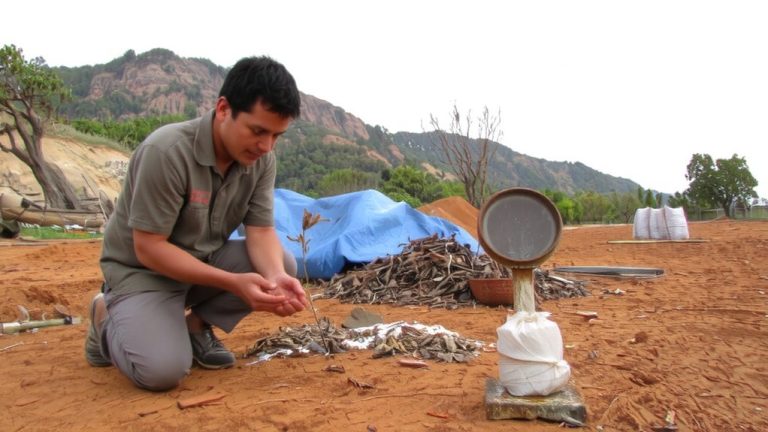
- Tea leaves are withered and dried over smoldering Pinus taiwanensis wood fires in bamboo-matted sheds for three to four days.
- Smoke from the open fires is channeled through drying sheds to infuse the leaves with a distinct pine flavor.
- Only mature souchong leaves, from the fourth and fifth growths, are used in traditional open-fire smoking.
- Authentic production uses indirect heat and occurs exclusively in Tong Mu Guan, Wuyi Mountains, for proper smoke integration.
How Lapsang Souchong Got Its Smoky Taste
Lapsang souchong’s bold, smoky character isn’t accidental-it’s the result of a centuries-old drying process born out of necessity. You’re tasting history when you brew smoked lapsang souchong, a tea that originated in the Wuyi Mountains during the Qing Dynasty. Farmers fleeing soldiers in 1646 needed to speed up the drying of tea leaves, so they used open pine fires. The leaves were withered indoors over smoldering Pinus taiwanensis, allowing them to absorb the smoke and develop their signature smoky flavor. This method, traditionally smoked over pine wood, became standard. The Fuzhou terms “la” (pine) and “sang” (wood) highlight how central pine smoke is. Even today, genuine lapsang souchong is still carefully dried this way, ensuring each cup delivers that authentic, robust character you expect from tea traditionally smoked in the Wuyi.
How Pine Smoke Defines Lapsang Souchong’s Flavor
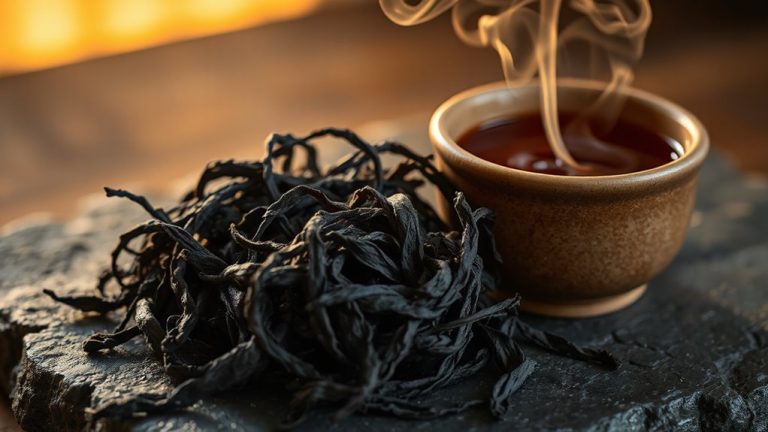
That bold, campfire-like punch you taste in every sip? It’s pine smoke defining Lapsang souchong’s flavor. When tea leaves from the Wuyi region are withered over flames of Pinus taiwanensis, they absorb rich wood smoke compounds, creating a truly unique smoked tea. The Fuzhou dialect name “lapsang” (la = pine, sang = wood) confirms smoke’s central role. As volatile compounds infuse the leaves, they develop deep, resinous notes like smoked paprika or peated whisky. Skilled artisans use indirect heat to balance intensity while minimizing harmful polycyclic aromatic hydrocarbons. This careful control guarantees bold flavor without bitterness or health risks. Unlike harsh, over-smoked versions, traditional Lapsang souchong delivers complexity-smoky upfront, with a clean, lingering finish. You’re not just tasting smoke; you’re experiencing a centuries-old craft, where fire and leaf meet in perfect harmony.
Smoking Lapsang Souchong the Traditional Way
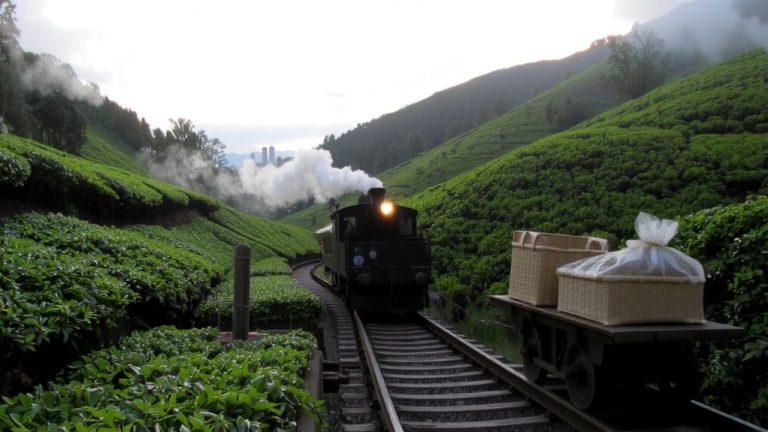
You’ve tasted the smoke, felt that rich, campfire warmth in every sip-now see how it’s made the way generations have done it. In the misty Wuyi Mountains of Fujian province, true Lapsang souchong, a bold black Chinese tea, is transformed through traditional smoking. The tea leaf drying process happens over slow-burning pine wood from Pinus taiwanensis, the smoke funneled through bamboo-matted sheds for three to four days. Only the larger souchong leaves-the fourth and fifth growths-are used, as they absorb smoke flavor best. This careful method creates a deeply smoky tea with notes of pine resin, wood fire, and dried longan. Unlike mass-produced smoked tea, authentic Lapsang souchong balances intensity without bitterness, a hallmark of genuine souchong teas shaped by fire, time, and place.
Why Authentic Lapsang Souchong Is Hard to Find Today
Though it might surprise you, the bold, pine-kissed Lapsang Souchong you’ve enjoyed could easily be a modern imitation, not the real thing. Authentic Lapsang Souchong-known as Zhengshan Xiaozhong-is a true Chinese Black Tea, smoked gently over pine fires in Tong Mu Guan, Wuyi Mountains. But real traditional production is rare now. EU rules limit PAHs, harmful compounds from open smoking, so many traditionally smoked batches don’t make it to market. Plus, the process is costly and slow, so most producers use hot-smoking in factories. Even the native Bohea cultivar, bred to absorb smoke perfectly, is grown less today. Without it, the flavor lacks depth. Most “Lapsang Souchong” today isn’t from Tong Mu Guan, isn’t smoked over pine, and isn’t authentic tea. If you want the original, look for Zhengshan Xiaozhong with origin proof, low-PAH certification, and slow-smoked craftsmanship.
On a final note
You get that bold, smoky punch in Lapsang Souchong from pine smoke during traditional drying, not additives. Authentic versions use fresh Lapsang pine, smoked 8–12 hours, giving a clean, resinous aroma-testers note notes of campfire, dried cherry, and cedar. Mass-market versions often skip real smoking, losing depth. For flavor and antioxidants like EGCG, real smoked tea is worth the hunt, delivering robust taste and real tradition in every 2-gram steep.