How Vietnamese Artisan Teas Are Reviving Forgotten Heirloom Cultivars
You’re sipping tea from 700-year-old Camellia sinensis var. assamica trees, where Hmong and Red Dzao farmers hand-pick fuzzy Shan Tuyet buds at 1,400 meters, rich in antioxidants and amino acids. Wood-fired drying over longan embers preserves complexity, crafting award-winning black and oolong teas. These ancient trees, with dense trichomes and high terpene content, yield rare, organic leaves that sustain biodiversity-and your next discovery awaits.
We are supported by our audience. When you purchase through links on our site, we may earn an affiliate commission, at no extra cost for you. Learn more. Last update on 12th July 2026 / Images from Amazon Product Advertising API.
Notable Insights
- Ancient Shan Tuyet tea trees in northern Vietnam preserve rare heirloom Camellia sinensis var. assamica genetics.
- Ethnic Hmong and Dao communities sustainably cultivate old-growth tea forests with traditional agroforestry methods.
- Hand-harvesting of 500- to 700-year-old trees supports conservation of genetically diverse heirloom cultivars.
- Artisan processing techniques revitalize unique flavor profiles from forgotten wild tea varieties.
- Global demand for premium Vietnamese teas drives renewed interest in protecting ancestral tea tree populations.
Vietnam’s Tea Origins: Wild Trees and Forgotten Cultivars
While much of the world’s tea history centers on China and India, you’ll find some of the oldest and most genetically diverse tea trees right in northern Vietnam, where wild Camellia sinensis var. assamica trees have stood for 500 to 700 years-some even taller than a four-story building-in provinces like Ha Giang and Lao Cai. These ancient wild tea trees thrive in biodiverse forests, forming the backbone of traditional Vietnamese tea cultivation. Indigenous groups like the Hmong and Red Dzao have sustainably harvested them for generations, preserving knowledge and heirloom cultivars like shan tuyet tea. With large, fuzzy buds and complex catechin profiles confirmed by Russian studies, these cultivars offer balanced flavor and potential health benefits. Archaeological finds of 10,000-year-old tea seeds suggest northern Vietnam may be a cradle of tea evolution. Today, renewed focus on Camellia sinensis var. assamica supports the revival of forgotten, high-performing heirloom cultivars grown at elevations up to 1,600 meters.
Why Shan Tuyet Tea Commands Premium Quality
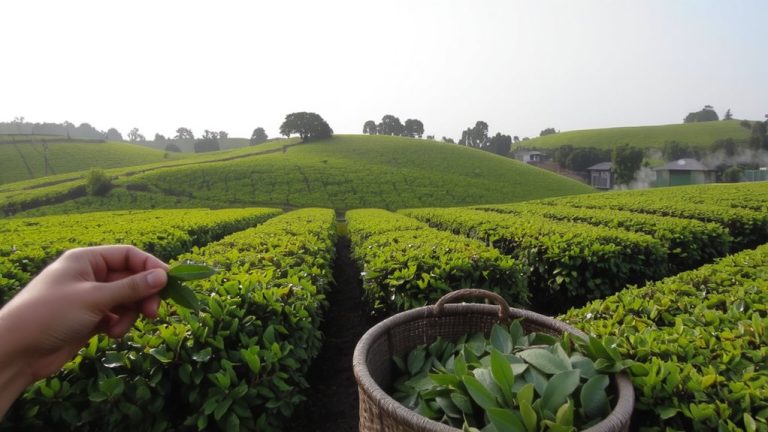
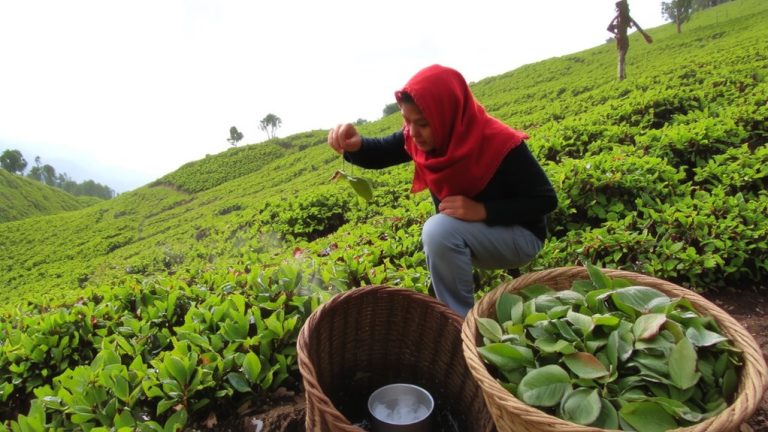
Because it comes from ancient wild tea trees growing high in Vietnam’s northern mountains, you’re getting something truly rare when you sip Shan Tuyet tea-leaves plucked by hand from 500-year-old Camellia sinensis var. assamica trees in Ha Giang and Lao Cai, often found between 900 and 1,400 meters elevation where cool temps and misty air slow growth and deepen flavor. The cool climate, combined with organic tea cultivation practices, boosts bioactive compounds like antioxidants. You’ll notice the white fuzz on each prized tea leaf, a hallmark of Shan Tuyet that signals maturity and protection from UV exposure. These ancient tea trees offer unmatched genetic diversity, translating to complex, aromatic Vietnamese green tea with sweet, floral, umami notes. Harvesting is labor-intensive-farmers climb 15-meter trees, selecting only the 1+1 bud-and-leaf. That care guarantees high-quality teas, batch after batch.
Guardians of the North: Farmers and Ancient Tea Forests
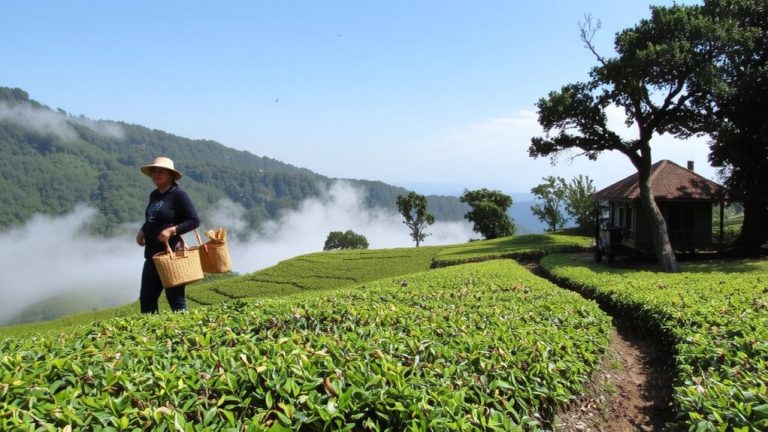
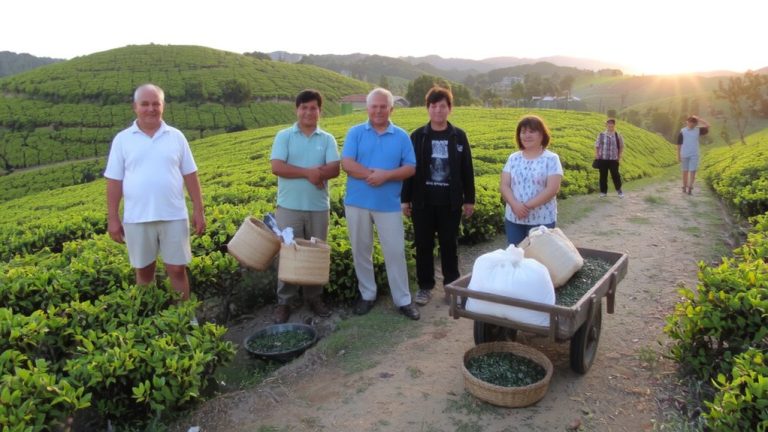
You’ve just learned what makes Shan Tuyet tea so rare-its ancient origins, high-elevation growth, and dense coating of white trichomes that protect leaves from harsh mountain sun. Now meet the keepers of this legacy: farmers across the northern provinces of Ha Giang, Lao Cai, and Yen Bai who tend tea trees growing in wild forest gardens. These ancient tea trees, some 500–700 years old, are central to Vietnamese culture and managed by ethnic minority groups like the Hmong and Dao. They practice sustainable harvesting, climbing tall trunks to hand-pick the 1+1 leaf standard, preserving both flavor and forest health. From Suối Giàng to Tà Xùa, these heirloom cultivars shape the region’s tea landscape, supporting biodiversity and yielding complex tea varieties. Their tea gardens aren’t planted-they’re inherited, evolving naturally, with DNA studies revealing climate-resilient traits essential for future tea security.
How Artisans Craft Award-Winning Vietnamese Tea
If you’ve ever tasted a tea with deep floral notes, a malty sweetness, and a finish that lingers like mountain mist, you’ve likely encountered the handwork of Vietnam’s master tea artisans. In Ha Giang, they craft Shan Tuyet tea from leaves plucked high in 500–700-year-old ancient trees, some as tall as 15 meters. Using traditional processing-wood-fired drum drying over longan wood, careful hand rolling-ethnic Hmong and Dao artisans preserve the delicate character of these heirloom cultivars. Their black tea, like the prized Pai Hao, undergoes precise oxidation, yielding an award-winning malty-floral balance. Meanwhile, in Lam Dong, oolong tea makers apply Taiwanese techniques to local Qing Xin and Jin Xuan cultivars, producing competition-winning Gui Fei and Gaba oolongs. Every sip reflects Vietnam’s terroir, heritage, and artisan dedication to quality.
From Leaf to Legacy: Export Recognition and Global Taste
Though Vietnam’s tea exports have reached 80 countries, including top markets in Europe, North America, and East Asia, it’s the rarefied tier of artisanal leaves-like Snow Shan Silver Needle and Pai Hao-that’s reshaping how connoisseurs view the country’s potential. You’re seeing real global recognition for Vietnamese teas, especially specialty teas from ancient trees in Ha Giang and Lao Cai. These heirloom cultivars, hand-harvested from 100–700-year-old Camellia sinensis var. assamica, fuel a growing demand for authentic artisan teas. While bulk tea production still dominates, premium teas make up less than 10% of tea exports-yet their impact is disproportionate. Initiatives like Siam Tea Shop’s “Vietnam Ancient Arbor Teas” highlight traditional tea cultivation and processing, elevating Vietnam’s status in the specialty teas world.
| Region | Notable Premium Teas |
|---|---|
| Ha Giang | Snow Shan Silver Needle |
| Lao Cai | Pai Hao, Purple Bud oolong |
| Lam Dong | Taiwanese-style oolongs |
| Moc Chau | High-mountain green teas |
| Dien Bien | Wild-harvested heirloom teas |
Saving Vietnam’s Ancient Tea Trees
As climate change threatens to shrink Vietnam’s viable tea-growing regions by up to 34% by 2050, preserving its ancient tea trees isn’t just cultural stewardship-it’s agricultural necessity. You’re seeing more Shan Tuyet, an heirloom cultivar from towering Camellia sinensis var. assamica trees up to 15 meters tall, thrive across the mountainous terrain of Ha Giang and Lao Cai. These ancient tea trees, some 500–700 years old, offer unmatched genetic diversity-confirmed by RAPD-PCR studies-making them essential for climate resilience. Artisan producers rely on hand-picking, harvesting the 1+1 standard or pure buds to craft premium teas like Snow Shan Silver Needle. This careful method guarantees quality while supporting sustainable tea conservation. By protecting these trees, you’re not only saving biodiversity but also securing robust stock for future crops, guaranteeing tradition and taste endure in every cup.
On a final note
You’re tasting history with every sip of Vietnamese Shan Tuyet tea, hand-plucked from 100+ year wild trees, rich in antioxidants like EGCG, up to 30% higher than common green teas. Artisans sun-wilt, hand-roll, and lightly oxidize leaves, preserving flavor and nutrition. At 35 mg caffeine per 8 oz, it’s smooth, low-jitter energy. Real tea drinkers note lasting clarity and a clean, floral finish. Support forest guardians, choose verified heirloom harvests-your cup saves heritage, one leaf at a time.