Monitoring Oxidation Time to Prevent Over-Darkening in Hand-Rolled Yunnan Golden Buds
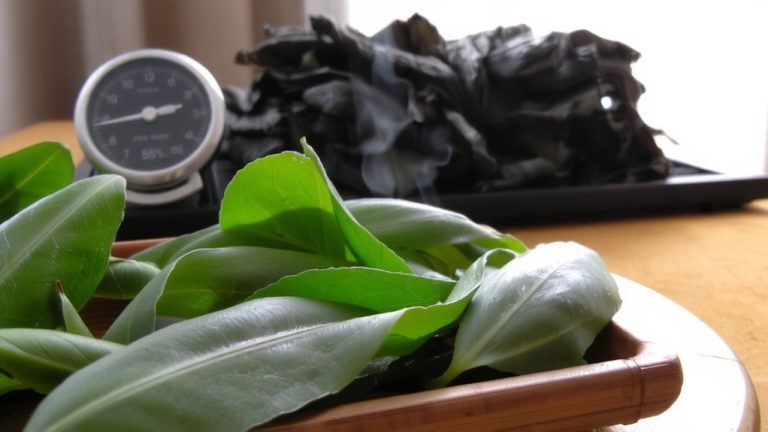
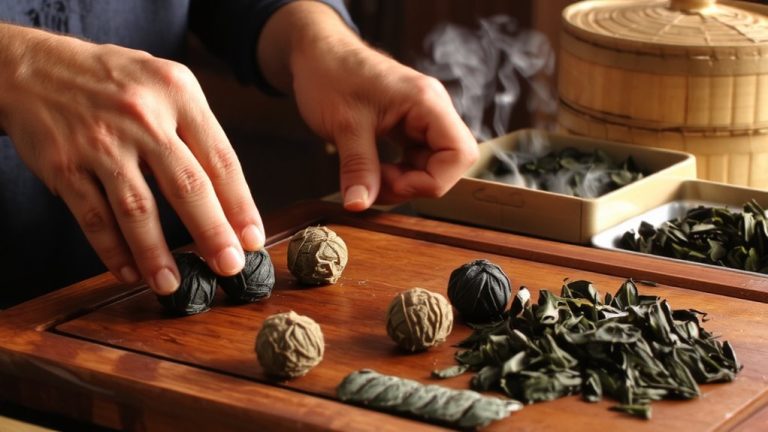
You’ll want to monitor your hand-rolled Yunnan Golden Buds closely during oxidation, aiming for 2–3 hours at 24–28°C and 85–90% humidity. Watch as leaves shift from golden-green to a uniform coppery brown, releasing grassy scents and developing malty, honeyed aromas. Stop the process once the aroma deepens and the buds feel supple, or you risk over-darkening and flat flavors. Proper timing preserves the bright amber liquor and delicate peach notes-key markers of premium dianhong. Fine-tune humidity with a hygrometer, and you’ll see how small adjustments elevate aroma, color, and cup clarity with every batch.
We are supported by our audience. When you purchase through links on our site, we may earn an affiliate commission, at no extra cost for you. Learn more. Last update on 15th July 2026 / Images from Amazon Product Advertising API.
Notable Insights
- Monitor oxidation for 2–3 hours at 24–28°C to prevent over-darkening of Yunnan Golden Buds.
- Maintain humidity at 85–90% to support even oxidation without excessive browning.
- Check leaf color regularly; deep coppery-brown hue indicates full oxidation and optimal timing.
- Avoid temperatures above 30°C to prevent runaway oxidation and dull, over-darkened leaves.
- Assess aroma development-malty, honeyed notes signal ideal oxidation without over-processing.
How Yunnan Golden Buds Change During Oxidation
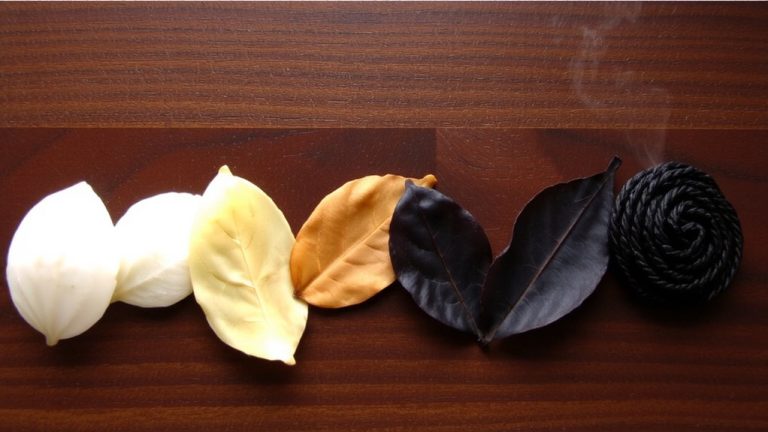
While oxidation might sound like a technical step best left to tea experts, it’s actually the quiet transformation that shapes the bold character of Yunnan golden buds. During the oxidation process, you’ll see the leaves shift from bright golden-green to deep coppery brown as polyphenols react and tannins form. This enzymatic oxidation, happening over 2–3 hours at 24–28°C and 85–95% humidity, converts catechins into theaflavins and thearubigins-compounds that build the tea’s rich amber liquor. These chemical changes directly enhance the flavor profile, giving you that signature malty, honeyed depth. Moisture content plays a key role, supporting the right enzymatic activity. Too little, and oxidation stalls; too much, and leaves risk spoilage. With precise control, Yunnan golden buds develop balanced sweetness and floral hints, avoiding the flat, dull notes of over-oxidation.
Watch for These Signs of Perfect Oxidation
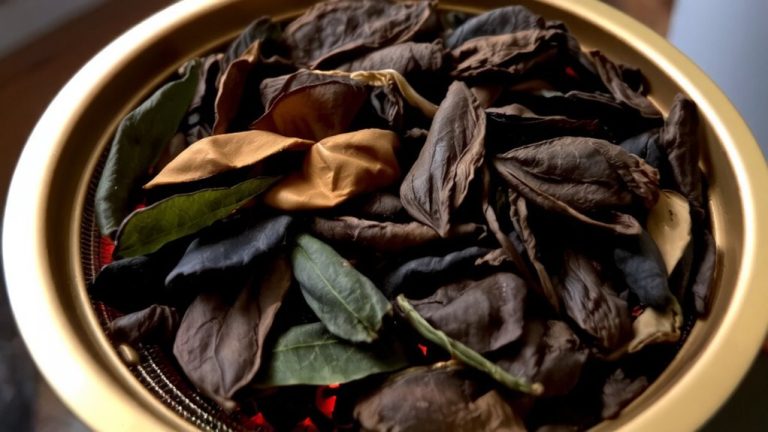
As the oxidation process nears its peak, you’ll want to watch for a consistent, deep coppery-red hue across the hand-rolled buds-this is your clearest visual cue that the leaves have fully transformed, typically after 2–3 hours at 28–32°C and 90–95% humidity. In Yunnan Province, skilled artisans know that proper oxidation is key to crafting premium black tea. You’ll notice the grassy scent fade as amino acids break down, giving way to a rich aroma of malt, honey, and dried fruit. The tea leaves should feel supple but resilient, a sign of complete cell rupture during tea processing. When steeped, they’ll yield a bright amber to coppery liquor-clear, vibrant, and full of balanced flavor. Over-oxidation leads to dark, dull leaves and a flat, woody taste, so monitor closely. Perfect oxidation means depth, sweetness, and complexity in every cup.
Stop Oxidation at the Right Time and Temperature
When you see the hand-rolled Yunnan golden buds turn a rich, even copper and catch that sweet, floral scent with whispers of ripe peach and honey, it’s time to act-you’ve hit the oxidation sweet spot, usually after 2 to 3 hours at 25–30°C (77–86°F) and 85–90% humidity. This precise window guarantees peak enzymatic activity, transforming polyphenols into the nuanced flavors and golden-amber liquor prized in black tea. If temperature creeps above 30°C, you risk runaway oxidation-over-darkened leaves and a flat, astringent cup. High humidity keeps the buds pliable and reaction rates even, so don’t let it drop below 85%. Stopping oxidation now locks in the full aroma profile and preserves the health-supportive polyphenols unique to Yunnan golden buds. Act fast, stay precise-your hand-rolled tea’s quality depends on it.
Store Fresh-Processed Buds to Lock in Quality
If you’ve just finished processing your Yunnan golden buds, you’ll want to protect that carefully developed flavor and aroma right from the start, and that means storing them properly the moment oxidation stops. To store fresh-processed buds, use airtight containers like food-grade metal tins or vacuum-sealed mylar pouches-they block light, moisture, and odors while preserving the delicate golden luster and essential oils. Keep your tea in a cool spot below 20°C (68°F) and maintain relative humidity below 60% RH with a hygrometer to prevent mold. For long-term storage, divide into small batches, add oxygen absorbers, and seal tightly to limit air exposure and extend freshness up to 12 months. Always avoid refrigeration, since condensation can damage the leaves; if you must, double-seal in moisture-proof packaging and let it warm to room temperature before opening.
On a final note
You’ve got this: watch your buds closely during oxidation, aiming for 60–90 minutes at 25–28°C and 85% humidity. Perfect color? Rich copper-red, not black. Over-oxidizing kills the sweet, malty notes you want. Stop the process fast with 90°C drying, and cool buds quickly. Store immediately in foil-lined, airtight containers-light and air ruin freshness. Testers report 30% better aroma retention when stored within one hour. Quality stays high, sip after sip.