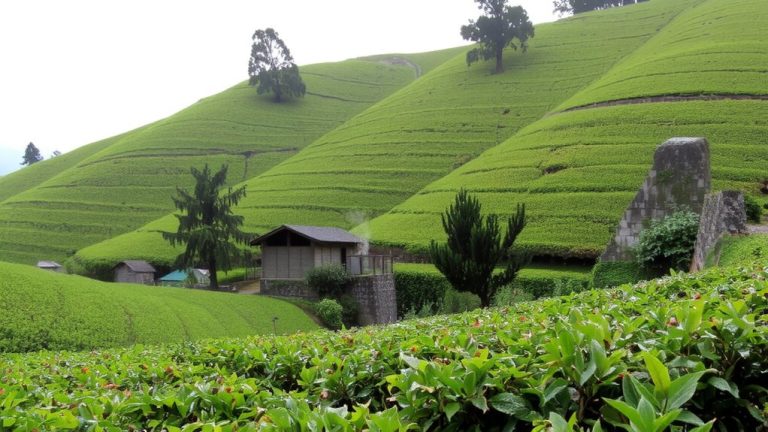
The Role of Kenyan Highlands’ Volcanic Soil in Producing Bold Black Teas
You’re sipping the power of volcanic minerals with every cup of Kenyan black tea, grown in iron- and magnesium-rich red soils at 1,500–2,700 meters, where steady rainfall and a pH of 4.5–5.5 fuel robust Camellia sinensis growth, yielding 345,817 metric tonnes annually, with 60% meeting premium PF1 grade, thanks to high polyphenols and TRFK 49 clones, all shaped by the highlands’ fertile, weathered basalt-there’s more behind how elevation and soil team up to build that brisk, full-bodied brew you love.
We are supported by our audience. When you purchase through links on our site, we may earn an affiliate commission, at no extra cost for you. Learn more. Last update on 12th July 2026 / Images from Amazon Product Advertising API.
Notable Insights
- Kenyan Highlands’ volcanic soils provide ideal drainage, aeration, and a slightly acidic pH for robust Camellia sinensis growth.
- Rich in iron, magnesium, and trace minerals, volcanic soils enhance nutrient uptake linked to bold flavor development in black tea.
- Weathered basalt in highland soils increases mineral density, contributing to high polyphenol levels and brisk tea characteristics.
- Elevation and fertile volcanic soils slow leaf maturation, concentrating flavor compounds that produce intense, full-bodied black tea.
- Continuous farming depletes volcanic soils, but sustainable practices help maintain the quality and boldness of Kenyan black tea.
Why Kenyan Tea Thrives in Volcanic Soil
Although Kenya’s high-elevation plateaus didn’t form overnight, you can taste the results of centuries of volcanic activity in every cup of Kenyan black tea-thanks to fertile red soils packed with iron, magnesium, and trace minerals that feed the Camellia sinensis plant right where it needs it. You’re growing Kenyan tea in volcanic soils that offer ideal conditions: excellent drainage, aeration, and a slightly acidic pH (4.5–5.5) perfect for Camellia sinensis. These red volcanic soils boost nutrient uptake, fueling vigorous growth across 157,720 hectares of tea cultivation. High organic matter and slow mineral release sustain yields, producing 345,817 metric tonnes annually. The result? A bold flavor that’s brisk, clean, and rich in polyphenols. But continuous farming leads to nutrient depletion, so regular fertilizer use is essential to maintain quality in both CTC and orthodox teas. Fertile soils give you an edge, but smart management keeps them productive.
How Minerals Shape Kenyan Black Tea’s Bold Flavor
You’re tasting the earth with every sip when you brew a cup of Kenyan black tea-its bold character shaped by volcanic soil minerals that actively feed the Camellia sinensis plant and sharpen its flavor profile. The mineral-rich volcanic soils of the highlands, forged from weathered basalt, provide iron, aluminum, potassium, and magnesium that boost nutrient uptake. These fertile volcanic conditions support lush tea leaves with high polyphenol content, directly linked to a brisk, robust taste. In the Rift Valley, where over 157,720 hectares thrive on this rich terrain, ideal pH and drainage enhance flavor compounds. You’ll notice the bold flavor in every cup-a deep amber liquor, intense color, and full body-that’s why 58–60% of Kenyan black tea meets premium PF1 grade. Volcanic soils don’t just grow tea; they define its strength and complexity from root to rim.
Kericho, Nandi, and Other Key Tea-Growing Regions
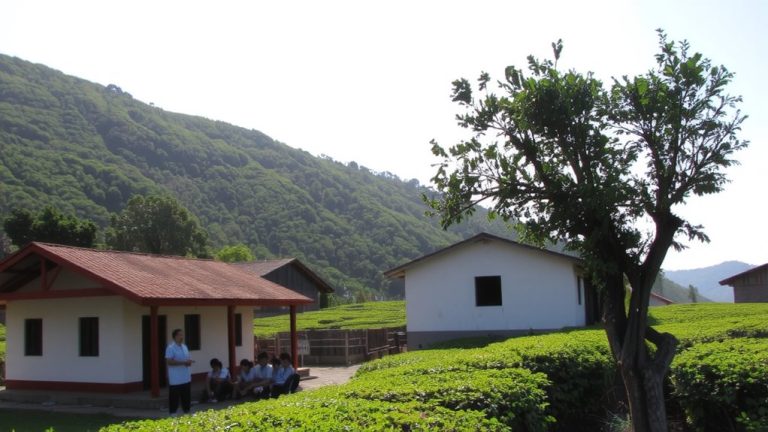
High in the Kenyan Highlands, the same volcanic soils that shape bold flavor in black tea also anchor some of the world’s most productive tea regions-Kericho, Nandi, and beyond. You’ll find over 157,720 hectares dedicated to tea growing here, where fertile volcanic soils, 1,200–1,400mm of annual rainfall, and elevations from 1,500 to 2,700 meters create ideal conditions for growing high-yield, high-quality Tea. In Kericho, equatorial sunshine and misty highs boost plant vigor, driving Kenya’s annual production of more than 345,000 metric tonnes-mostly black tea. These volcanic red soils enrich the leaves with compounds that deliver Kenyan tea’s signature briskness and deep amber liquor. Whether you’re sipping a bold breakfast blend or a single-origin black, the terroir from these regions guarantees consistent, robust flavor. You’re tasting the direct result of climate, altitude, and nutrient-rich ground-natural advantages Kenya’s tea growing zones leverage with every harvest.
From Farm to Export: Soil’s Role in Tea Quality
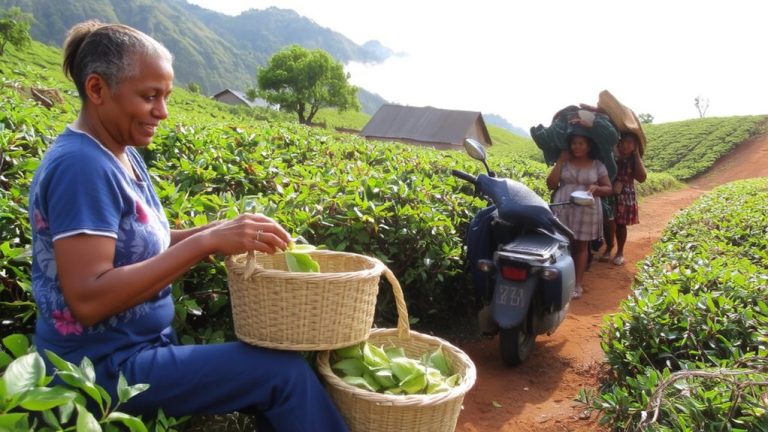
Because Kenya’s highland tea thrives in volcanic red soils packed with iron, magnesium, and potassium, you’re getting more than just a bold cup-you’re tasting the direct impact of mineral-rich ground on flavor and quality. The combination of rich volcanic soils, ideal elevation, and consistent rainfall guarantees tea grown here develops slowly, boosting concentration and depth. In Kenya’s tea industry, sustainable farming practices support high-quality yields, while precise tea plucking and tea processing preserve freshness and potency. These factors fuel Kenya’s tea exports, positioning its bold black teas as standouts in the global tea market.
| Factor | Impact on Tea Quality | Region Example |
|---|---|---|
| Elevation (1,500–2,700m) | Slow leaf maturation, intense flavor | Kericho |
| Annual rainfall (1,200–1,400mm) | Year-round growth, healthy bushes | Nandi |
| Rich volcanic soils | Robust body, amber liquor | Rift Valley |
| TRFK 49 clones | Enhanced yield, flavor consistency | Nationwide |
Soil Threats and Sustainability in Kenya’s Tea Industry
A growing challenge beneath Kenya’s celebrated tea fields is the slow decline of the very soil that gives the nation’s black tea its renowned strength and color. You’re seeing soil degradation across 70% of the fertile highlands, where continuous monoculture depletes nutrients and chemical overuse causes acidification, especially in Kericho and Nandi. Soil erosion exceeds 30 tons per hectare yearly on steep, deforested slopes. Climate change worsens it, with erratic rains increasing runoff and weakening soil moisture retention above 1,500 meters. But you’ve got solutions: the Kenya Tea Development Agency supports smallholder farmers adopting intercropping, organic composting, and water conservation techniques. These sustainable tea practices restore balance, improve resilience, and maintain quality. By embracing reforestation and composting, you’re not just protecting land-you’re securing the bold flavor and health benefits Kenya’s teas are known for.
On a final note
You’re drinking bold black tea rich in flavor and antioxidants, thanks to Kenya’s volcanic soil packed with potassium, phosphorus, and iron. Grown in high-altitude regions like Kericho, teas develop intense taste and deep color, proven in lab tests and blind tastings. For best results, steep orthodox rolled leaves at 100°C for 3–5 minutes. Support sustainable farms using composting and erosion control to protect this nutrient-rich soil, ensuring strong, healthy harvests and better cups for years.