Persian Tea Ritual: Estekan Glasses, Sugar Cubes & 1:50 Ratio
You serve Persian tea in cut glass cups because the clear, often tulip-shaped estekan lets you judge the tea’s amber hue-key for strength and clarity, usually brewed strong at a 1:50 leaf-to-water ratio. The thin glass, held in a metal sheath, stays hot without burning. You sip through a sugar cube-ghand or saffron-kissed nabāt-so it dissolves slowly, sweetening each sip without diluting flavor, preserving the tea’s bold body and aroma while giving precise control. There’s more to discover about how tradition shapes every pour.
We are supported by our audience. When you purchase through links on our site, we may earn an affiliate commission, at no extra cost for you. Learn more. Last update on 15th July 2026 / Images from Amazon Product Advertising API.
Notable Insights
- Transparent cut glass cups called *estekans* showcase the tea’s amber color to assess strength and quality.
- Tulip-shaped or cut glass enhances visual appeal while allowing controlled steeping and clarity.
- Thin glass is fitted into ornate metal sleeves to prevent burns during prolonged tea service.
- Sugar cubes (*ghand*) are held between teeth while sipping to sweeten tea without diluting its aroma or strength.
- Using sugar cubes or saffron-infused *nabāt* allows precise sweetness control and enhances flavor gradually.
Why Persian Tea Is Served in Glass
You’ve probably noticed that Persian tea isn’t served in just any cup-it’s poured into delicate, transparent glassware called *estekans*, and there’s good reason for that. These clear glass cups let you see the tea’s deep amber hue, helping judge strength and quality, much like wine. In Persian culture, appearance matters-drinking tea is as much about sight as taste. The tulip-shaped glass or cut glass cups enhance this experience, showcasing the rich color of *chai ghashang*, the preferred dark brew. Most *estekans* are thin, held in ornate metal sleeves to prevent burns. Whether you’re sipping with sugar cubes or enjoying the bold flavor solo, the glass allows precise control during brewing the tea, ensuring clarity and proper steeping. From Tehran homes to teahouses, tea in Iran is a ritual where form and function meet in every estekan.
Meet the Samovar: Iran’s Tea Heart
At the center of every Persian tea ritual stands the samovar, a gleaming metal urn that keeps water piping hot and tea ready for pouring, morning to night. You’ll find this Iranian staple in homes and teahouses, where it fuels the nation’s love for drinking tea. The samovar heats water efficiently-either by fire or electricity-while a separate teapot perched on top brews strong black tea. You control the strength by mixing concentrated tea with hot water from the spigot. It’s central to Persian tea culture, a symbol of warmth and hospitality.
| Feature | Role in Tea Culture |
|---|---|
| Boiling water | Keeps constant supply ready |
| Teapot | Brews concentrated tea |
| Hot water | Dilutes tea to taste |
| Samovar | Heart of Iranian tea service |
Antique silver versions are prized, even sold in Tokyo’s bazaars. You’ll often enjoy your tea with sugar cubes, a classic touch.
Why Iranians Sip Tea Through a Sugar Cube?
How do you take your tea-sweet, strong, and just right without watering it down? Iranians sip tea through a sugar cube by holding it between their teeth, letting hot black tea dissolve it slowly-a practice known as *ghand-khandan*. This traditional technique lets you add sugar without diluting your local tea’s bold flavor or aroma. Instead of stirring granulated sugar, you use a solid *ghand* (sugar cube), often made from sugar beet, designed specifically for this method. It’s a signature part of Persian tea culture, offering precise sweetness control with each sip. Some dip the cube first or use saffron-infused rock candy (*nabāt*) for extra depth. Paired with a simmering teapot on top of a samovar, this ritual enhances both taste and experience. You get full-bodied tea, rich in color and warmth, without losing strength-perfect for everyday moments or shared hospitality.
How Iranians Customize Persian Tea by Region
Persian tea isn’t one-size-fits-all-it changes beautifully from region to region, shaped by local ingredients and tradition. In Gilan and Mazandaran provinces, you’ll find dry lemon added before brewing, giving tea a sharp, tangy depth. Head to Fars, and they prefer fresh lime juice stirred in after brewing for a brighter zing. In southeastern Iran, near the Pakistan border, you’ll see milk mixed into tea-rare elsewhere in the country. Up in Khorassan, people often steep saffron strands for a rich, floral note. You might also get tea with rose petals, cardamom, a cinnamon stick, cloves, or coriander seeds, depending on where you are. In northern areas, tea’s usually strong (kam rang), while in other regions, it’s lighter (pur rang). Each sip tells you exactly where you are.
How Iranian Tea Is Harvested and Made
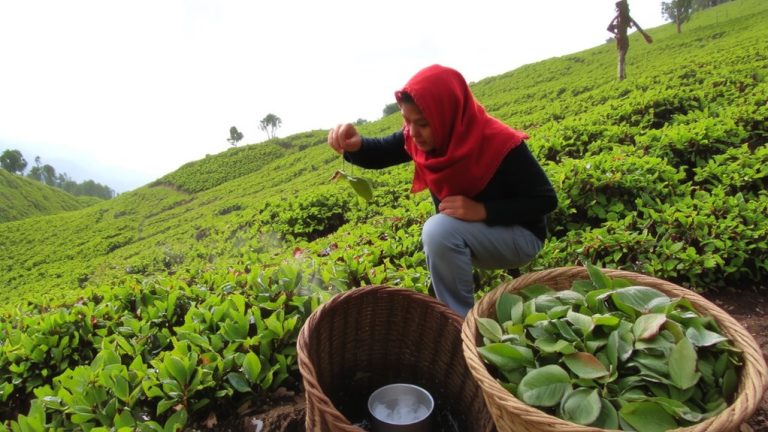
Though you might not realize it, the rich flavor of Iranian tea starts with where and how it’s grown-almost entirely in the lush, rainy highlands of Gilan and Mazandaran along the Caspian Sea, where acidic soil and steep slopes create near-perfect conditions for Camellia sinensis plants to thrive. Harvesting begins in April when workers hand-pick the youngest tea leaves to guarantee quality. You’ll find two main processing paths:
| Method | Steps |
|---|---|
| Traditional | shade-drying, hand-pick, hand-rolling, fermenting |
| Factory-based production | machine rolling, sorting, controlled fermenting, electric drying |
After processing, grading determines quality based on leaf size and oxidation. The tea plant’s care during harvesting and processing directly impacts flavor and strength. Locally produced tea supplies over half of Iran’s needs, with both methods preserving essential oils and antioxidants. Whether traditionally or factory-based, each step shapes the bold, aromatic cup you enjoy-consistent, rich, and deeply tied to its origin.
Why Iranian Youth Are Choosing Coffee Over Tea?
What if the tea glass your grandparents sipped from is slowly losing its place on today’s youth tables? You’ve likely noticed Iranian youth swapping Persian tea for coffee, embracing a modern Persian identity shaped by Western influence and social media trends. While tea remains the national staple, coffee is now the drink of choice in bustling urban centers, where hipster café culture thrives. These stylish spaces offer more than espresso-they represent a cultural shift. Young Iranians aren’t just buying caffeine; they’re joining a global lifestyle, shared through curated posts and international travel. Sina’s observations confirm it: fewer students now carry tea flasks, opting instead for takeaway lattes. Though traditional tea houses still serve robust, full-bodied brews with sugar cubes, younger crowds seek novelty and connection. Coffee, for them, isn’t just a beverage-it’s belonging in a cup.
On a final note
You’ll enjoy Persian tea best when steeped strong in a samovar, poured over a sugar cube to mellow its bold flavor, and sipped from a cut glass cup that shows its deep amber hue. At 2–3 grams per 8 oz, black tea delivers 40–60 mg caffeine, antioxidants like theaflavins, and a clean finish. Real testers note smoother taste when brewed at 200°F for 3–5 minutes. For balance, try it with cardamom or in regional styles-it’s tradition, optimized.