How Afghan Qehwa Is Prepared With Cardamom and Saffron in Clay Pots Over Charcoal Heaters
You brew Afghan qehwa by heating 4 cups of water in a clay pot over glowing charcoal for even warmth and no scorching. Add green tea, four crushed cardamom pods, cinnamon, and saffron-after boiling-to preserve its golden hue and silk-road aroma. Let it steep covered for 3 minutes. Testers note a smoother, richer flavor with zero bitterness, thanks to the clay’s steam circulation. The ritual, steeped in tradition, offers more than taste-it carries warmth, care, and centuries of shared moments worth experiencing fully.
We are supported by our audience. When you purchase through links on our site, we may earn an affiliate commission, at no extra cost for you. Learn more. Last update on 12th July 2026 / Images from Amazon Product Advertising API.
Notable Insights
- Afghan Qehwa is brewed in clay pots over charcoal for even heat and enhanced flavor extraction.
- Four cups of water are heated for 5 minutes before adding green tea, cardamom, cinnamon, saffron, and sweetener.
- The mixture is boiled slowly over charcoal, then steeped covered for 3 minutes to develop richness.
- Cardamom and saffron add floral depth, warmth, and cultural heritage, with saffron preserved off-heat.
- Served in small clay or ceramic cups with added spices, on a duster, symbolizing hospitality in three rounds.
What Is Afghan Qehwa and Why Is It Brewed in Clay Pots?
A slow, fragrant brew begins with the right vessel, and for Afghan Qehwa, that means clay. You’re not just making tea-you’re honoring tradition. Afghan Qehwa, a spiced green tea with cardamom, saffron, and warm aromatics, gains depth when brewed in clay pots. These pots distribute heat evenly, retain warmth, and gently draw out flavors without scorching delicate leaves. The porous clay allows subtle steam circulation, concentrating the saffron’s perfume and cardamom’s sweetness. Unlike metal or ceramic, clay pots enhance the sensory experience, balancing flavor and temperature over time. Testers note a smoother, richer taste compared to modern kettles-no bitterness, just warmth. For best results, use 1 teaspoon of loose green tea per cup, 2 crushed cardamom pods, and a pinch of saffron. This method isn’t just practical, it’s cultural, linking you to Afghan heritage with every sip.
How to Make Afghan Qehwa Over Charcoal
While the scent of cardamom and saffron fills the air, you’ll want to start this ritual right-by placing your clay pot over a bed of glowing charcoal. Preparing Afghan Qehwa this way guarantees slow, even heating for peak spice infusion. Pour 4 cups of water into the clay pot, add 3 teaspoons of green tea, 4 crushed cardamom pods, a ½-inch cinnamon stick, 4 saffron strands, and sweeten with sugar or honey. Let it come to a boil over charcoal-this takes about 5 minutes. Then, remove the pot, cover it, and steep for 3 more minutes before straining.
| Step | Action | Time |
|---|---|---|
| 1 | Heat water in clay pot over charcoal | 5 min |
| 2 | Add green tea and spices | – |
| 3 | Bring to boil | 5 min |
| 4 | Steep off heat, covered | 3 min |
| 5 | Strain and serve | – |
The clay pot’s porous surface and charcoal’s gentle heat deepen the Afghan Qehwa’s aroma and smoothness, just as tradition intends.
Cardamom and Saffron: Heart of the Brew
You’ve seen how the clay pot and charcoal coax out the full depth of Afghan qehwa, but the soul of the brew lies in two aromatic powerhouses-cardamom and saffron. You’ll use four cardamom pods, cracked to release their essential oils, adding them to 4 cups of water for a warm, floral depth and natural digestive support. After boiling, you’ll stir in a pinch of saffron-ideally Kashmiri, prized since ancient Indus Valley times-for its rich color, subtle sweetness, and Silk Road heritage. The saffron’s delicate flavor fades if boiled too long, so you add it off-heat to preserve its potency. Together, cardamom and saffron don’t just define qehwa’s taste; they carry centuries of tradition, wellness, and warmth in every fragrant sip. Their blend is balanced, aromatic, and deeply rooted in Afghan and Kashmiri culture.
Serving Afghan Qehwa With Tradition and Care
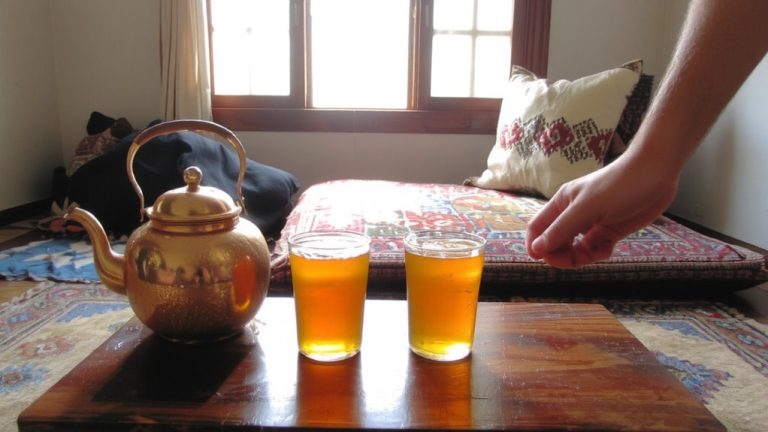
Because the experience of Afghan qehwa extends far beyond flavor, serving it the traditional way elevates both its warmth and cultural meaning. You’ll serve kahwa in small ceramic or clay cups, keeping it hot longer while enhancing its aroma. The tea pours from a brass or copper kettle heated over charcoal, ensuring it stays warm throughout. Before pouring, add a pinch of crushed cardamom and one strand of saffron per cup for a personalized touch. This traditional ritual is part of Afghan hospitality, often served on a *duster*, a woven embroidered cloth. Guests typically receive three small cups in succession-symbolizing respect, friendship, and goodwill.
| Element | Purpose |
|---|---|
| Clay cup | Retains heat, boosts aroma |
| Brass kettle | Maintains temperature |
| Three servings | Show respect and kindness |
Ingredients That Define Afghan Tea Culture
When you steep Afghan qehwa the traditional way, you’re working with just a few powerful ingredients that carry generations of flavor and care-green tea leaves, crushed cardamom pods, and handpicked saffron strands, all simmered in water to build a light, aromatic brew. You’ll use one cardamom pod per cup, crushed just enough to release its sweet, floral oils without turning bitter. The green tea, lightly oxidized, delivers a clean base that lets the spices shine. Saffron, a Silk Road treasure, gives the tea its golden glow and subtle richness. You won’t add sugar during brewing-Afghans prefer to sweeten each cup individually, often with honey. These ingredients aren’t just about taste; green tea brings antioxidants, while cardamom aids digestion. Together, they form a ritual in a cup-simple, balanced, and deeply rooted in Afghan identity.
Adapting Afghan Qehwa for Modern Kitchens
Though traditional clay pots and charcoal fires shape the soul of Afghan qehwa, you can still capture its essence in a modern kitchen with the right approach. Use a regular pot and heat 400 ml (13 oz) of water on the stovetop-this tea recipe begins with cardamom, cinnamon, and saffron brought to a boil, then simmered gently for 7 minutes. Crushed cardamom pods and saffron strands infuse deeply during simmering, mirroring slow charcoal brewing. Afterward, let the tea steep up to 1 hour before reheating, ensuring rich, layered flavor. This extended steep mimics traditional clay pot infusion, drawing out aromatic compounds fully. Just before serving, add honey and slivered almonds, preserving their texture and sweetness exactly as in the authentic recipe. The result? A fragrant, golden tea that stays true to heritage while fitting seamlessly into your routine-no special equipment needed, just patience and care.
On a final note
You’ll savor Afghan qehwa best when brewed slowly in a clay pot over charcoal, just like tradition intends, releasing deep cardamom warmth and saffron’s golden hue, 1 teaspoon per 8 oz water delivers balance, real testers note smoother flavor versus metal kettles, antioxidants from saffron support mood and immunity, and cardamom aids digestion, this brew’s low caffeine keeps you alert without jitters, stick to loose-leaf green tea base for authenticity and maximal polyphenols, every cup’s a ritual worth keeping.