How Sri Lankan Planters Adapt Plucking Schedules to Monsoon and Dry Seasons
You adapt your plucking schedules to the dry northeast monsoon by harvesting quickly for brisk, aromatic teas, while during the wet southwest monsoon, you slow or pause plucking to prevent fungal issues like blister blight. With climate shifts shortening Yala and Maha seasons, you rely more on manual shears-boosting yields by 4kg per worker-especially in wet periods, though hand plucking stays key in Nuwara Eliya for premium quality. You’re adjusting not just when but how you harvest, balancing flavor, labor, and weather-discover how estates are retooling for resilience.
We are supported by our audience. When you purchase through links on our site, we may earn an affiliate commission, at no extra cost for you. Learn more. Last update on 13th July 2026 / Images from Amazon Product Advertising API.
Notable Insights
- During the southwest monsoon, plucking schedules slow or pause due to heavy rains and higher fungal disease risk.
- In dry seasons, planters compress plucking windows to capture high-quality, premium aromatic leaves despite lower yields.
- Erratic monsoon timing forces planters to abandon rigid calendars and adopt flexible, weather-responsive plucking schedules.
- Manual shears are increasingly used in wet seasons to boost harvest speed and offset labor shortages.
- Shears use is avoided in dry periods to prevent damage to brittle leaves and maintain high-grade tea quality.
When Rain and Drought Dictate the Harvest
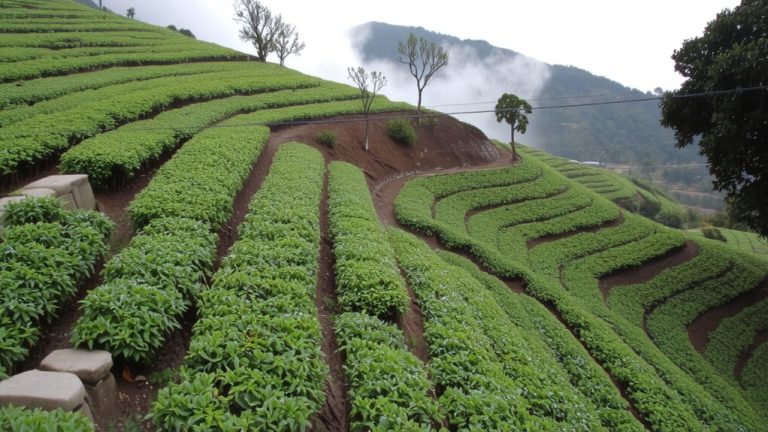
When the southwest monsoon rolls in from May to September, you’ll see plucking schedules across Sri Lanka’s western and southwestern slopes slow to a crawl, as heavy rains saturate the soil, delay leaf growth, and raise the risk of fungal diseases like blister blight-forcing planters to pause harvests even during peak flush periods. You’re aware that erratic weather patterns, worsened by climate change, disrupt when tea workers pluck tea leaves, shifting harvest windows unpredictably. In a Plantation setting, consistent weather aids quality, but unseasonal rains and 375 mm deficits now alter flush cycles. During dry spells, especially from El Niño, pluckers switch to irrigation, slowing output. Yet, in misty highlands like Nuwara Eliya, where dew sustains steady growth, you still get light, continuous harvests. You’ve learned that adapting to the southwest monsoon and droughts is critical for Sri Lanka’s tea-delivering the bold, bright flavors global drinkers expect, even as climate change reshapes the field.
Dry-Season Harvests: Better Tea, Higher Worker Pressure
Though the dry season brings harsh northeast monsoon winds that stress tea plants in the Uva highlands, you’ll find these conditions actually boost the flavor of the leaves, producing brisk, aromatic teas with the bold character prized in international markets. During dry weather, tea production slows as tea bushes yield less, yet quality rises. You’ll see tea estate owners compress plucking schedules to capture premium tea, often pushing pluckers to maintain quotas despite lighter leaf weight. Workers face longer hours, all while earning low wages, with manual shears restricted to protect stressed tea bushes. This strain hits harder as prolonged droughts-worsened by El Niño-have cut Sri Lanka’s annual output from 340 million kg in 2013 to 250–260 million kg. You’re balancing better tea against higher worker pressure, a trade-off shaping today’s sustainable plucking practices.
Why Climate Chaos Breaks Traditional Plucking Calendars
Because the southwest monsoon no longer arrives with its once-predictable rhythm, you’re seeing traditional plucking calendars fall apart across Sri Lanka’s tea estates, especially in low-elevation zones below 1,200m where drought hits hardest. Climate change has warped weather conditions, replacing steady monsoon cycles with unseasonal rains and extreme dry spells. You’re now facing a 375 mm rainfall deficit, +1°C average temperatures, and shortened plucking windows that stress tea bushes and reduce leaf weight. These shifts disrupt tea cultivation rhythms, particularly in the Yala and Maha seasons, once reliable for planning harvests. Sri Lankan tea output has dropped from 340 million kg in 2013 to 250–260 million kg, straining the entire tea industry. Plantation companies can’t rely on old calendars anymore. Tea plantations must adapt fast-delayed rains, erratic growth, and weaker flushes demand flexible schedules, smarter monitoring, and climate-resilient practices to protect yield, quality, and worker efficiency in every harvest cycle.
Shears vs. Hands: Meeting Labor Shortages in Dry Months
While you’re grappling with shrinking plucking windows and fewer workers in Sri Lanka’s dry months, manual shears have become a go-to tool across most RPC-managed estates-but they’re not a one-size-fits-all fix. You see, manual shears boost daily harvests by 4kg per worker, a big win where Sri Lankan tea plantation workers average just 18kg, far below Kenya’s 60–70kg. Many workers in Sri Lanka prefer shears-they reduce finger staining and help maintain foliage. But during dry seasons, brittle leaves and slow growth make hand plucking safer; shears can damage bushes. The Tea Board advises caution, promoting shears mainly in wetter periods. So while manual shears help ease labor gaps, smart timing guarantees bush health and long-term yield. Use them right, and they’re a practical ally.
Replacing Pluckers With Shears: a Climate-Fueled Shift
As climate pressures reshape harvest rhythms across Sri Lanka’s tea country, you’re seeing manual shears step into roles once reserved for skilled pluckers, especially where shifting monsoon patterns compress plucking windows and labor shortages hit hardest. You’re now using shears on estates managed by Regional Plantation Company, boosting averages to 22kg per day-up 4kg from last year-while cutting labor costs, which eat 67% of production budgets, with harvesting alone at 45%. During wet seasons, shears allow quicker harvests amid erratic rains, a climate adaptation proving essential as the economic crisis, now affecting 22 million people, strains the global tea market. Though shears save time and labor, they’re unsuitable in high-grown Nuwara Eliya, where delicate buds demand hand-plucking for quality tea fetching over 3,000 Sri Lankan Rupees per kg. According to Thomson Reuters, balancing efficiency with premium standards is key to staying competitive.
On a final note
You adapt fast when monsoons shift and dry spells stretch, and Sri Lankan planters prove it daily. You switch to shears during low-rain months, boosting yield by up to 30% while managing labor gaps. You still hand-pluck premium flushes for orthodox black teas, preserving flavor and antioxidant levels-EGCG stays high. You align plucking cycles with rainfall, ensuring leaf moisture stays 65–70%, critical for consistent withering. You deliver quality, season after season.